

We spoke to 4Divinity’s Phil Doust at Gamescom 2026 to discuss how Chinese developers could fill a gap in the market left by triple-A bloat.


China has continued to establish itself as an important name in game development, boasting heavy hitters such as Hoyoverse's gacha suite, Game Science's Black Myth: Wukong and the upcoming Zhong Kui, and Marvel Rivals from NetEase. But alongside some of the biggest upcoming PC games from the region, like Phantom Blade Zero and Ananta, there are many smaller Chinese studios punching above their weight. Singapore-based publisher 4Divinity is among those working to bring these games to a western audience, so, at Gamescom, we caught up with Head of Global Publishing Phil Doust for a chat.
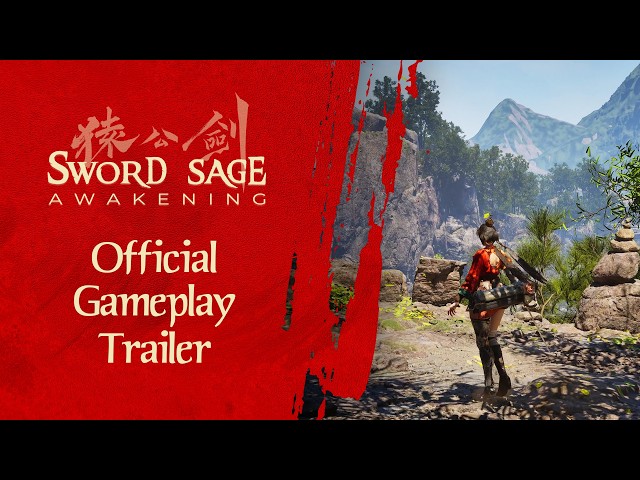
"90% of our titles are based in China," Doust tells us, and the team wanted to bring "all of them" to Gamescom. "If we're doing something in China, which will always be our lead region, we replicate it in the west in whatever way makes sense." 2026 wasn't technically 4Divinity's first time at the show, however - Doust notes the team was there last year in "a really small, sightseeing way," with both run-based slasher Realm of Ink (now out in 1.0) and mythical action RPG Sword Sage: Awakening on the show floor.
4Divinity was first established in 2022 to help western studios break into Asia, and did so for games including Atomic Heart and Stalker 2. Doust, who spent 16 years in PR and Business Development at Rockstar Games prior to joining 4Divinity in 2024, notes that the approach is still fundamentally the same in both directions. "We are speaking globally about our games all the time, we don't have siloed campaigns - you market a game the way it needs to be marketed." There have traditionally been differences in the specific demands from each region's communities, however.
"The Chinese community are very technically minded," Doust remarks. "If they see a trailer, they have to see gameplay. They need to know it's real, it has to be tangible." He said he would see "seven, eight, nine-minute gameplay videos, and I'd get some sort of PTSD - you're showing too much! But in China, you have to prove your case." He recalls young players filming The Defiant on their phones at its booth; "I was in panic mode - The Defiant team were like, 'That's great, this is all going on Bilibili,' and they love it."
He says that this approach doesn't work as well for the western audience: "We have the attention spans of gnats. We're on Instagram and Shorts, we can't even watch a half-hour show on Netflix without getting on our phones. So here, 90 seconds is probably about as much you can do - and you don't show too much. You intrigue, you show mystery, you show story, right? And you leave a lot to the imagination because we are much more spoiler-averse."
Doust wants to push into the gap left in the mid-tier of the market, noting that the industry has been trending towards big-name franchises and sequels. "We're seeing very little new IP, yet the demand for new IP is at an all-time high." He points to Clair Obscur: Expedition 33's game award sweeps: "Tiny game, team-wise, but huge scale, story-driven, interesting, something new, makes people feel something. That's where the demand curve is, but no-one's supplying it, and no-one's supplying it, in my opinion, because of the cost."
While China certainly has big, triple-A productions, such as Black Myth: Zhong Kui and Phantom Blade Zero, 4Divinity's portfolio is mostly "small teams, new teams," with employee counts typically in the 25 to 80 mark. "That's quite common in China, and that's where most of our games are." He notes that the Chinese market is "very price sensitive," however, and so the most games can realistically charge is around the equivalent of $60 in America.
سەرچاوەی فەرمی بە زمانی ئینگلیزی: https://www.pcgamesn.com/gamescom/4divinity-interview-chinese-games