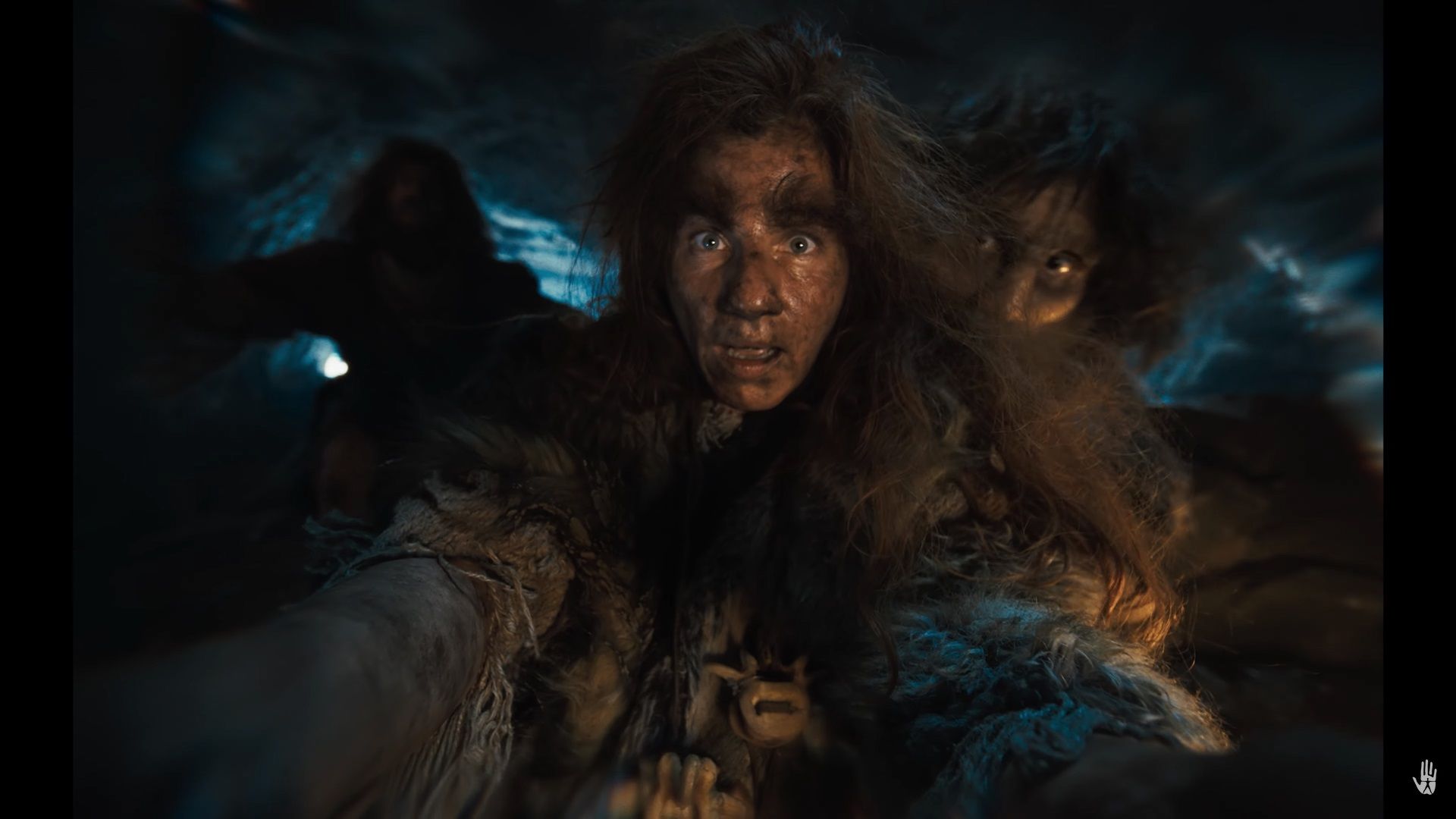

Showa American Story is, if nothing else, a profoundly wacky action-RPG. Five years have passed since its initial reveal in 2021, and with barely any updates in recent years, players have been left wondering: In an era where the Chinese AAA single-player market is rapidly expanding, can a game with such an eccentric tone actually carve out its own identity?
We recently had the chance to go hands-on with about two hours of Showa American Story. Based on an introduction by Creative Director Xiangyu Luo and our own gameplay experience, here is what makes this absurd adventure tick. Luo describes Showa American Story as an RPG overflowing with retro pop culture. Set in an alternate late-'80s where Japan bought up most of the United States, effectively colonizing it economically and culturally, players take control of Choko Chigusa—a girl brought back from the dead. She embarks on a road trip filled with combat, exploration, and growth across a world that feels both absurdly bizarre and weirdly familiar.
Our demo was split into four segments: a linear story-and-combat section, a camp exploration slice focused on rest and character progression, an open-map exploration sequence, and a massive boss fight.
Combat in Showa American Story integrates elements from various action game staples, as Choko can use both melee and ranged weapons. The demo featured four types of melee weapons—Bare Hands/Gauntlets, Katanas, Drills, and Polearms—alongside ranged options like shotguns and assault rifles. Every melee weapon comes with a specific name. For instance, the katana category consists entirely of historical legendary blades; I found one called "Mikazuki Munechika" lying around. You can actually equip it, though the item description hilariously notes it's probably just a fake.
Weapon categories boast intensely edgy, anime-style move names and wildly different playstyles: Bare Hands: Beyond basic fists, you can equip gauntlets, brass knuckles, and even "Wolf Fang Vajra Claws"—which look exactly like Wolverine's iconic claws. They offer the highest attack speed, but naturally, the lowest damage. Katana: This category has the deepest moveset. Depending on your light and heavy attack combos, Choko shifts into different "Stances" (Kamae), offering branching attack paths for your next move. Light + Heavy triggers "High Stance," Light + Light + Heavy initiates "Yin-Yang Stance," and a single Heavy attack results in "Matsukaze Stance." There's even a long combo (four Lights, three Heavies) that unleashes a "Reversed Hasso Stance" capable of parrying, while double Heavy puts you in a "Fudoshin (Immovable Mind) Stance." Polearms: The demo let us wield a literal American flag as a dual-handed weapon. It excels at wide-sweeping attacks and grants Super Armor. While it struggles to instantly break enemies, it easily knocks them down. The trade-off is massive stamina consumption, which can be mitigated through upgrades. And Drills: Harder to master. The attacks are mostly linear and restrict your ability to sprint, but the damage is astronomical. The linear thrusts pierce through enemies, and using a Rage Attack drastically shortens the weapon's long wind-up animation while leaving a lingering cyclone for continuous multi-hit damage.
The core of the combat revolves around a strategic "Rage Cycle." Dealing or taking damage builds the Rage meter. Once enough is gathered, it converts into a "Rage Point" (currently capped at 5). Weapon types generate Rage at drastically different rates; barehanded weapons build it the fastest. Therefore, swapping to fists when you're starved for resources is the optimal play. Even within a category, there are nuances—gauntlets deal less damage than brass knuckles but build Rage faster.
Rage Points dictate the flow of combat and can be spent in several ways: Ultimates: Consume multiple points for massive damage (3 points for barehanded, 5 points for katanas). Rage Attacks: Holding R1 and pressing Triangle turns your standard heavy attack into a stronger Rage variant. Katanas gain extended reach, while Drills inflict longer sustained damage. Chain Attacks: Similar to the "Flash Attack" in the Nioh series. Pressing R1 and the D-pad corresponding to another melee weapon during an attack consumes 1 Rage Point to instantly swap weapons and unleash a high-damage follow-up with zero recovery frames. Swapping to a firearm triggers Bullet Time and exposes enemy weak points. Standard weapon swapping is notoriously slow, making Chain Attacks the most effective way to juggle your arsenal. Perfect Dodge & Super Recovery: Holding R1 + Dodge at any time spends 1 point for a Perfect Dodge; subsequently pressing the attack button unleashes a Melee Chain or Ranged Chain. Alternatively, getting hit by a heavy attack triggers a brief slow-motion window; pressing dodge here burns 1 point for a "Super Recovery," and pressing attack immediately after automatically fires off a Melee Counter or Ranged Counter.
Rage and Chain attacks quickly deplete an enemy's stamina. Once they are broken, you can perform an Execution. Thus, the ideal combat loop looks like this: quickly build Rage, spend it for high damage or Ultimates, but always keep 1 point in the tank to seamlessly swap back to fists to rebuild your meter. It requires intense focus and resource management.
سەرچاوەی فەرمی بە زمانی ئینگلیزی: https://www.ign.com/articles/showa-american-story-the-first-hands-on-preview