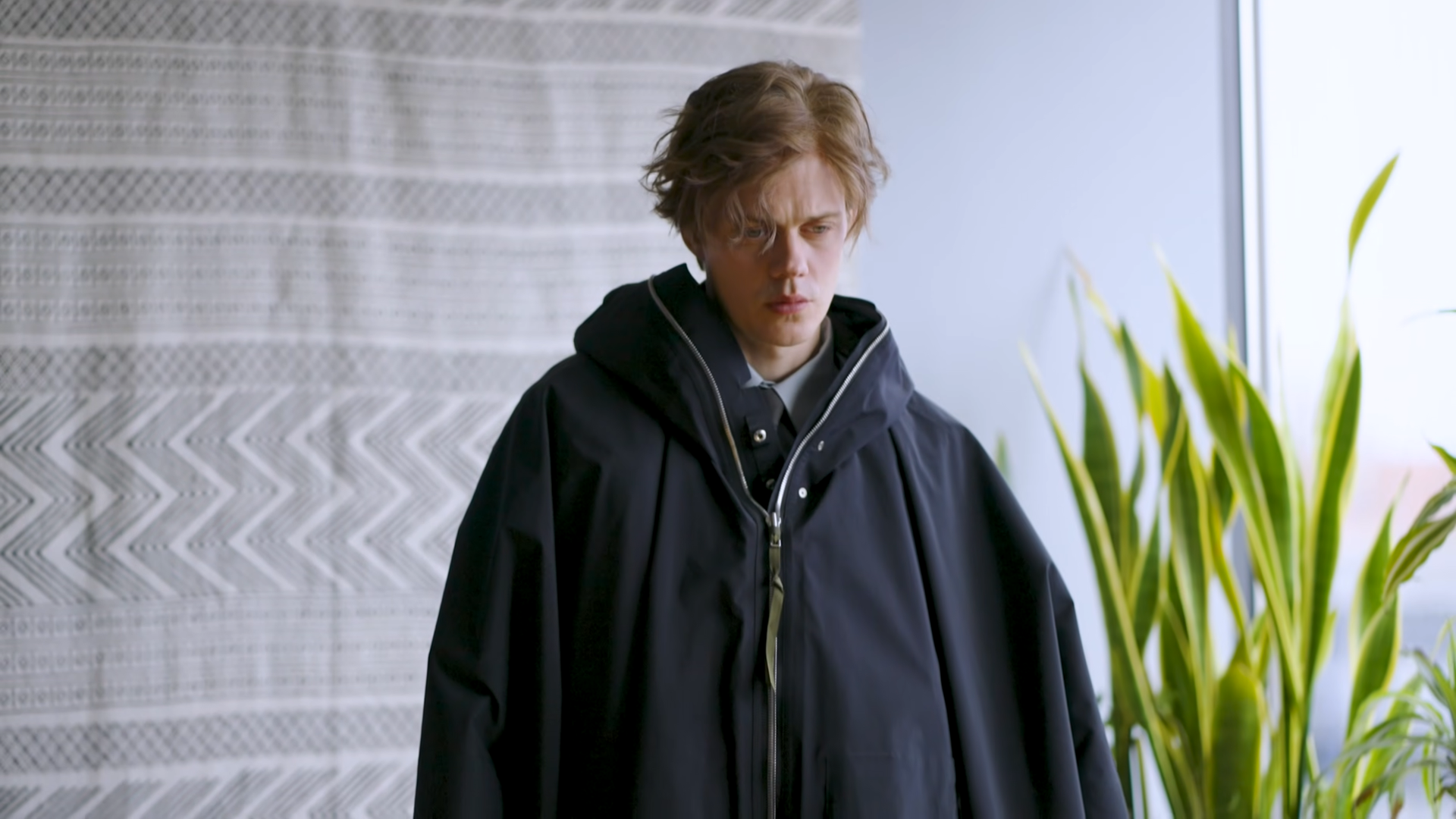

Phantom Blade Zero composer Caisheng Bo is known as a pioneer in Chinese experimental music. As the soundtrack for the critically acclaimed action game gets announced for release today – a four-disc, 81-track audio adventure published by Milan Records – the music publisher shares the intriguing backstory of this soundtrack. "The musical story of Phantom Blade Zero began 18 years ago, when Caisheng Bo and Soulframe Liang—one in high school and the other in graduate school—were working on their indie game Rainblood 2: City of Flames, which would later evolve into the Phantom Blade franchise."
Bo, based in Beijing and a graduate of the University of Virginia in the US, spoke with IGN on the eve of the soundtrack's release.
IGN: From what I've seen of Phantom Blade Zero, the music very much ties in with some of the folklore and cultural themes explored in the game. Can you discuss how you sought to express this through music?
Bao: In traditional Chinese music, each instrument has developed a rigid set of associations—what it represents and how it should be used. I see this as a form of stereotyped expression. The erhu, a Chinese two-string bowed fiddle, is most often used to depict heroic action and the sorrow of personal endeavour. The pipa, a Chinese four-string lute, is associated with a feminine image and with danger on the battlefield. Anything outside these conventions may seem out of context.
This is the narrative I want to challenge in the music of Phantom Blade Zero. For each Chinese instrument, I set up a polarity between its traditional associations and a new set of meanings.
In Phantom Blade Zero, the erhu represents heroic action, as in the traditional idiom, but it also represents "manipulation"—a key image in which red threads descend from the sky, pulling enemies upward and controlling them. The pipa is tied not only to danger and the crisis lingering in the dark, but also to "discordance," an otherworldly realm where time stops and space distorts. The matouqin and Hoomai (throat singing), represent "mandate" and righteousness, while at the other pole they evoke megalophobia—the fear of vast objects. The xūn, a Chinese clay ocarina, is traditionally used to represent weeping, one of its signature playing techniques. In Phantom Blade Zero, the xun is also heard when Mu Tianmiao, a character of absolute authority, is present. These narrative polarities are among the design choices I made to enrich the game's story through music.
Alongside this innovative use of Chinese instruments, there are stuttering sound designs in the cutscenes, especially when Zuo Shang is plotting his scheme. As the story progresses, the stuttering sound grows louder and more present. This building stutter suggests his growing ambition—his uncontainable "Sha Qi" (killing intent).
By incorporating traditional Chinese instruments alongside modern musical genres and elements, I hope the music can cross cultural barriers, reach players' hearts, and offer them a truly distinct listening experience.
سەرچاوەی فەرمی بە زمانی ئینگلیزی: https://www.ign.com/articles/phantom-blade-zeros-kung-fu-punk-inspired-bold-musical-decisions-to-match-the-visuals