It’s hard to find players who don’t love loot, and even those who claim they don’t want every open-world game to evolve into a full-fledged RPG probably won’t deny that there have already been some really strong examples of such a transition. Ultimately, it all depends on how well each game embraces loot systems and makes them vital to their gameplay without overcomplicating things. Adding loot is rarely completely out of place; it’s all a matter of balance.
Well-fleshed-out loot systems can make any game better, but there are certain rules to follow, from the amount of loot players receive to the layered nature of its perks and stats. Such systems can easily become unnecessarily complex to learn or, on the contrary, too simple to be meaningful. Below are some open-world RPGs with legit perfect loot systems, maintaining the delicate balance between quality, quantity, depth, approachability, and reward in their own unique ways.


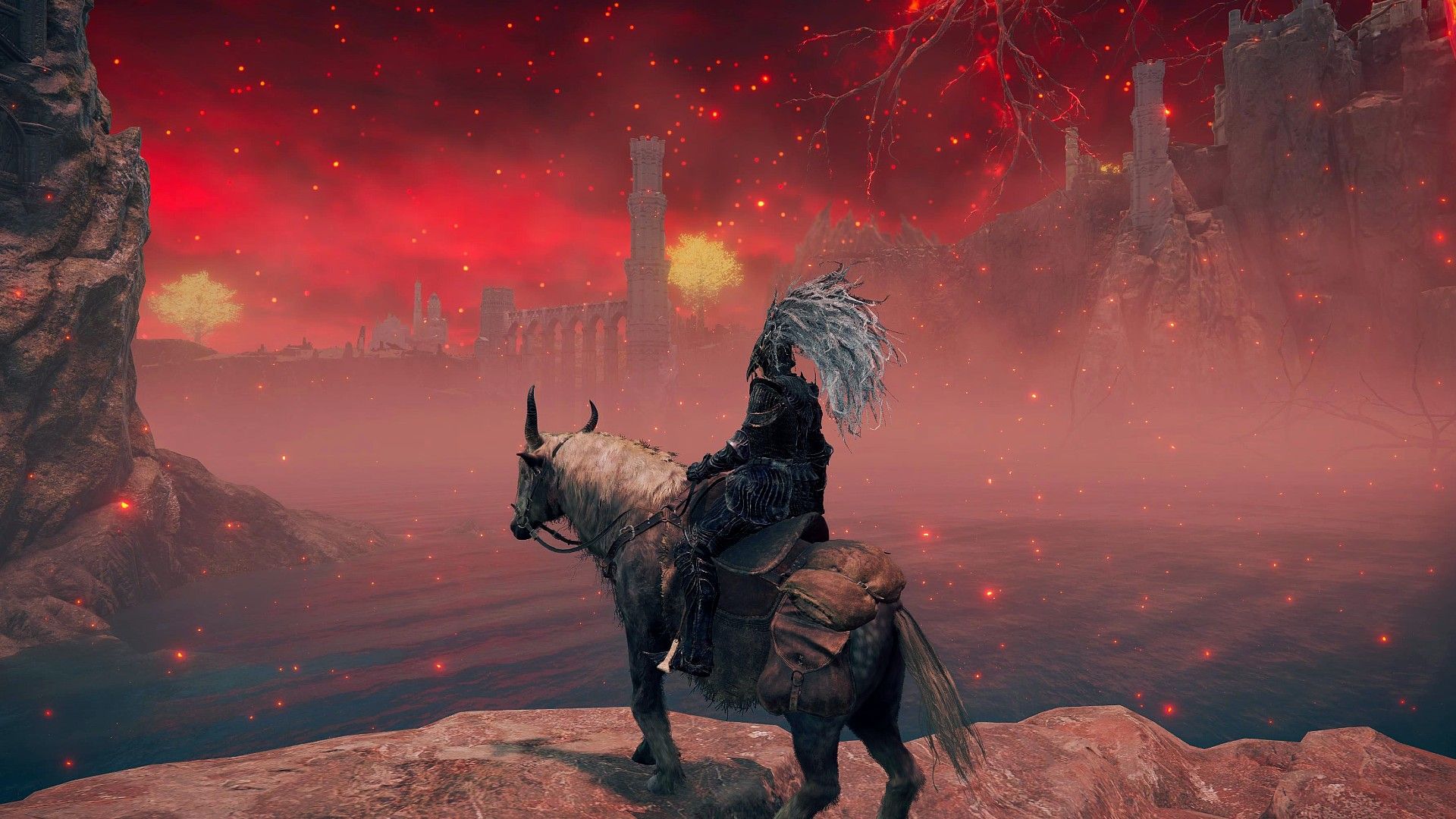
While most modern open-world RPGs are still somewhat reliant on randomized, color-coded loot systems, Elden Ring remains a standout achievement in handcrafted gear variety. Every piece of gear you get in Elden Ring is individually designed, from its looks to its stats, weight, moveset (for weapons), and more. This approach makes every discovery desirable and strongly encourages deep exploration, because you know that some rewards simply can’t be obtained anywhere else in the game.
While Elden Ring isn’t the only game that treats its loot this way (AC Valhalla is another example that comes to mind), it’s easily among the most generous games when it comes to distinct loot found in chests or dropped by enemies and bosses. Beyond the exceptional number and variety of items, their individual stats are also important, whether it’s armor with resistance to various damage types, a weapon’s special ability, or unique bonuses from talismans. Even gear weight can become a problem if your character can’t handle it.

Mentioning Borderlands instantly floods one’s mind with an avalanche of loot, mostly guns of all shapes and sizes. By the fourth mainline entry, Gearbox has mastered the subtle art of looting, delivering a never-ending stream of wildly randomized variations that are more flexible than ever before. Combined with much greater buildcraft variety, this puts Borderlands 4 one step above its predecessors, while an extra focus on multi-piece set bonuses and Firmware transfers makes the system easy to get invested in.
Borderlands 4’s weapons are assembled from manufacturers, stats, elements, special effects, and individual components, so you never really know what you’re getting or how it will behave until you try it in combat. Special Legendary and Pearlescent items are extremely rare and carry effects ordinary gear cannot roll, further enhancing their worth. Fortunately, the game’s endgame knows what you might be after, making the hunt for specific items easier and more fruitful.
Once a popular open-world series, Middle-earth: Shadow of War is now mostly remembered for its unfortunate Nemesis System patent, keeping other titles from freely building on this one-of-a-kind mechanic. However, the game’s loot system is another achievement that is often overlooked. Random loot drops and randomized enemies with deeply personal encounters really feed into each other here, creating an unusual balance that works better than in most other titles.
In Middle-earth: Shadow of War, orc captains can drop equipment connected to their class, so hunting higher-ranked commanders yields greater rewards. Obtaining a powerful weapon may constantly remind you of the distinctive orc you repeatedly faced to get it. Aside from that, it is a mostly classic but still robust system, featuring Legendary pieces and themed sets, gear with unique in-game upgrade challenges, and a way to quickly adjust your best items to your current level without needing to scrap them as you progress.
سەرچاوەی فەرمی بە زمانی ئینگلیزی: https://gamerant.com/open-world-rpg-games-perfect-best-loot-systems/