
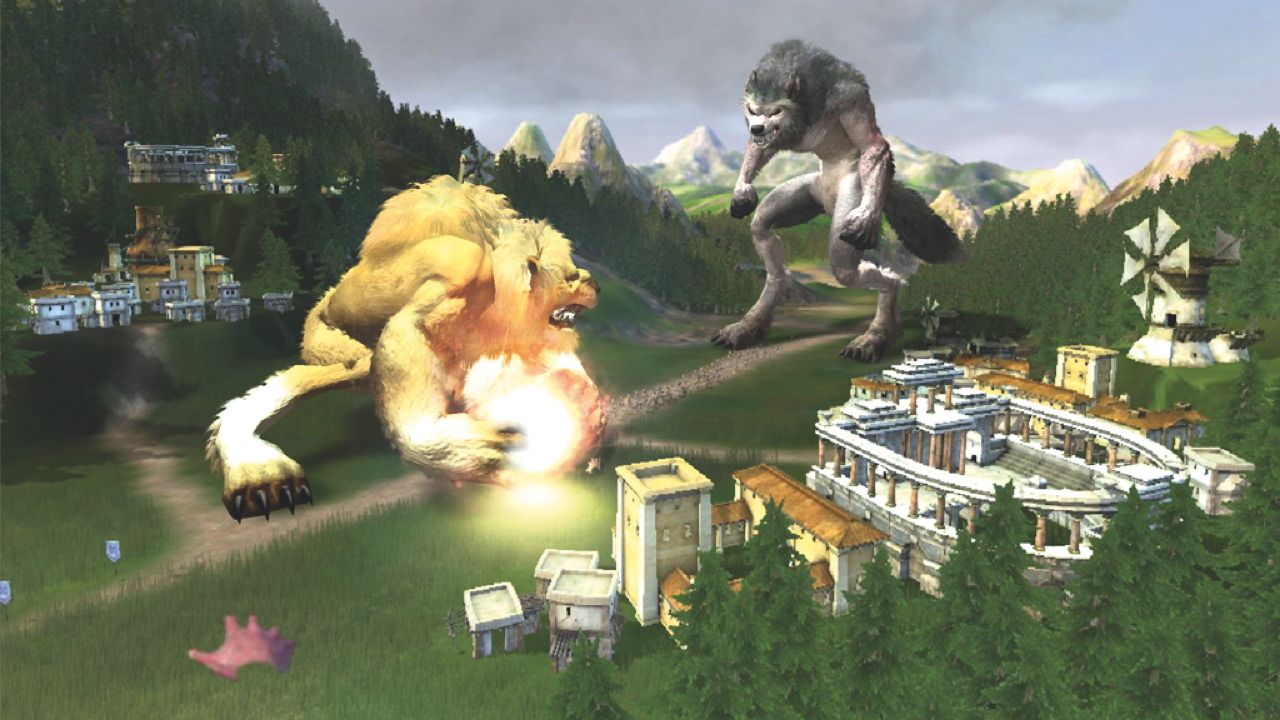
Picture it: a suited exec walks onto a stage and announces a new game about influencing and controlling people, about good and evil. And the clincher: it'll all be driven by machine learning. In 2026, that game has to be a dystopia. That's where our imaginations go now when we hear anything about AI and social control. There'd be a grim synthwave drone underpinning scenes of trench-coated cyberpunks. There would be absolutely no apes casting spells.
But 2001 was a very different time, and Black & White took those exact elements, simian wizards and all, and turned them into a joyful sandbox without even a whiff of the sinister about it. In many ways it was a natural extension of Peter Molyneux's favorite themes, and by the turn of the millennium his particular fingerprint was already familiar.
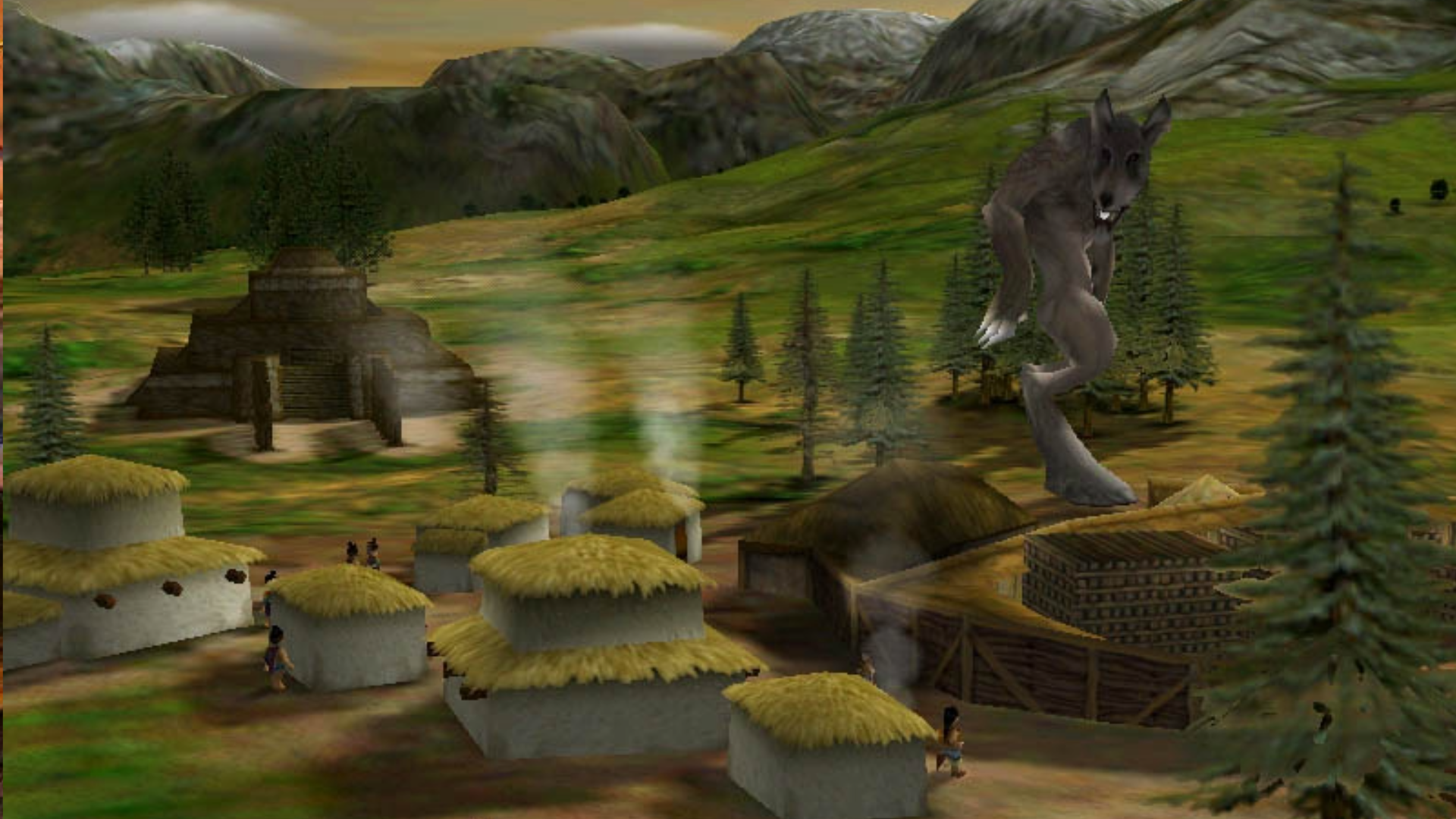
Bullfrog's back catalogue had consistently offered compelling power fantasies throughout the '90s, and they often had a quietly amoral aspect. Theme Park famously empowered you not just to build an eponymous theme park, but also to lead thrill-seekers to their demise – at least gastrointestinally – on your rides. Dungeon Keeper made that motif explicit, more or less inviting you to build torture chambers for heroes to navigate. Even the more straight-laced Bullfrog series, Populous, featured throwaway human sacrifice and wanton destruction of rival tribes' villages. Above all, in every Bullfrog game, the kick was in controlling people, according to whatever personal moral compass you decided to adhere to.
When Molyneux began to work on a new project with a team of nine in February 1998, his ambition was to take those notions further than his previous games had been able to: Black & White would be a toybox in which the player felt that they could do anything. But it would also call upon deeply specific and personal references from Molyneux's own childhood and pop-culture kinks. In a 2000 GDC keynote, he told the audience how he "wept like a baby" at the end of King Kong and felt like a god in an alien land the first time he found an anthill. Those threads can be picked up in the final release of Black & White, but along the way many ambitious concepts fell to the cutting-room floor or were radically retooled.
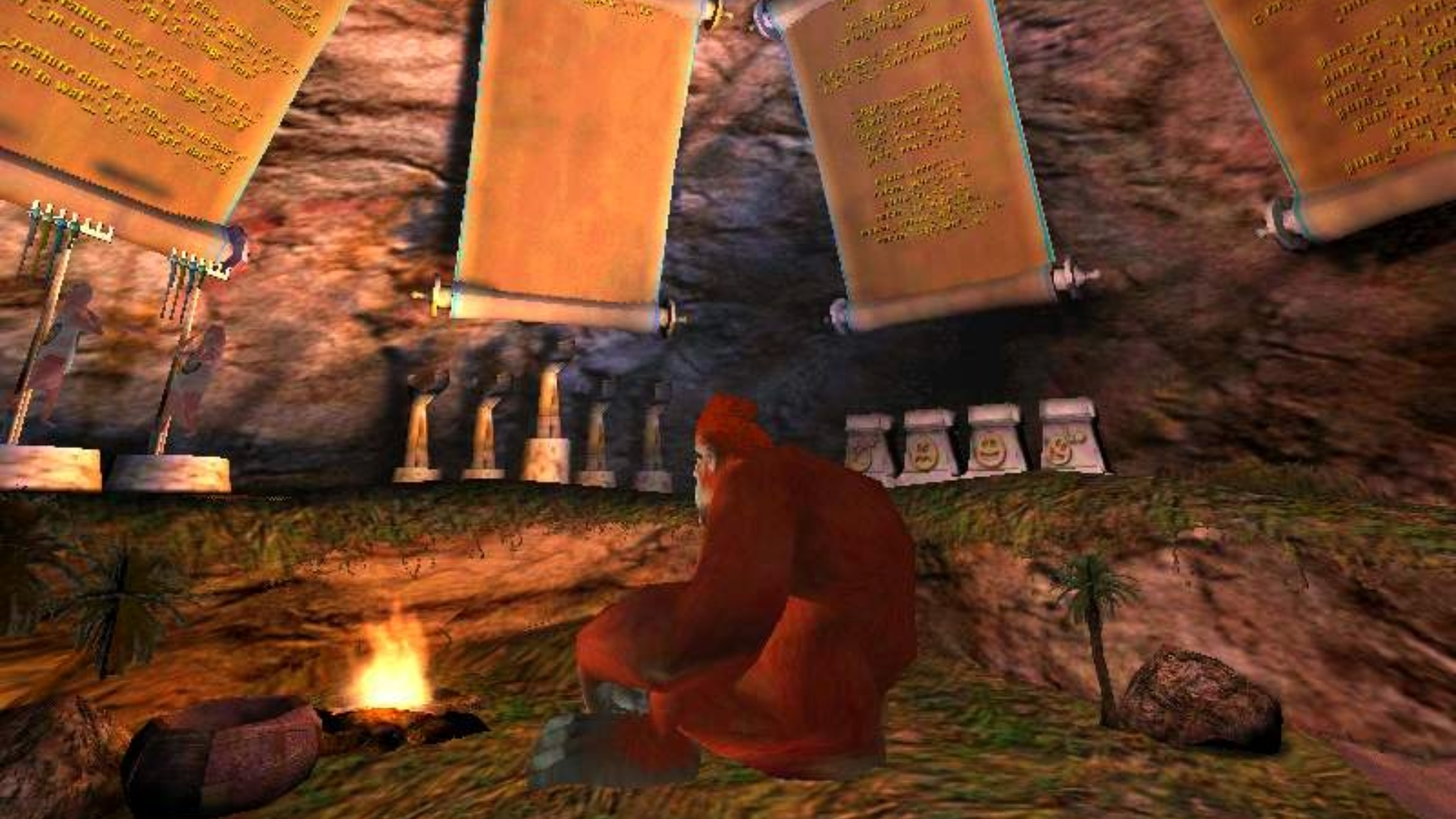
Among these ideas from the newly formed Lionhead Studios was the ability to pick up any creature in the game and rear it into a giant. Buildings and environments would take on a different visual aspect depending on your alignment to good or evil, while the characters within them would be fully lip-synced. And at the centre of it all would be a tale of powerful wizards vying with the player for control of a set of islands.
Eventually, the creatures you could control would be limited to just a handful, lip-sync was jettisoned, and the wizards' robes were tossed in the bin in favour of warring gods. But it would be the personnel, rather than the premise, that would make Black & White special.
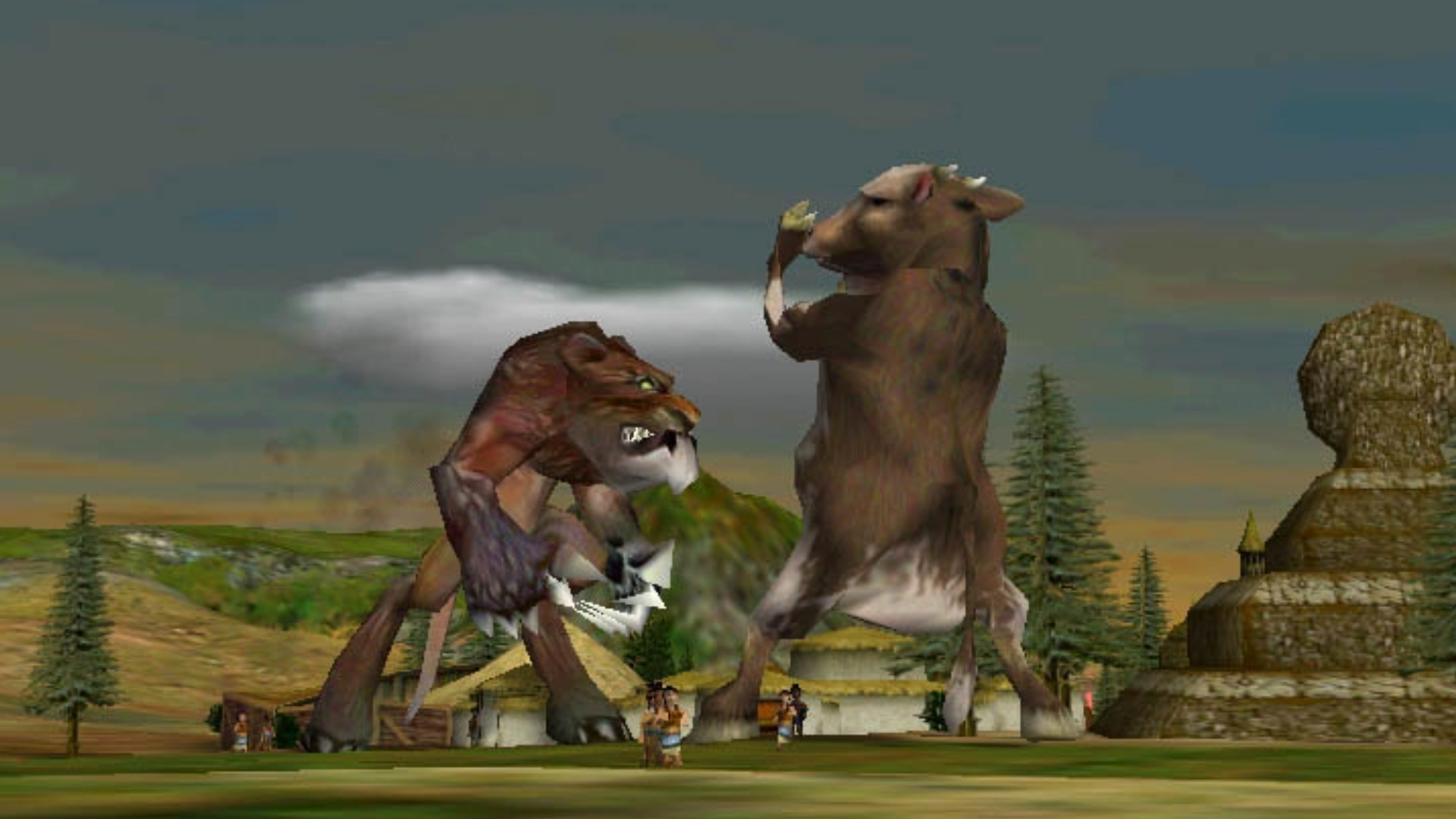
One of that team of nine, and working out of Molyneux's own house for the early part of Black & White's development, was Richard Evans. He'd been Molyneux's colleague at EA and now co-founded Lionhead with him. A young chess prodigy called Demis Hassabis joined shortly afterwards, reuniting with Molyneux after leaving Bullfrog to earn a double first in computer science at Cambridge University. Much later, Hassabis would go on to found DeepMind, the deep-learning AI research project bought by Google in 2014, which taught a computer to beat any human Go player. Then it was constantly working on cures for terminal disease, but subsequently merged with Google Brain in 2023 to become Google DeepMind, which now claims to be building "safe artificial intelligence systems". Evans would also take a job at DeepMind, on the research team. But as has been established, 2001 was a different time. And in that time, these two artificial intelligence luminaries coded a chimp that learned where it was allowed to excrete.
هەفتانە هەرسکردنەکان، چیرۆکەکانی ئەو کۆمەڵگایانەی کە خۆشت دەوێن و زۆر شتی تر
سەرچاوەی فەرمی بە زمانی ئینگلیزی: https://www.gamesradar.com/games/simulation/playing-god-the-revolutionary-ai-that-made-black-and-white-still-unforgettable


