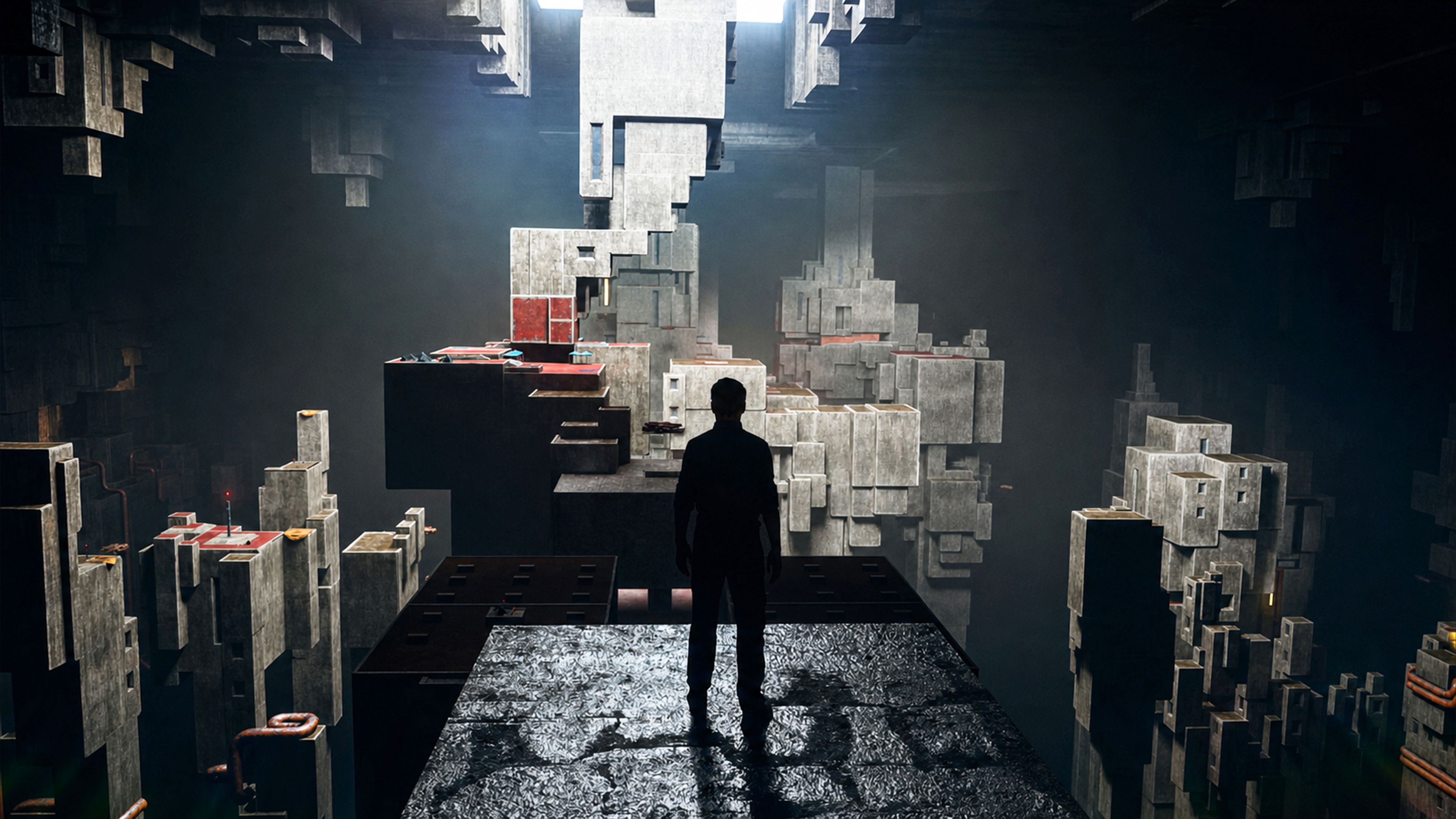
Having reviewed Control Resonant over a playthrough of over 40 hours and now being 20 hours into a New Game Plus playthrough, I'm more than familiar with how the game works and what it expects from you. While the sequel still takes place in the same universe that defined its predecessor, a lot has changed here, particularly when it comes to its combat and exploration. Whereas the first Control was a third-person FPS in a largely non-linear, interconnected, Metroidvania-style world, Control Resonant takes the series to a far more open world (though Remedy refrains from calling it that) and replaces the FPS combat of the original game with melee combat, complete with a pretty sizable skill tree to boot. Because of those rather significant changes, you can't step into Control Resonant and expect to approach it the same way you did the first game.
In many ways, this means Control Resonant is an entirely different game. And while some Control enthusiasts have suggested these changes are for the worse, I, for one, feel that the first game's formula has been properly expanded and evolved in the sequel, and it's actually for the better. Opinions on its execution aside, though, it's impossible to deny that Control Resonant comes with a vastly different set of rules you'll need to follow if you want to end your first playthrough with a bang rather than a whimper. However, there is one rule in particular that you need to learn early, and I do mean early, because if you try to play the game any way other than this, you'll find yourself in a world of hurt.


One complaint I've seen emphasized throughout a number of the Control Resonant reviews I've read is that it can be rather challenging at times. And I'll admit, I literally have written in my notes from when I was reviewing the game, "Fights are genuinely challenging, especially early on." I wrote that down because, when Control Resonant's combat really started to pick up in the first couple hours of the game, it honestly felt a little unbalanced. Don't get me wrong, the combat was manageable, and I only died a handful of times learning the ropes, but peering at it through an objective lens, I could see it frustrating players who didn't expect that kind of difficulty.
کۆنسۆڵەکان بە ڕیزبەندی دروست دابنێ.
کۆنسۆڵە هەڵبژێردراوەکان لە نزمترینەوە بۆ بەرزترین ڕێکبخە.
But, being the open-world lover that I am, that opinion changed over the next 10–20 hours, as I spent the majority of the first half of my playthrough simply exploring Manhattan and taking advantage of everything it offered me. Yes, Control Resonant is an inherently difficult game. Enemies are agile and strong, and if you don't keep your wits about you, you will indeed be pummeled into the ground repeatedly. However, if you allow yourself to get distracted by the open world, engage with every single enemy you see, complete side quests, and spot the unassuming storefronts that house powerful upgrades and materials, the game's combat will become much easier to manage, as your Dylan becomes an incredibly overpowered, unstoppable machine.

That's the one rule you need to learn early: Control Resonant gives you an open world—use it. In fact, I'll actually say up front that I believe this was Remedy's plan all along. It wants you to explore the world, and it knows that in doing so, you'll become so powerful that enemies will be mere ants for you to squash beneath your feet. That's why it needed to make encounters more challenging even early on, rather than simply scaling their difficulty alongside whatever version of Dylan you're trying to build. These seemingly needed to feel like formidable foes for Dylan at the start, because it makes the payoff of finally achieving an overpowered build in Control Resonant that much more worth it.
Of course, there is some nuance to this, or it's at least worth explaining why exploring Control Resonant's open world is so important, because it's not as much about the quality of the content you'll encounter (which is actually great) as it is about how that content helps grow Dylan into a force to be reckoned with, regardless of the build you're pursuing. There are plenty of open-world RPGs out there that you could easily throw into the "explore, do side content, and become overpowered" category, but not all of them approach things the way Control Resonant does. Many of those games rely on XP and skill points alone to make characters stronger, and while Control Resonant certainly applies that rule, there are other things going on as well.
سەرچاوەی فەرمی بە زمانی ئینگلیزی: https://gamerant.com/control-resonant-open-world-exploration-upgrades-difficulty/