I’ve always preferred the action combat of wham-bam ‘Take a bike to the face, man!’ in Ryu Ga Gotoku Studio games, so I was ecstatic to learn that Stranger Than Heaven would let me return to my button-mashing ways. Or so I thought. After going hands-on with a three-battle combat demo at Gamescom, I awkwardly realised that I need to “git gud” and actually hone (read: obtain) some proper combat skills.
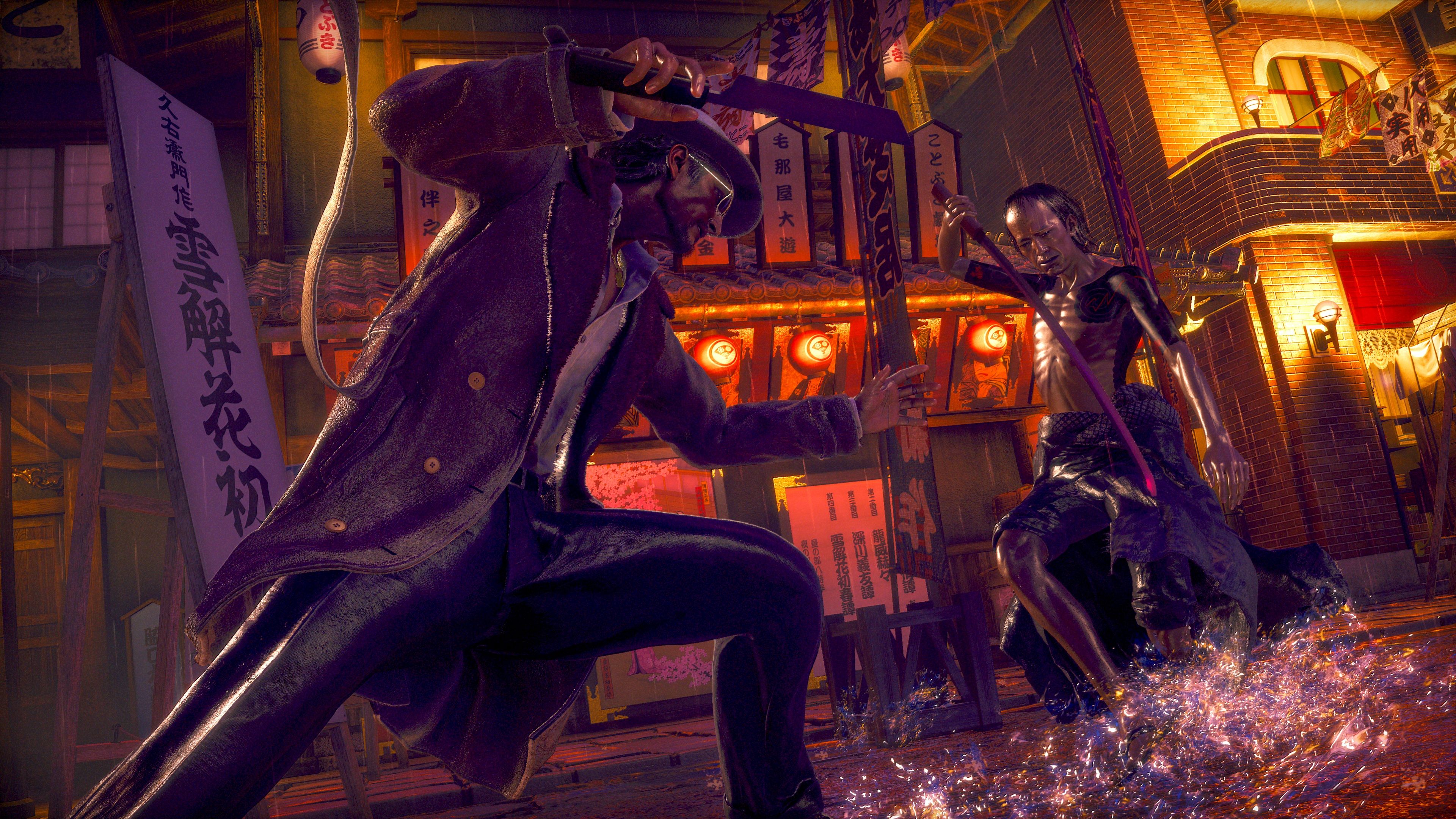
Stranger Than Heaven’s combat is unique in that it utilises independent left and right body controls using your controller's shoulder buttons and triggers. You also have weapons you can equip, use, and swap between during a battle, though be warned that your enemies won’t stop while you swap your large hammer for a little knife.
We had three battles of increasing difficulty to complete; the only real difficulty for me was learning to actually block attacks for once. I normally just suck it up and let my characters act like a sponge while I spam attacks, but that didn’t work here, as I soon found out in the second encounter. I died so many times I lost count, but eventually I had to get better, or else I’d have to leave in shame. I knuckled down and started being more careful about timing, blocking, and evading, and finally made it through to the final, most challenging battle… only to find it way easier than the previous one once I realised I had to actually fight like a good girl and not be lazy.

After finally completing all three battles and escaping with my gamer card mostly intact, I spoke with producer Hiroyuki Sakamoto and director Mikinobu Abe.
“With Stranger Than Heaven, we wanted to create a completely new title, and that was also the reason for this new combat style because we wanted to go back to this original action game feeling that, with time, your skills develop and you have a deeper gameplay,” Sakamoto says.
There wasn’t a concern that some fans would find the combat too difficult, with Sakamoto saying, “it shouldn't be that complicated that people can't play it”, adding, “even for those who are not used to action games”. Besides, you could always just lower the difficulty. Or you know, get good.
Stranger Than Heaven feels more brutal than fans are used to from RGG Studio, and Sakamoto explains that as the game tells the story of the origins of yakuza, detailing the roots of the organisation and outlaw world, “it’s kill or die, so it has to be brutal”. He tells me that he wanted to ensure that the yakuza world didn’t have any fantasy elements, and that it was “important that we can show this realistic origin of yakuza and show all the drama and all the tragedy which comes with it”.
Throughout Stranger Than Heaven, players will experience both the violence of the Japanese underworld and the highlights of show business and the music industry. While this might seem like polar opposites at first glance, the two are actually intrinsically linked.


سەرچاوەی فەرمی بە زمانی ئینگلیزی: https://www.thegamer.com/stranger-than-heaven-gamescom-interview-realistic-yakuza/