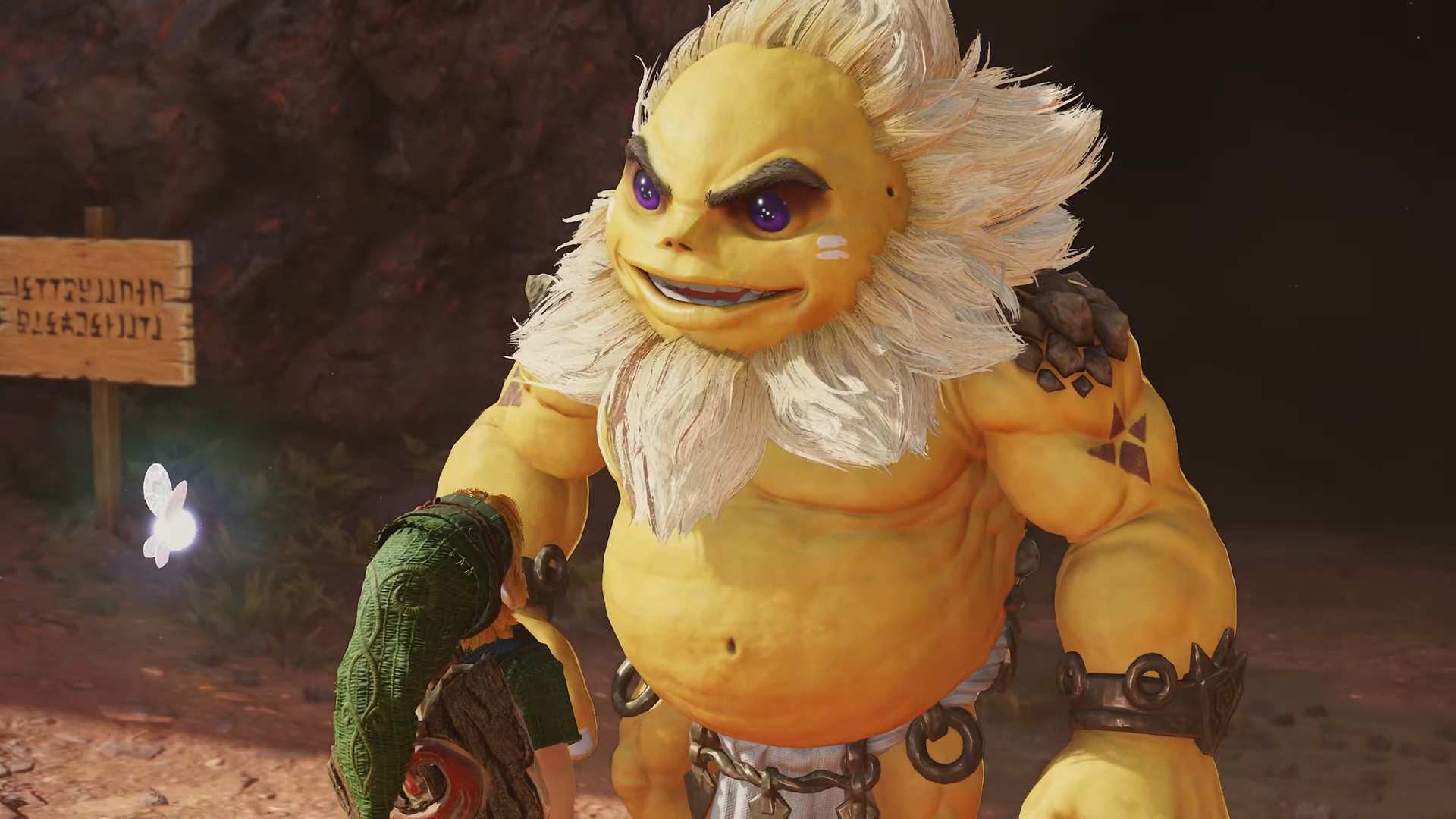
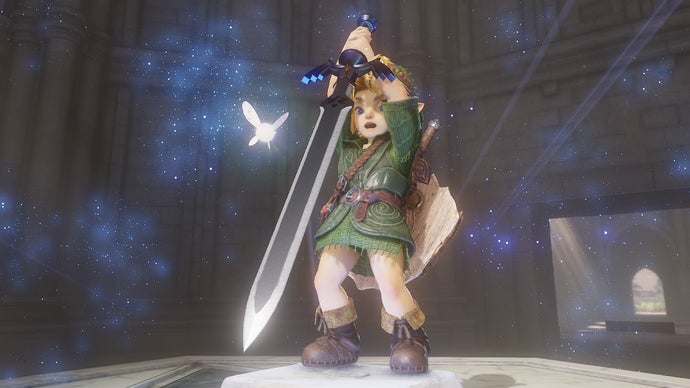
The Legend of Zelda: Ocarina of Time is being wrapped up in all kinds of modern touches for its imminent Nintendo Switch 2 remake (that owl seems to be less chatty, for starters), but there's at least one quality-of-life feature borrowed from Breath of the Wild that the developers felt was better left on the cutting room floor: fast travel.
In Nintendo's latest Ask The Developer blog post, long-time series producer Eiji Aonuma explained that he initially asked the game's remakers to add warp points so players could get around Hyrule without having to spam rolls and presumably make Link violently ill in the process. But he and the team quickly realised fast travel doesn't work so well in a game that's still, in its bones, almost three decades old.
"In The Legend of Zelda: Breath of the Wild, there are many warp points that enable players to move quickly around the game's vast world. In the original The Legend of Zelda: Ocarina of Time, you could get around a bit faster by spamming forward roll, so I think a lot of players spent their time doggedly rolling across Hyrule Field whenever they needed to be somewhere in a hurry," Aonuma said.
"I thought we needed to address this in this new version. So I asked the team to add warp points that didn't exist in the original game, giving players access to shortcuts. But when we actually tried playing the game with those warp points, we realized that we were missing out on the moments of discovery that came from stopping along the way and wondering, 'Wait, what's this?' Through this development process, we were reminded once again just how important those moments are to the very structure of The Legend of Zelda: Ocarina of Time. So even though I was the one who proposed adding warp points, they just weren't working for me in the end, so I got the team to take them all back out again."
There you have it. No fast-travel points in The Legend of Zelda: Ocarina of Time's remake, and it sounds like it's for the best. I avoided warping around Breath of the Wild's open world for the same reasons Aonuma laid out - spotting something odd way in the distance, slowly finding a way to reach it, and then discovering a funky little Korok seed was always a thrill that wouldn't have been possible by cutting out the trek in between main objectives.
Talking about why Nintendo chose to revive Ocarina of Time now, Aonuma said some of the younger developers on the team had maybe never played the original game 28 years ago, and remaking it could "trigger new insights that they can carry forward into future development."
As for the remake's somewhat divisive art style, art director Aya Shida said the team "used phrases like 'a puppet-show feel' and 'the analog feel of practical effects films'" early on in production. "Neither puppet shows nor practical effects films reproduce reality exactly as it is. Even so, both create a convincing sense that the characters truly exist within their respective fantasy worlds," Shida continued.
The Legend of Zelda: Ocarina of Time comes out on the 5th of November. After getting some hands-on time with the revival, Lottie thought it was shaping up to be a brilliant remake.
سەرچاوەی فەرمی بە زمانی ئینگلیزی: https://www.eurogamer.net/nintendo-fast-travel-legend-of-zelda-ocarina-of-time-remake