
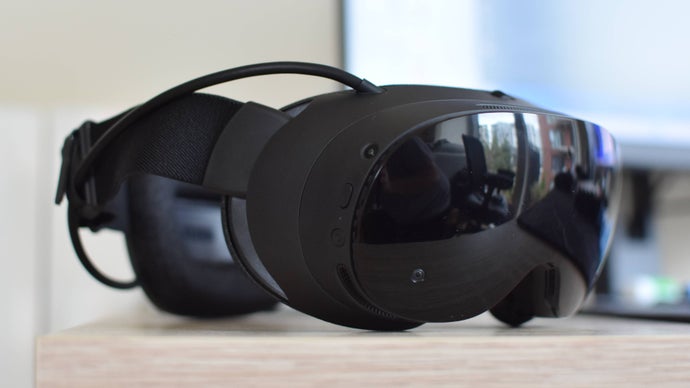
Surprising no-one, Valve’s Steam Frame VR headset is launching with higher-than-expected prices, following the Steam Machine in having its budget-friendly intentions foiled by the memory shortage misery of RAMnarök.
The lack of affordable PC parts - which as a fully standalone-capable VR kit, the Steam Frame is as vulnerable to as any laptop or desktop - continues to have wide-ranging, usually shitty impacts on hardware manufacturing and even game development. Besides simply raising prices, some kit makers are reverting to lower-RAM models to keep costs down, or going DRAMless altogether. Valve, however, have told RPS that there was never a question of cutting the Frame’s specs, even as the worldwide component crisis took hold.
According to Frame engineer Josh Hudman, who I spoke to ahead of the Frame’s pricing and launch plan reveal, this decision was partly down to the Frame being so far along in development at the time, and partly because they just liked the headset’s system-on-a-chip (SoC) setup too much, consarn it.
"Those kinds of things kind of came late in the project, because we had some cost goals that we were after, and I think we were pretty happy with where things were going. And then, the whole issue with all the memory and storage and everything kind of adjusted that on us," Hudson recalled. "I think what we came up with is just that we had already done a lot of work, and worked with other people. to figure out what those specs were, and it didn't seem like it was the right product choice to make those changes.
"It felt like we had landed on a place that we were really happy with, and we felt delivered the kind of experience that people would want. And adjusting those didn't really fit what we were trying to deliver."
The Frame, unlike the revamped Steam Machine, doesn’t have dedicated memory - it uses a Snapdragon SoC, like you’d find in a high-end smartphone, so all the RAM, CPU, and GPU components are kind of smushed together into one. While still flexing smaller graphical biceps than even the Steam Deck, it is enough to run Half-Life: Alyx and other visually complex VR games at a decent clip in standalone mode; you can imagine how hardware downgrades might undermine that, especially with the older, cheaper Meta Quest 3 already lurking.
Valve’s stance is also consistent with the Machine launch, the Steam Deck OLED’s recent price hike, and arguably the premium cost of the new Steam Controller: better to charge more than to lower capabilities. Despite unconfirmed reports of big sales drops for the Deck, mind, Valve’s techies also say that they’ve been pleased with the response to their trio of 2026 hardware bits - even if some strange souls are taking their Steam Machines well outside its living room comfort zone.
"We're super happy that a bunch of people are getting their hands on them," said SteamOS developer Pierre-Loup Griffais. "For things like the Controller and Machine, I think a tonne of what we were anticipating the experience would look like has been realised there. When we're seeing end-user feedback, I think people are enjoying the products in all the ways that we were hoping they would, and letting them experience their Steam library in the living room, and the Controller on their PC, and all that. I think all this stuff is working out very good.
سەرچاوەی فەرمی بە زمانی ئینگلیزی: https://www.rockpapershotgun.com/valve-decided-that-cutting-the-steam-frames-specs-to-avoid-price-rises-wasnt-the-right-product-choice-for-the-vr-headset