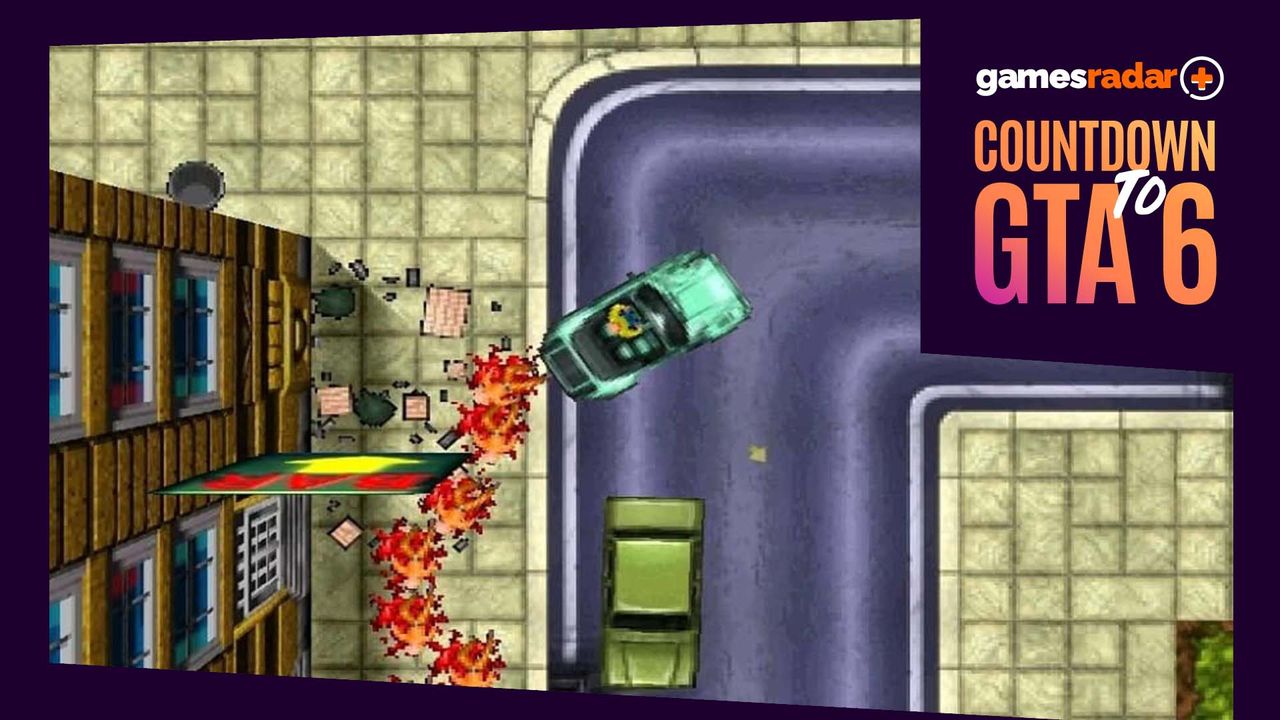
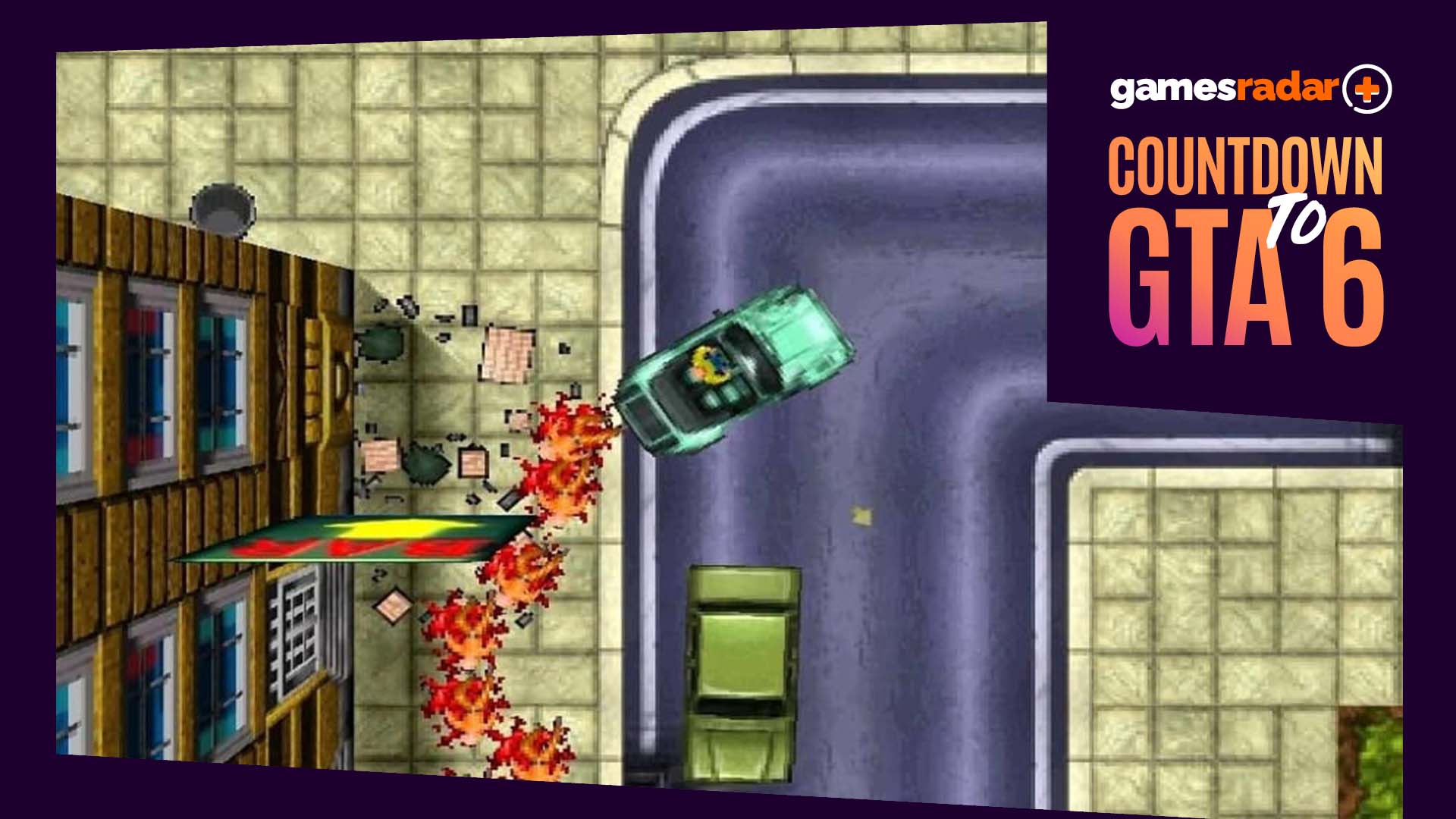
It was 1997. The UK was on a high. The general election that year had brought about the end of a Conservative government and the beginning of what was said to be a new era. British music was thriving to the point that a fresh movement – Britpop – had been created, with the UK even winning the Eurovision Song Contest. JK Rowling released the first of her Harry Potter novels, The Philosopher's Stone. The phrase 'Cool Britannia' may have become rather tiresome, with The Economist saying the following year that the public had grown sick of it, but it sure encapsulated the mood of the time.
Gaming formed part of this British creative wave. WipEout was enthralling clubgoers, boys were lusting after Lara and, fresh from releasing the classic Lemmings, DMA Design was sensing a change in the way games were being perceived. Dave Jones, DMA's co-founder, felt gaming should tap into the wider world of entertainment. He wanted people with an interest in film, music, books and a broader sense of popular culture to play. More than that, DMA wanted people to forget that they were playing a game and immerse themselves into an environment instead.
The DMA team cracked on with a city simulator. Programmer Mike Dailly produced a prototype on his 486 PC, working with an isometric viewpoint and all of the action on foot due to issues getting vehicles around the city. But when it came to actually playing this early prototype, it was deemed too slow. It didn't help that Syndicate Wars looked similar, so Dailly went back to the drawing board and created a second prototype, this time from a side-on perspective.
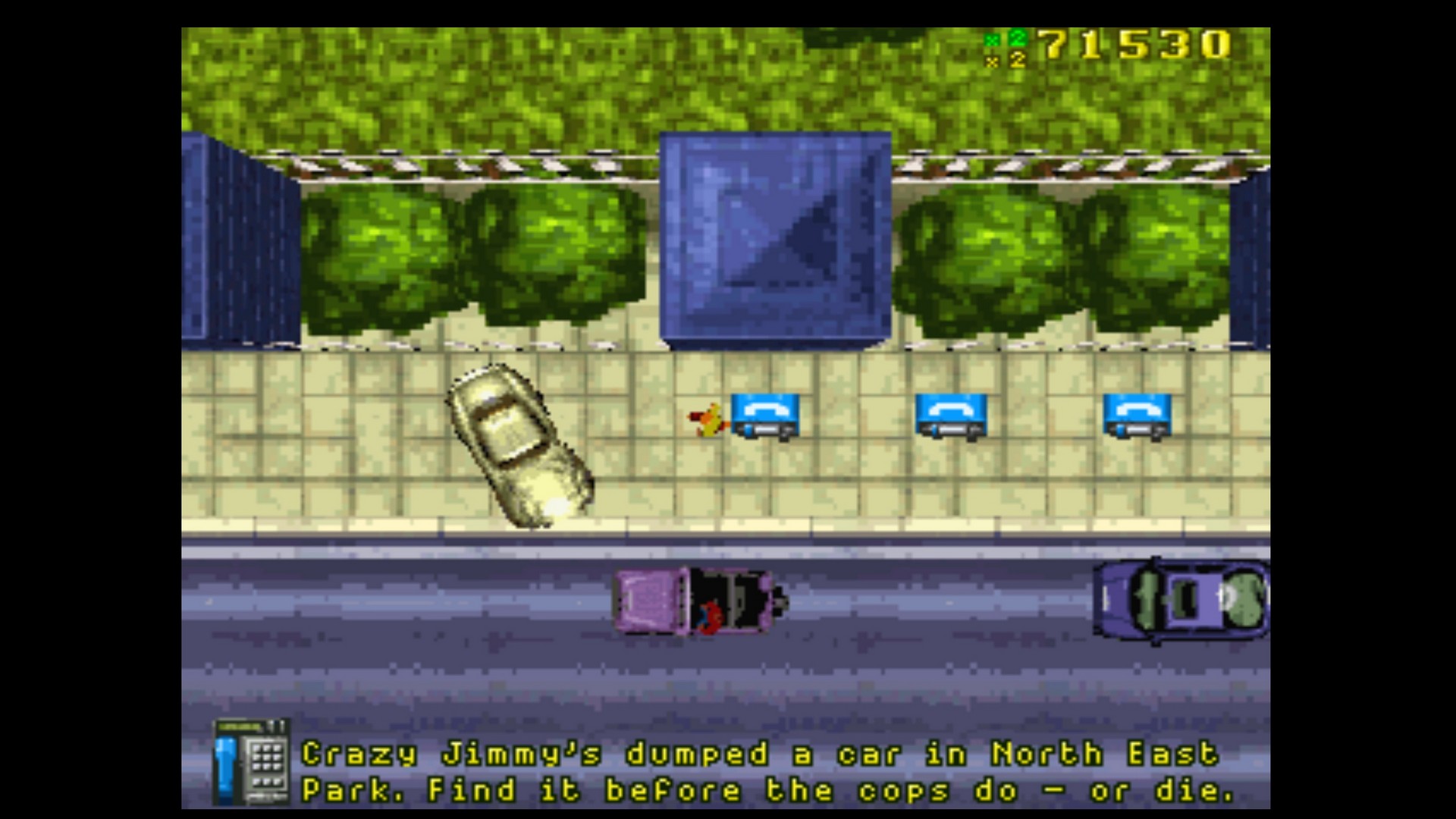
A short while later, Dailly spoke to John Whyte, the lead programmer of Body Harvest for the N64. Whyte had wanted to create a top-down racer but Jones wasn't interested, yet it got Dailly thinking. Adding a floor to his side-on demo, he turned his second prototype from a side-on view to a top-down perspective. Then, using the first prototype as a base, he built perspective points using cubes to produce a pseudo-3D effect. DMA's management team loved it, and the new game, entitled Race'N'Chase, was given the go-ahead.
In 1995, DMA drew up design documents for the title. Aiming "to produce a fun, addictive and fast multiplayer car racing and crashing game which uses a novel graphics method" and set in the present day, the developers had an idea for three cities, each with their own graphical style. The game was to be packed with missions. There were, the document detailed, to be pedestrians. Such bystanders could be run over by cars. Players could also get out of cars and steal others. And this would attract the attention of the police.
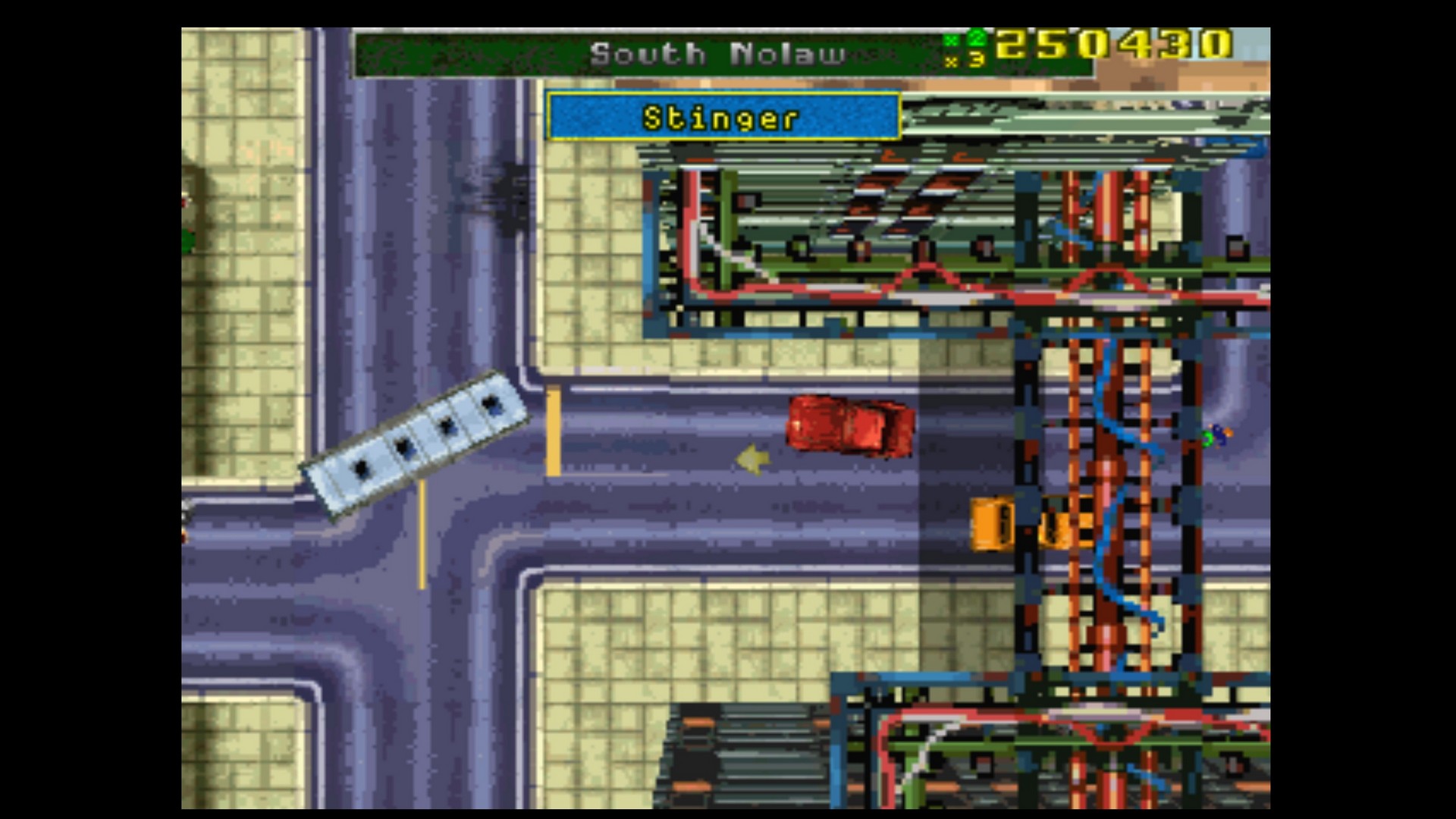
The initial meetings about the direction of the game were somewhat chaotic. "The only agreed direction was that we were basically writing a game that we would want to play ourselves," says lead programmer Keith Hamilton. "Everything had to be interactive. The player had to be able to drive any vehicle he could find. Nothing was to be off-limits. We wanted fun situations to present themselves just by all the elements coming together, not necessarily in ways that were specially designed."
About the only thing they could decide upon at this stage was that the top-down view was the best way forward, nixing suggestions of using full 3D from a very early stage. DMA wanted whatever game was made to be delivered over multiple platforms – the PlayStation, PC and, originally, the Saturn – and while it was theoretically possible to do 3D on the PC, the console versions simply wouldn't support it. "The choices were to more or less develop two different game engines, or focus on making the game as rich and deep and fun as we could on an engine that would run across all of the platforms," recalls writer Brian Baglow. "So we did that. I think it was the right decision."
هەفتانە هەرسکردنەکان، چیرۆکەکانی ئەو کۆمەڵگایانەی کە خۆشت دەوێن و زۆر شتی تر
سەرچاوەی فەرمی بە زمانی ئینگلیزی: https://www.gamesradar.com/games/grand-theft-auto/i-think-some-of-the-team-were-a-little-shocked-by-the-tabloid-response-says-original-gta-dev-wed-made-a-game-that-gamers-critics-and-the-people-actually-playing-all-thought-was-pretty-bloody-good