
The first time I encountered a troll in Valheim, I let out a noise usually reserved for discovering a rat under the kitchen sink. My squad and I had spent the past few hours merrily galavanting, doing the typical survival-crafting loop: chopping wood, bashing rocks, getting distracted by shiny things, and generally operating with the false confidence of people who thought they had a plan. Then a blue troll crested the hill. It was enormous, absurdly so, and it was coming directly toward us. I remember the panic and the realization that our itty bitty Viking bodies were definitely not equipped for whatever nonsense this was. More than 300 hours later, I still remember that troll.

That is the magic of Valheim. It is a survival game, but it’s also about accumulating memories. It gives you a world to inhabit rather than just a checklist of things to complete, and the simplest moments, like watching the sun go down behind a forest, sailing into unfamiliar waters, building a fireplace in a house that absolutely did not need another fireplace, are what end up sticking. Now, with version 1.0 finally here, Valheim feels like a game that triumphantly arrived at its destination.
At its core, Valheim is remarkably simple. You gather resources, build, eat, explore, and fight - then repeat. The simplicity is exactly what makes it so easy to sink into. There is always another material to find, another piece of equipment to improve, another biome somewhere beyond the horizon that looks just dangerous enough to make you wonder what is waiting there.
The survival mechanics are similarly restrained. Food matters, but it never feels like the game is demanding that I spend my entire evening babysitting a hunger meter. Eating better food gives me more stamina and health, which makes preparation meaningful. I am encouraged to care about what I eat because it makes me a better Viking, not because my character will keel over if I forget lunch.
The building system is another reason I keep coming back. I have spent a truly ridiculous amount of time constructing houses in Valheim, and I am not particularly good at constructing houses in Valheim. Somehow, the tools are forgiving enough that even my architectural decisions somehow become something I am proud of. Building rarely ever feels like wrestling with the interface. Instead, it is another form of exploration: finding a beautiful spot, imagining what could go there, and then spending far, far too long making it happen.
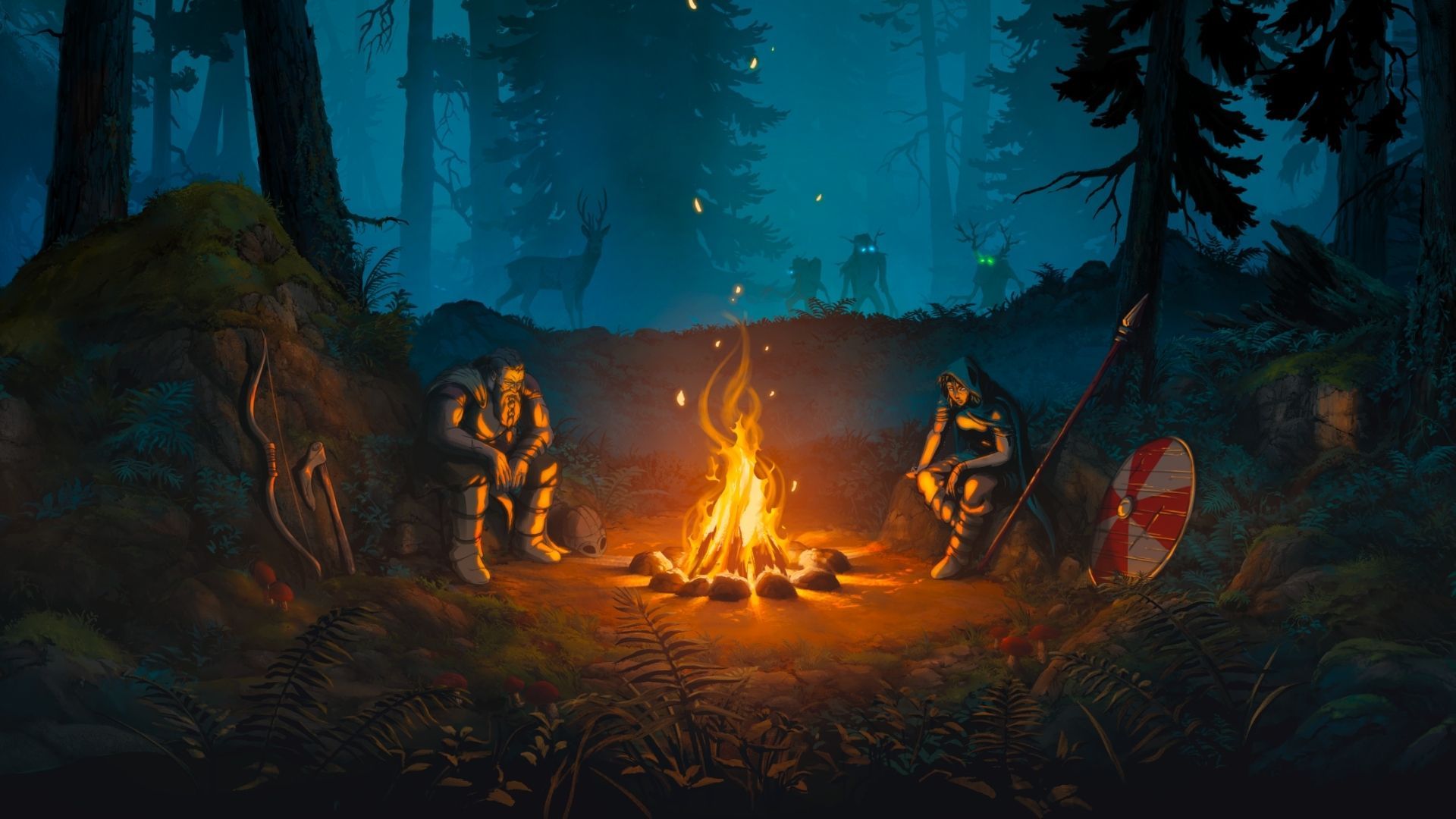
Visually, Valheim is gorgeous. Its deliberately pixelated aesthetic could have made the world feel crude, but instead it gives everything a painterly quality. Forests, mountains, oceans, and sunsets have an almost dreamlike beauty. Even when the geometry is simple, the atmosphere isn’t. I have stopped more times than I can count just to look at the sky.

It’s impossible to talk about Valheim without addressing the grind, which ramps up significantly in the mid-to-late game. Advancing means gathering increasingly specific resources and upgrading weapons, armor, tools, food, and infrastructure. Need a new piece of armor? Better find hundreds of a material that only exists in the biome where everything wants you dead.
But that grind has an important purpose. Progression gives the game a reason to keep existing. When I return to an old area with better equipment, I can feel the difference. A place that once terrified me is manageable, and a previously impossible journey is suddenly routine. The game changes because I have changed. That relationship between progression and exploration is one of the things I love most about the game.


سەرچاوەی فەرمی بە زمانی ئینگلیزی: https://www.thegamer.com/valheim-1-0-review-deep-north/