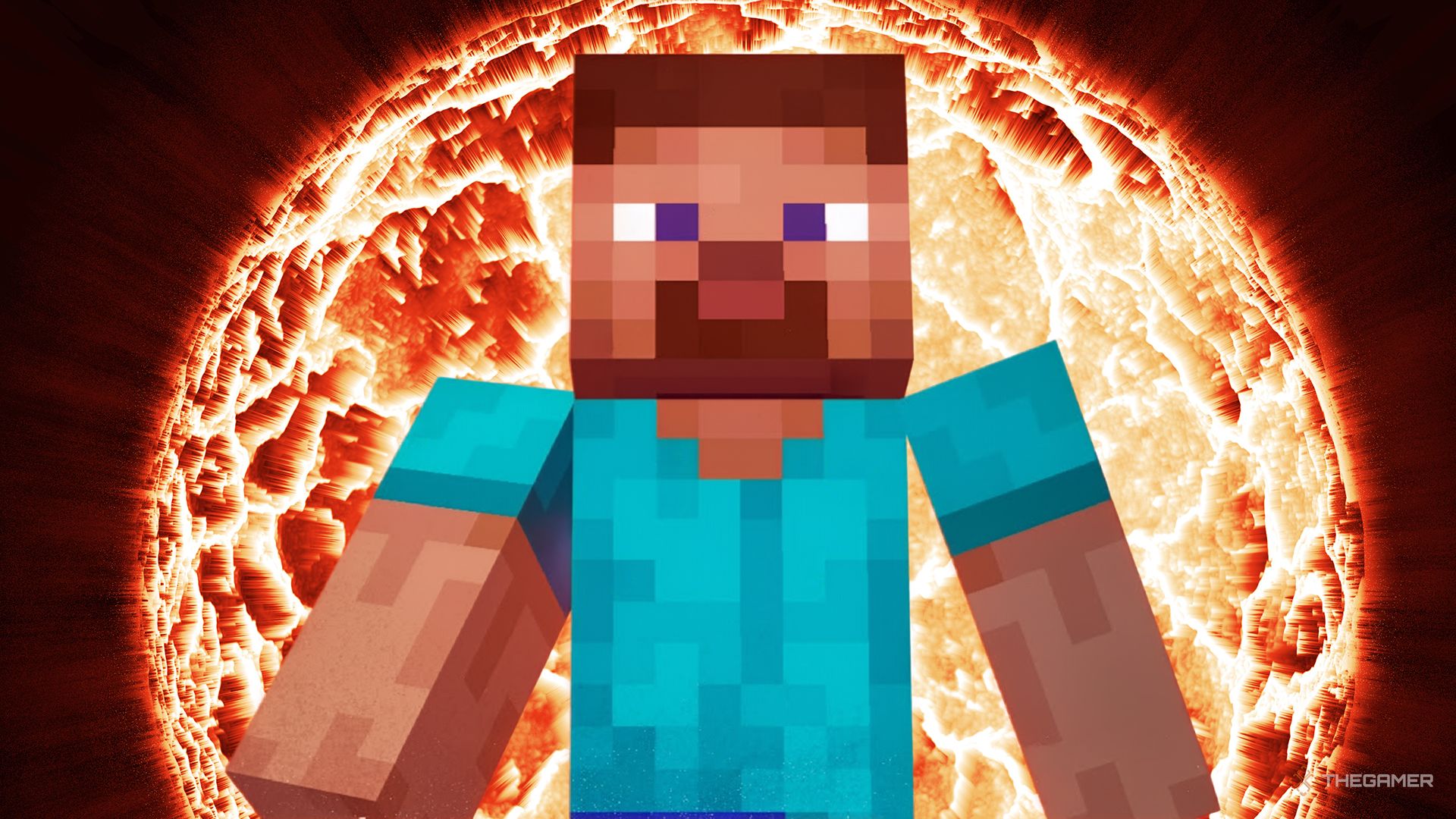
If you left Minecraft running until the game somehow beats itself, the oceans would evaporate under the scorching heat of a brighter Sun, leaving barren continents devoid of life, suffocated by an increasingly toxic atmosphere, while the Moon drifts tens of thousands of kilometers away.
Thank God your computer is solar-powered.
I'm being melodramatic (or not, we might ruin the Earth long before then), but that's roughly how long it would take. YouTuber RedLogic ran a simulation to test whether Minecraft could feasibly beat itself, i.e. kill the Ender Dragon, without a player ever setting foot in the world. Surprisingly, it can, it would just take two billion years.
As reported by IGN, this is basically the infinite monkeys on a typewriter situation, but with mobs and cubes. 35,510 years into the simulation, an Enderman finally found the portal. It then took millions of years for a Snow Golem to enter and destroy a single crystal. Once all of them had been taken care of, Creepers had to miraculously blow the dragon up, which took 1.97 billion years altogether.
The simulation was done by compressing "billions of ticks into explicitly sampled waiting times, while explicitly tracking rare events and the physical resources that can advance or destroy the chain," using a Minecraft seed that had just the right amount of resources and a naturally occurring End Portal.
So, Minecraft can beat itself, but the Sun will make Earth uninhabitable before it ever has the chance. Or, y'know, nuclear war, climate change, AI uprisings... Maybe I should dial back the nihilism on a Friday morning.
If I had to wheedle out a point from the article to pull back from the image of the Earth being fried and reducing our history to dust (which Randy Pitchford told TheGamer is why he isn't fussed about game preservation, funnily), don't worry if you still haven't beaten the Ender Dragon. It would take the game so long that life would cease to exist. You have plenty of time.



سەرچاوەی فەرمی بە زمانی ئینگلیزی: https://www.thegamer.com/minecraft-beat-itself-2-billion-years/