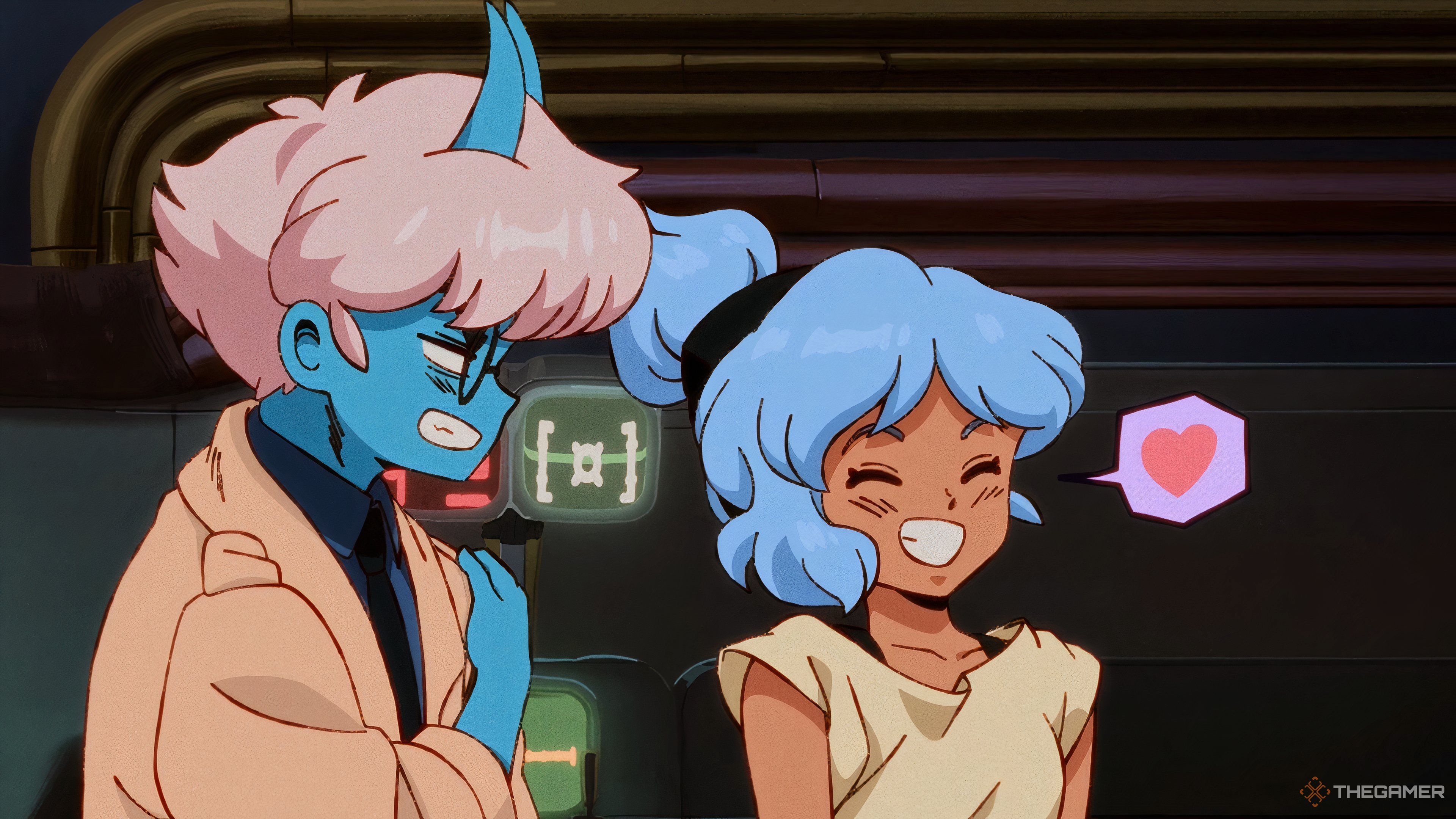
Nostalgia is a powerful tool, but it’s also one of the easiest things to misuse. From the moment I laid eyes on Orbitals’ retro anime aesthetic, I, like most of you, was hooked. That said, it’s not enough to throw out a couple of clever references and capture a beloved art style. There also needs to be a deeper understanding of why these resonate in the first place.
For that reason, I initially remained cautious that Orbitals might rely too heavily on nostalgia without fully delivering an experience comparable to the classics it was pulling from. Now, I’m pleased to say my worries were for nothing.
From the moment you boot up the game, it’s abundantly clear that there's passion and intention in every aspect of Orbitals' design. There are clear references, yes, but the feel of comfortable familiarity in the world-building and character design is something you can’t fake. Shapefarm has managed to find a balance between tugging at the heartstrings of the past and creating something with its own identity.

Being sold on the visuals before I even picked up the game, the main thing I was seeking from the gameplay was a good use of teamwork mechanics that made Orbitals feel like more than two players having individual experiences in the same game. For a game centered around a feature like this, the co-op gameplay needs to feel less like a feature and more like a mandatory requirement for cooperative problem-solving and story development.
Thankfully, Orbitals delivered on this even beyond my initial expectations. Maki and Omura each have their own roles for the mission, but nearly every aspect of the game, from exploring the world to defeating bosses, requires both players to work together, as they should. Nobody is ever just sitting on the sidelines.

Orbitals even gives you the freedom to figure out the team dynamics yourself, so the choice you make at the start of the game doesn’t end up defining your entire experience. In games like It Takes Two or Split Fiction, the character you select at the beginning unknowingly locks in the abilities you’ll have access to for the rest of the game, and that is not the case with Orbitals.
While you do choose who will play as Maki and Omura at the start of the game, and any time you pick it back up, these choices have no impact on your gameplay beyond just assigning the character model that will represent you. Rather than tying abilities to the characters, Orbitals puts focus on the tools instead.
On your ship, you’ll have a small space where you can find all the tools you’ll use throughout the game, such as grappling hooks or laser guns. At the start of each mission, the required tools will be highlighted, and Maki and Omura are free to grab the one they’d like to use. This lets both players discuss which tool to take while also giving them the freedom to choose a different one on a later mission.


سەرچاوەی فەرمی بە زمانی ئینگلیزی: https://www.thegamer.com/orbitals-review-a-nostalgia-fueled-adventure-with-a-heart-of-its-own/