Nowadays, first-person shooters have been fine-tuned and optimized to near-perfection, and each year produces a couple of titles that can stand alongside the greats. However, the history of FPS games goes beyond graphical and mechanical upgrades, and the timeline is punctuated by seismic releases that reshape the industry's foundation. These games' impact sent ripples that can still be felt today and will likely continue to be felt for all time.
I'm not talking just about titles that were commercial juggernauts or critical darlings; no, these shooters caused paradigm shifts that created before-and-after moments in the FPS genre. They wrote the blueprint that would become universal plumbing for every FPS game, and we will likely never see a full-scale remodeling ever again.


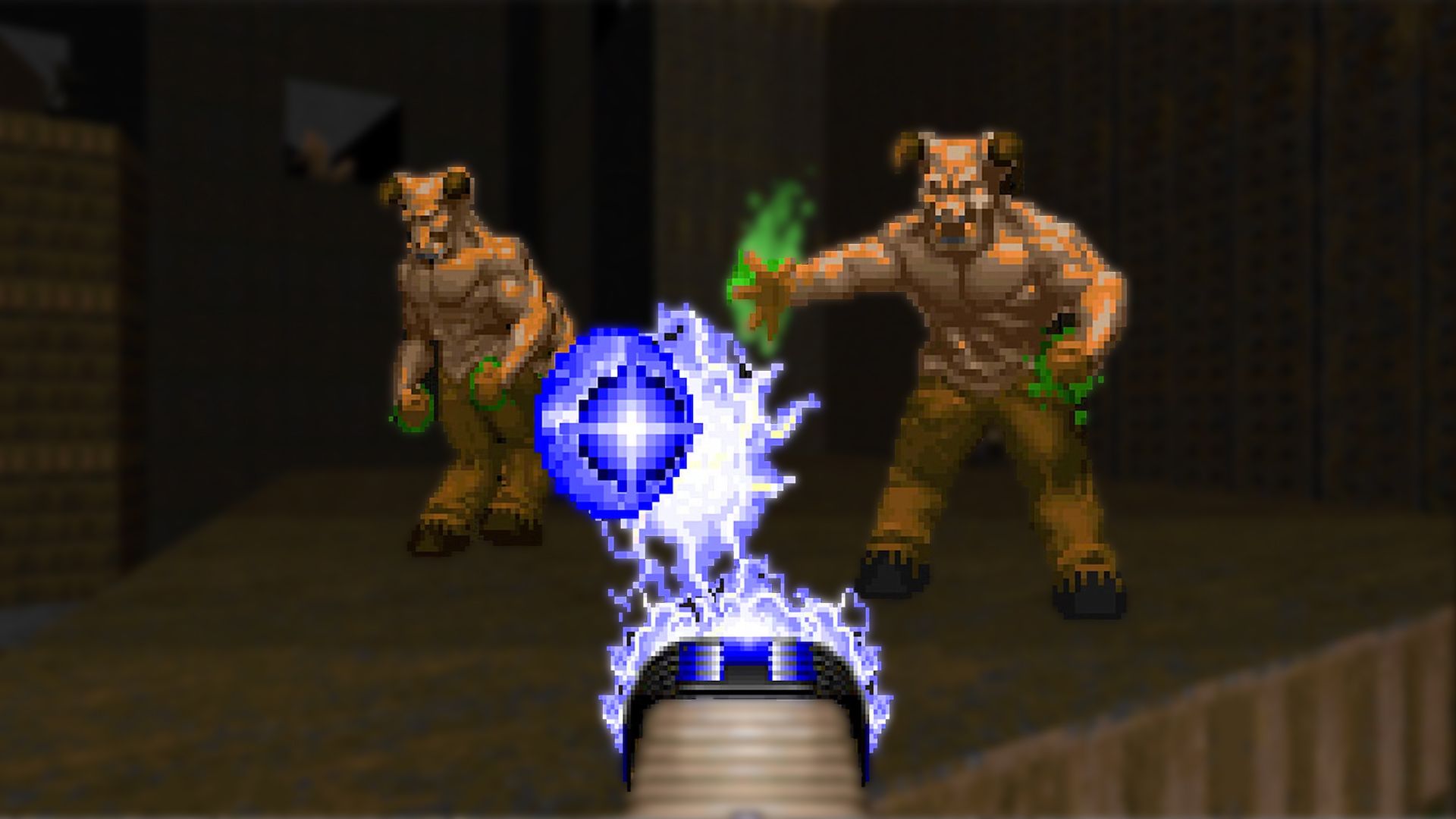
Although not technically the original first-person shooter, Wolfenstein 3D propelled the concept into the cultural zeitgeist, setting the stage for DOOM to unleash an explosion that would redirect the gaming industry's future. To really understand its impact, you have to teleport yourself back to December 1993, when id Software released DOOM's first episode, "Knee-Deep in the Dead," as shareware, causing it to spread like wildfire across bulletin boards, office networks, and floppy disks.
By 1995, more office PCs had DOOM than Windows 95, prompting Bill Gates to release an infamous promotional video to let everybody know that Microsoft's platform runs games, too. New IT policies were needed to prevent DOOM from running during the day, as people were running multiplayer sessions that clogged the LAN infrastructure. Also, Id Software coined the term "Deathmatch," a mode that has become a cornerstone of the FPS genre that will never crumble.
Perhaps most importantly, John Carmack and John Romero released DOOM in a way that let players easily customize their games without touching the source code, essentially spearheading our modern interpretation of mods. Seriously, DOOM was such a lightning-in-a-bottle that its impact will never be replicated.
Let's jump forward to 1997, when FPS games were absolutely booming on PC. However, common wisdom dictated that you just cannot play shooters with a controller; ergo, console FPS games shouldn't be a thing. Now, DOOM and Wolfenstein 3D had made the jump to the Atari Jaguar, SNES, and PS1, but nobody pretended that these ports were remotely comparable in quality to the originals. The FPS genre is just not designed for consoles.
Then, Rare designed an FPS game for a console, specifically the Nintendo 64, and proved everyone wrong. Although it hasn't aged particularly well, GoldenEye 007 was EVERYTHING when it originally launched. Mechanically, Rare showed that these types of games could work with an analog stick, even if it would be a few more years before the control scheme would truly be perfected.
GoldenEye 007's multiplayer became a social phenomenon, turning millions of living rooms into PvP battlefields. Players taped cardboard to their televisions to avoid peeking at each other's game, and I'm personally bitter that I never got to experience this myself. Adults and kids memorized spawn points, used proximity mines as traps, and set house rules like "don't use Oddjob, you coward."
سەرچاوەی فەرمی بە زمانی ئینگلیزی: https://gamerant.com/classic-fps-games-modern-shooters-cant-match/