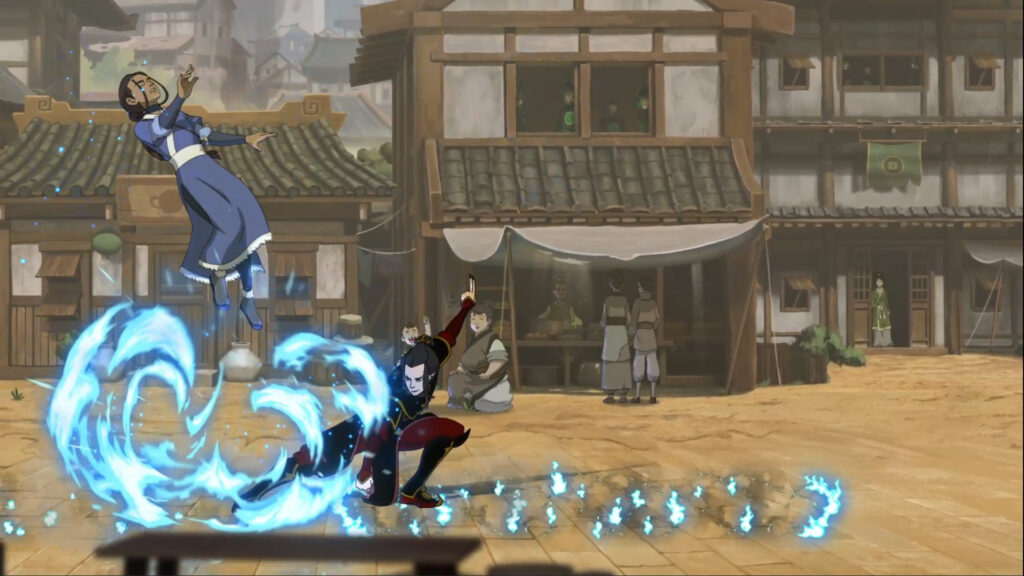
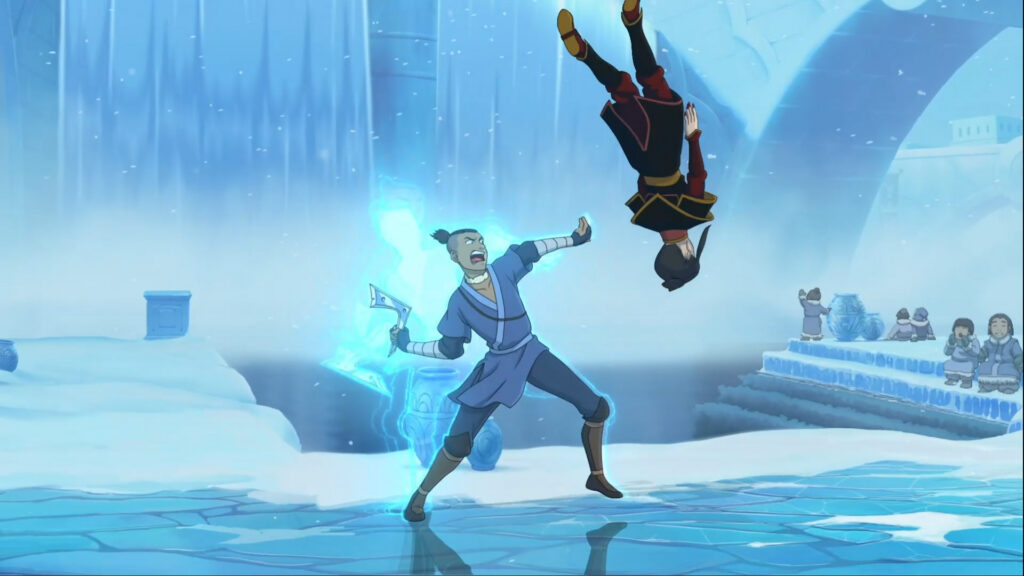
The Avatar State Patch is available today for Avatar Legends: The Fighting Game on XBOX Series X|S, and it’s the biggest update the game has seen. It brings a fresh new look for the game’s menus and in-match displays, two totally reimagined fighters, Ranked Mode 2.0, quality-of-life upgrades for story, versus, and online play, plus balance changes for every character on the roster.
Since the game launched earlier this year with 12 characters from “Avatar: The Last Airbender” and “The Legend of Korra,” fighters have been putting their bending (or boomerangs) to the test, and our team has been watching closely. This patch is the result. It’s the game we envisioned from the beginning, and now it’s ready for you to play.
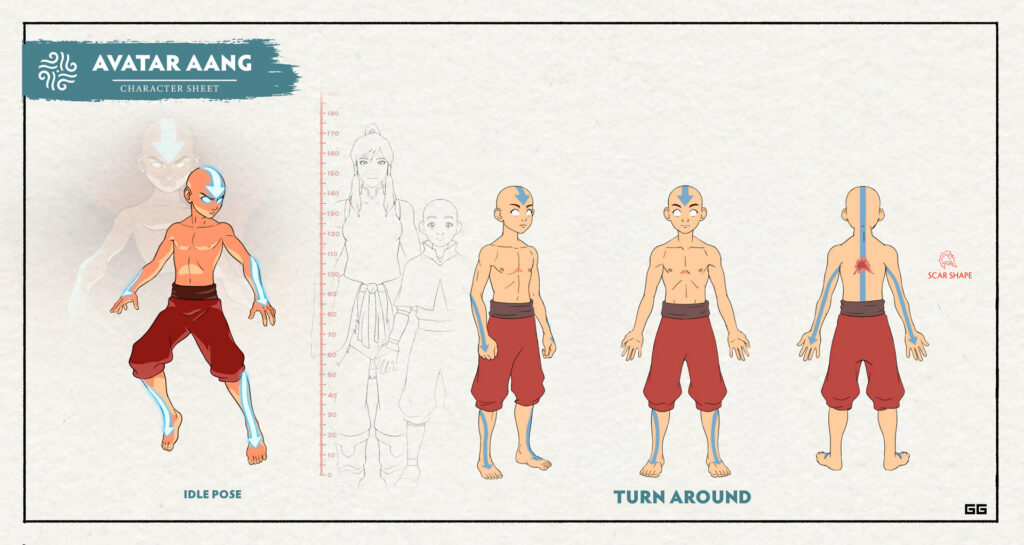
The two fighters at the heart of this patch are among the most powerful forms in the Avatar universe. Studio Art Director Giancarlo Montalbano, Art Director Santiago R. Villa, and Combat Director Young share how they brought them to life, and why they took the pair in opposite directions. “For Aang, his Avatar pose looks to elevate his presence in all ways, while for Korra it looks to diminish it. One is solemn and imposing while the other is languid and elusive.” Villa explains.
In the Avatar State, Aang taps into the power of every Avatar who came before him. Young points to his final showdown with Fire Lord Ozai as the biggest touchstone, along with Avatar State moments across the series, from channeling Kyoshi on Avatar Day to facing the Sandbenders. While regular Aang is playful, Young describes this version as pure, overwhelming power, landing precise elemental attacks with the smallest movements. Villa adds that he’s the only fighter in the game lit from below, a deliberate choice to make him look mysterious and boss-like. Young’s favorite move is his signature special, Avatar’s Ascension, which lifts him into an air sphere packed with callbacks to the Ozai fight.
His new Level 4 super, his most powerful attack, brings in a special guest: Avatar Roku, straight out of the Winter Solstice two-parter. “Aang’s direct manifestations of prior Avatars ended up being something very unique to him,” says Young, “so we felt like we had to include it!”
Montalbano admits Avatar Aang was the trickier of the two, since his arm tattoos had to read correctly from every angle. Villa shares another hard call: Aang’s foot scar is missing, because with fighters switching sides, it would have been on the wrong foot half the time.
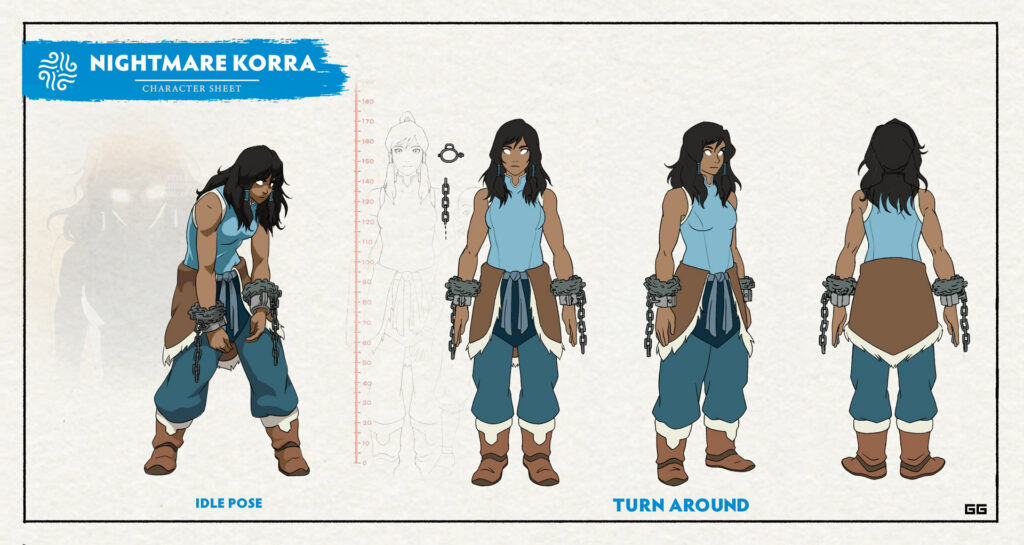
Young explains that Nightmare Korra is the dark reflection that haunted Korra in “The Legend of Korra” episode Korra Alone, with her final fight against Zaheer at the end of Book 3 as another influence. “She’s a manifestation of that berserk state…alongside being a kind of spooky, ghost-like entity so we wanted to try and hit both of those angles pretty sharply. So you’ll see big contrasts between her slowly dragging her feet, then suddenly exploding into big chain swings or teleports.” Villa notes that she now wears chains on both wrists instead of one, a nod to how much weight they carry in her story.
Her visual effects are some of the wildest in the game. Montalbano highlights the mercury in her super moves and a victory pose that zooms through a fish-eye lens into her transformation into Vaatu, which he calls “very unique compared to a lot of other stuff in the game.” For Young, the standout is her Final Technique, Eternal Nightmare, a big team effort that looks just as striking when it misses as when it lands.

سەرچاوەی فەرمی بە زمانی ئینگلیزی: https://news.xbox.com/en-us/2026/10/30/avatar-legends-the-fighting-game-enters-the-avatar-state/