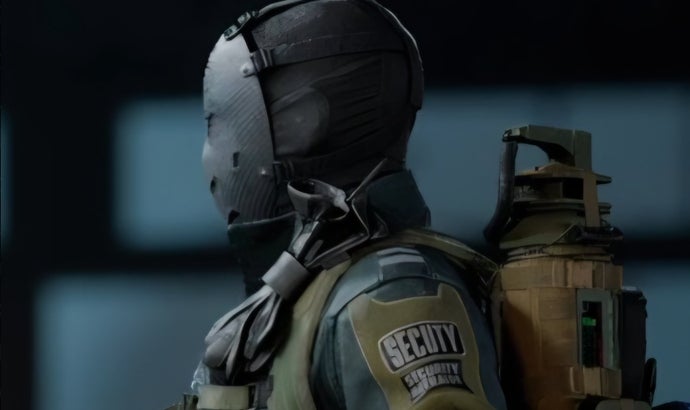


Cleverly, Invisible Inc is a balance of contrasts, a yin-yang structure of opposing forces that combine in harmony. As a turn-based strategy game, it wants you to take as long as you need to make your decisions, yet also demands precision timing. It wants to retain an element of risk in every act, but removes the genre's characteristic percentages and dice rolls. It wants you to have all the info you need to make your next move, while ensuring every mission is an unknowable challenge. It wants Roguelike replayability, without the brevity or abruptness of most Roguelike campaigns.
The foundation for all this is a focus on stealth. Invisible, a hi-tech private espionage outfit in the late 21st century, finds itself hunted by a group of powerful companies. You control its remaining agents as they infiltrate a series of corporate facilities to acquire info, money, and equipment. Keep surviving and gathering resources long enough, and you get a chance to enter the enemy's HQ and take their systems offline. Until then, you spend your time sneaking around offices, labs, and bank vaults, avoiding guard patrols and hacking security systems to meet various objectives.
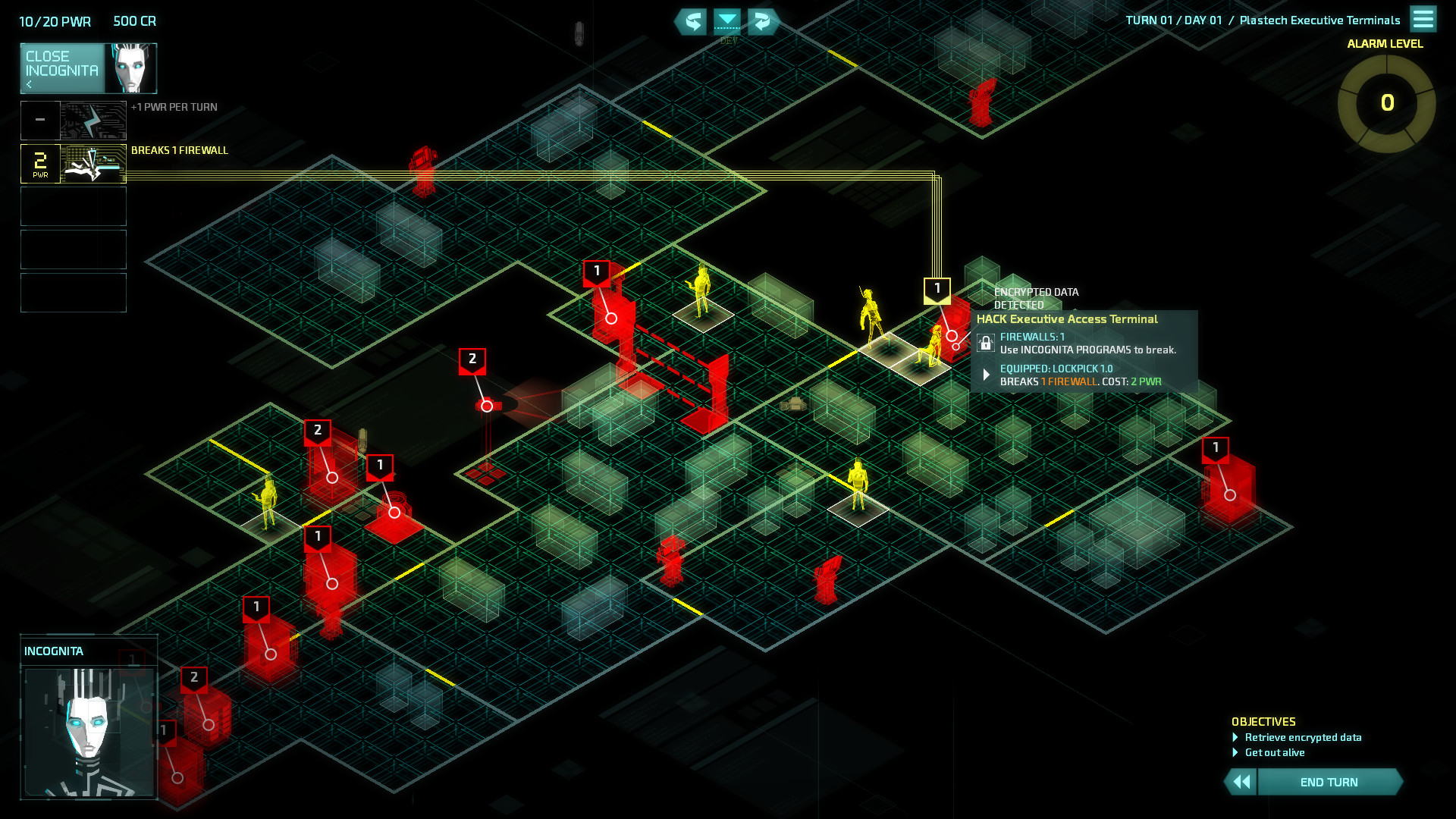
The first contrast is between the familiar and the new. You start with two characters (you can rescue further operatives along the way) whose movements around grid-based locations are governed by AP, or action points. Following basic stealth protocols, you stay in cover, look ahead before you advance, and only engage guards as a last resort. But there's already another crucial resource to consider: power. You won't get far unless you remotely disable security cameras, drones, and laser grids, or access locked workstations and safes. And you can't do that if you don't maintain your power supply by activating replenishment programs or leeching from on-site terminals.
When it comes to the rules and flow of play, Invisible Inc revolves around simultaneous extremes of transparency and opacity, or information that is either remarkably abundant or completely absent. First there's what you don't know. When you start one of the procedurally generated missions, the facility's layout is a mystery. You teleport into an empty square room with one or more doors; beyond that, somewhere there's your main objective, and somewhere there's the exit. Guards could be anywhere, either about to walk in on you or patrolling deeper into the complex. You'll have to figure it all out as you move.
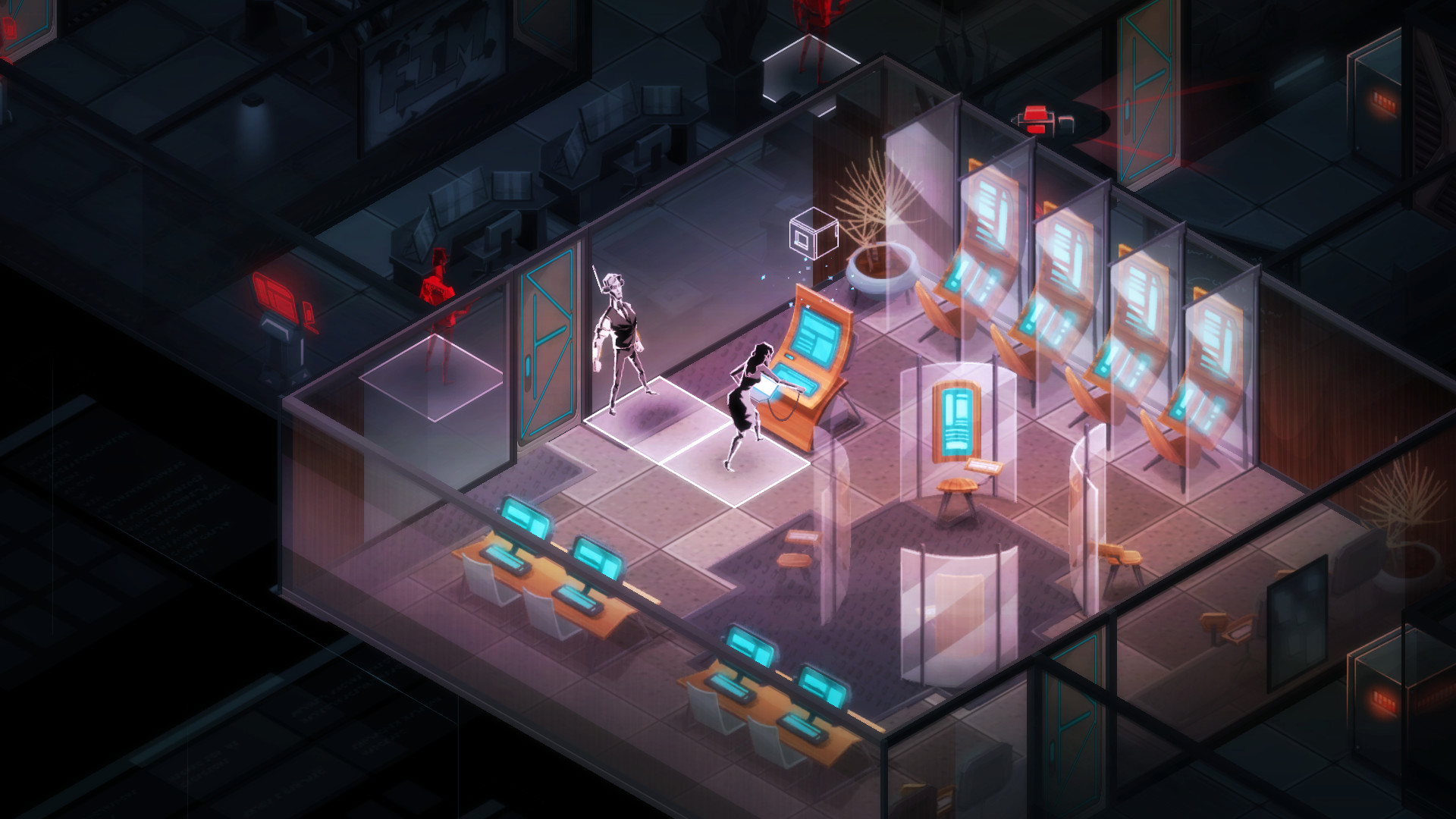
As for what you do know, the rule is that once you can see something, intel on it is instant and comprehensive. This is a carryover from Klei Entertainment's previous game, Mark of the Ninja, where line of sight immediately clarifies the status of objects and enemies. Here, in a turn-based world, the concept goes a step further. If a guard is visible, you can read about any armor or special abilities he has, and perceive his exact cone of vision. Use an action point, and you can even check the path of his next move. With this knowledge, your fragile but resourceful characters can assume control. Walk through a guard's peripheral vision on your way to cover, for example, and his attention will turn to that spot, giving you a window to sneak up and rifle through his pockets or escape unseen.
The simple and predictable nature of the AI is part of the game's drive to eliminate ambiguity. Even combat, when it does occur, is strictly binary. Either you have a weapon that can knock out or kill a particular guard, or you don't, and if you attack, the result is guaranteed. You never have to second-guess what the enemy will do and you never have to think about probabilities. You merely have to choose from the many possibilities laid out in front of you. Surprises only occur when you blunder forward blindly, or fail to consider what you've been told.
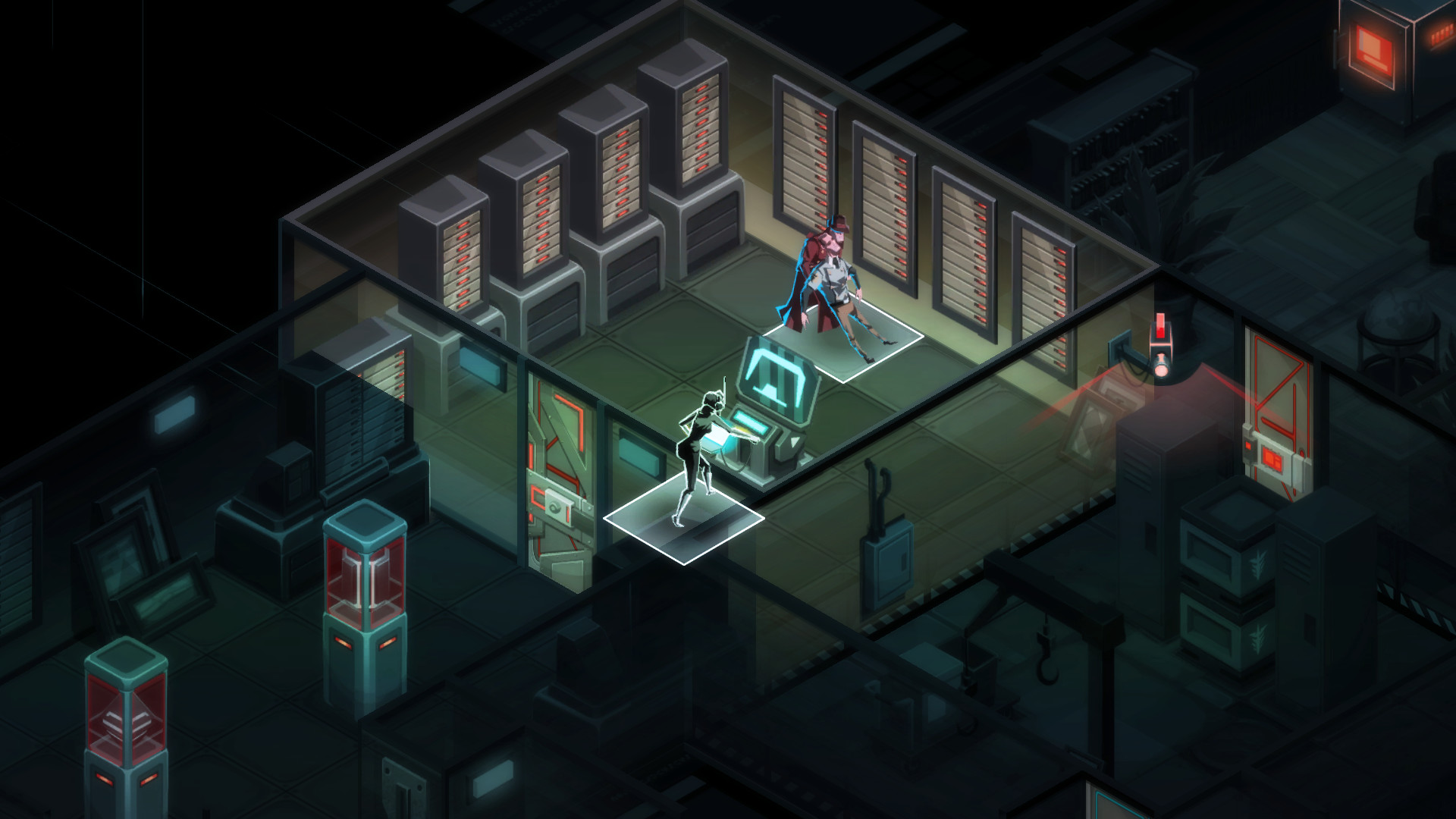
This absolute transparency, coupled with the contemplative nature of turn-based play, suggests cool, methodical advancement. But again that's only the half of it. The other half is urgency, pressure and panic, and it mostly comes from a single cause: the alarm level. The big twist in Invisible Inc is that while you arrive in each facility undetected, the enemy security network becomes more alert to your presence after every turn, and introduces new threats at certain thresholds – extra cameras, increased firewalls, more guards. Also, any time you get spotted, hack a booby-trapped system or use lethal force, the level jumps up even more. The longer you hang around and the more mistakes you make, the harder it is to get anything done.
هەفتانە هەرسکردنەکان، چیرۆکەکانی ئەو کۆمەڵگایانەی کە خۆشت دەوێن و زۆر شتی تر
سەرچاوەی فەرمی بە زمانی ئینگلیزی: https://www.gamesradar.com/games/stealth/how-an-indie-spy-game-made-turn-based-tactics-relentlessly-exciting