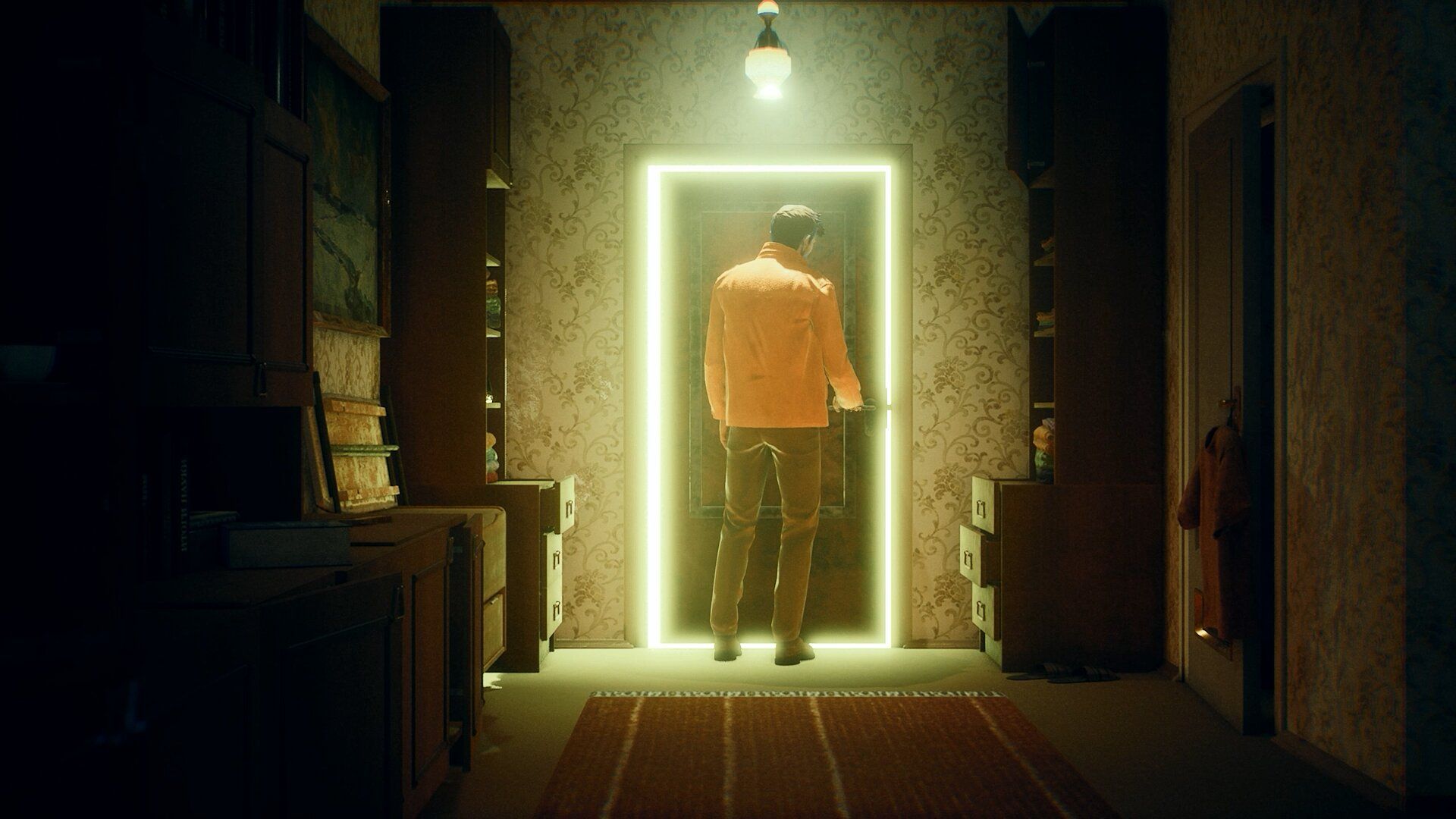

“A young man is swallowed by a whale while searching for his father’s remains deep in the ocean.”
That is the elevator pitch for Whalefall, starring Austin Abrams (Resident Evil) and co-written by Daniel Kraus and director Brian Duffield (No One Will Save You). Set for release on October 16, the film is based on Kraus’ 2023 novel, inspired by a viral video of kayakers seemingly being swallowed by a whale. Whalefall’s central conceit is one writers and directors are challenged by, and often dream of, because it raises the questions: Can I pull this off? And how can I make this work? In other words, the absolutely bonkers premise is fertile ground for real creative risk and opportunity.
Of course, Whalefall isn’t the first or only film to take a big leap. Throughout cinema history, bold filmmakers have swung for the fences and connected. Too many for just one list, in fact. Children of Men, Groundhog Day, Parasite, The Truman Show, Tie Me Up! Tie Me Down!, Spirited Away, The City of Lost Children, The Stepford Wives, Inside Out, Poor Things, Everything Everywhere All at Once, and many more could easily have made this list. The following is a small sample of films that successfully stepped out of standard storytelling boxes.
“Gentlemen, you can’t fight in here! This is the War Room!”
Positive that communists are poisoning the “precious bodily fluids” of the American populace, General Jack D. Ripper launches an unauthorized nuclear attack on the U.S.S.R., triggering an increasingly farcical crisis which culminates in a dunce's doomsday, an apocalypse driven by insane idiots and a Nazi.
One of cinema’s great political satires, Dr. Strangelove opened in 1964, about a year and a half after the Cuban Missile Crisis, when the world held its breath, wondering if we really were going to self-destruct. Stripping away the reasoned tones that politicians of the day used to discuss nightmare scenarios, Dr. Strangelove captures the powerless fear of a populace, and exposes geopolitics for what it so often is: utterly unhinged and stupid (possibly drunk), and treating mass casualty as if it is a child’s game to win or lose.
The film cost $1.8 million to make and earned more than $9 million at the domestic box office. Though it was shut out at the Academy Awards with four nominations and zero wins, it earned several nominations and four wins at the BAFTAs, including Best British Film and Best Film from Any Source. Upon release, reviewers were polarized: some found genius in the dark comedy, while others were disturbed by its treatment of the very real threat of nuclear war. Over time, it has become director Stanley Kubrick’s highest-rated film on Rotten Tomatoes, at 98%, and was deemed so influential that the National Film Registry selected it as one of its first 25 films in 1989. Director Michael Mann went so far as to say he wasn’t really interested in movies until he saw Dr. Strangelove. It remains a standard-bearer for satire. It captures essential truth, if not (necessarily) objective reality. As for reality, military officials criticized the film upon release, yet, coincidentally or not, made internal changes that mapped to the vulnerabilities Dr. Strangelove exposed.
In a world where sentient cartoons live alongside humans, Eddie Valiant – an alcoholic private detective with a vendetta against toons – is hired to investigate a sultry cartoon femme fatale, Jessica Rabbit, who may be cuckolding her stuttering rabbit husband, Roger. When her alleged lover is found dead, Valiant is forced to protect the unruly rabbit and drawn into a sinister toon conspiracy.
سەرچاوەی فەرمی بە زمانی ئینگلیزی: https://www.ign.com/articles/crazy-movie-premises-that-actually-worked