So many of the questions in a press briefing for the upcoming Dungeons & Dragons: World of Warcraft book revolved around whether the 52-year-old tabletop game would bend out of shape to work like a massively multiplayer online game. But while the D&D translation of WoW does include races and dungeons and characters from Blizzard's famous game, it doesn't fundamentally alter what it is.
The D&D: World of Warcraft book releases 17th November, and it's a 256-page publication stuffed with quite a lot of new art, and it brings 16 playable species (races) from WoW to D&D. Of those, Dwarf, Elf, Goblin, Human, and Orc were already in D&D, but Dracthyr, Draenei, Earthen, Forsaken, Haranir, Mechagnome, Pandaren, Tauren, Troll, Vulpera, and Worgen are being added.
Similarly, there are new playable subclasses in the shape of Oath of the Ebon Blade and Oath of the Holy Paladin subclasses (the former meant to be a Death Knight-like specialisation); the Demon Hunter Ranger, the Shadow Domain and Discipline Domain Cleric, and the Path of the Elements Barbarian. Other subclasses have been updated for the game: the Sashbuckler Rogue, the Path of the Spiritual Guardian, and the Warrior of Mystic Brews Monk.
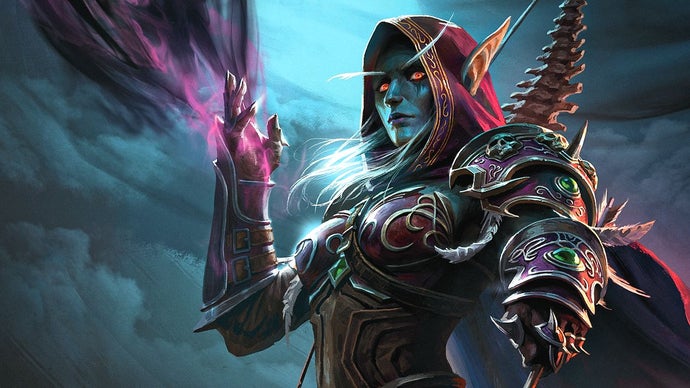
There are 60 new spells being added to conjure that WoW feeling, and crafting is being adjusted to introduce professions to D&D. But perhaps more importantly, the entire continent of Azeroth - expansions and all - is there for you to explore and do with as you wish, and there are some incredibly famous characters from the game to play around with. Burning Crusade boss Illidan is there, fallen paladin turned Lich King Arthas is there, Sylvanas is there. And there are all kinds of dungeons to explore, including Dire Maul, Scarlet Monastery, Ragefire Chasm, Shadowfang Keep and more. They've all been reinterpreted slightly to work well in a D&D environment.
For example, there are no raids in D&D: World of Warcraft; there are iconic raid-dungeons such as Onyxia's Lair, but they're encounters for small groups of friends - four or five - rather than 20 or 40. "The joke I always like to make is that most of us have enough trouble getting five people together around a table, let alone 40," principal designer James Wyatt told the assembled group of press, which I was a part of.
Similarly, you won't suddenly be grinding bosses for tiered loot or equipment, because that's not the point of D&D, where you don't wear piecemeal sets of armour and where combat takes much longer. It'd break immersion to fight the same resurrecting character over and over again. Plus, you won't die and resurrect at a Spirit Healer, because that's not how D&D works; even the quintessential WoW faction divide of Horde versus Alliance isn't as hard-written into the tabletop interpretation of the game as it is in computer-game WoW. It's up to the Dungeon Master how prevalent that conflict is.
James Wyatt said the best way to think of the new project as a "paraphrased" version of WoW, rather than a "translation" of it. "I've been trying to shift my thinking to talking about 'paraphrase', because we're not doing a word-for-word translation of any WoW game mechanics," he said. "The game you're sitting down at the table to play is still D&D in the setting of World of Warcraft, and with a lot of the trappings of World of Warcraft, and hopefully evoking the feel of World of Warcraft without making you do the kinds of math calculations that an MMO is doing on your computer chip all the time that you don't have to think about.
There's obviously a lot of inspiration in the book from WoW the video game - that's the whole point of it, and I'll come onto what is there in a moment - "but translating those two directly leads to a really unsatisfying experience", Wyatt said. "D&D players don't grind. They don't fight the same boss over and over again, because that suspends your disbelief and your immersion in the game," he explained.
سەرچاوەی فەرمی بە زمانی ئینگلیزی: https://www.eurogamer.net/dungeons-and-dragons-dnd-world-of-warcraft-wow-book