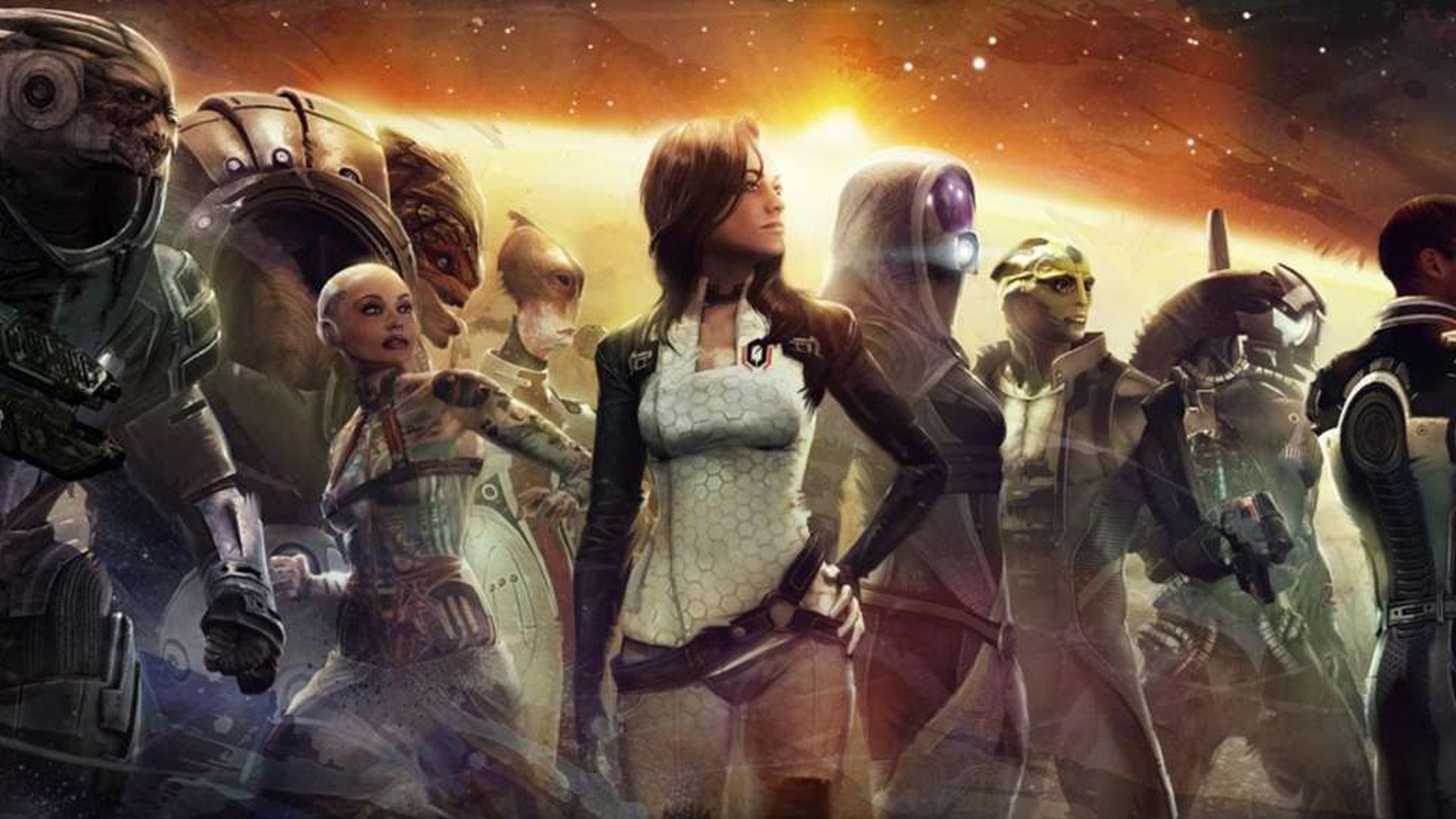

Vorp! With a simple sci-fi sound effect, BioWare tore apart the gleaming hull of the Normandy SR-1, scattered a great deal of what came before to the void, and split its burgeoning action-RPG series clean in two. Save files from 2007's Mass Effect might have brought with them an XP bonus or credit dump as well as the player's established continuity, but rarely before or since has the reset button been pressed so swiftly, or so heart-wrenchingly.
It was exactly what the series needed. One-time Xbox 360 exclusive Mass Effect had been a bright spot of promise for the console, buffed to a lens-flare-spilling sheen by being billed as a franchise that would move beyond binary morality and deliver a meaningful, ongoing space opera – one that wasn't Star Wars for a change. (Many studios now promise episodic gaming, but BioWare was crafting series-spanning narrative arcs long before that buzz-phrase was coined.) The opening part of the trilogy was certainly grandiose and epic in scope, yet somehow austere, a feeling compounded by a glut of anodyne shootouts and awkward driving filling the time away from its much-admired conversation wheel. It wasn't Star Wars, but nor had it found an identity among all its copious lore. As a concept piece, a pilot, it was tantalising enough, but more of the same would not do, especially when the world was then drowning in third-person cover shooters thanks to 2006's punchy, hyperviolent Gears of War.
And so millions watched the SR-1's malady in horror, took brief control of malleable returning protagonist Commander Shepard for a spot of eye-searingly beautiful Dead Space homage heroism, and then shaped a 4-billion-credit rebirth. This wasn't just a sequel, it was a reinvention, and BioWare made sure everyone knew it.
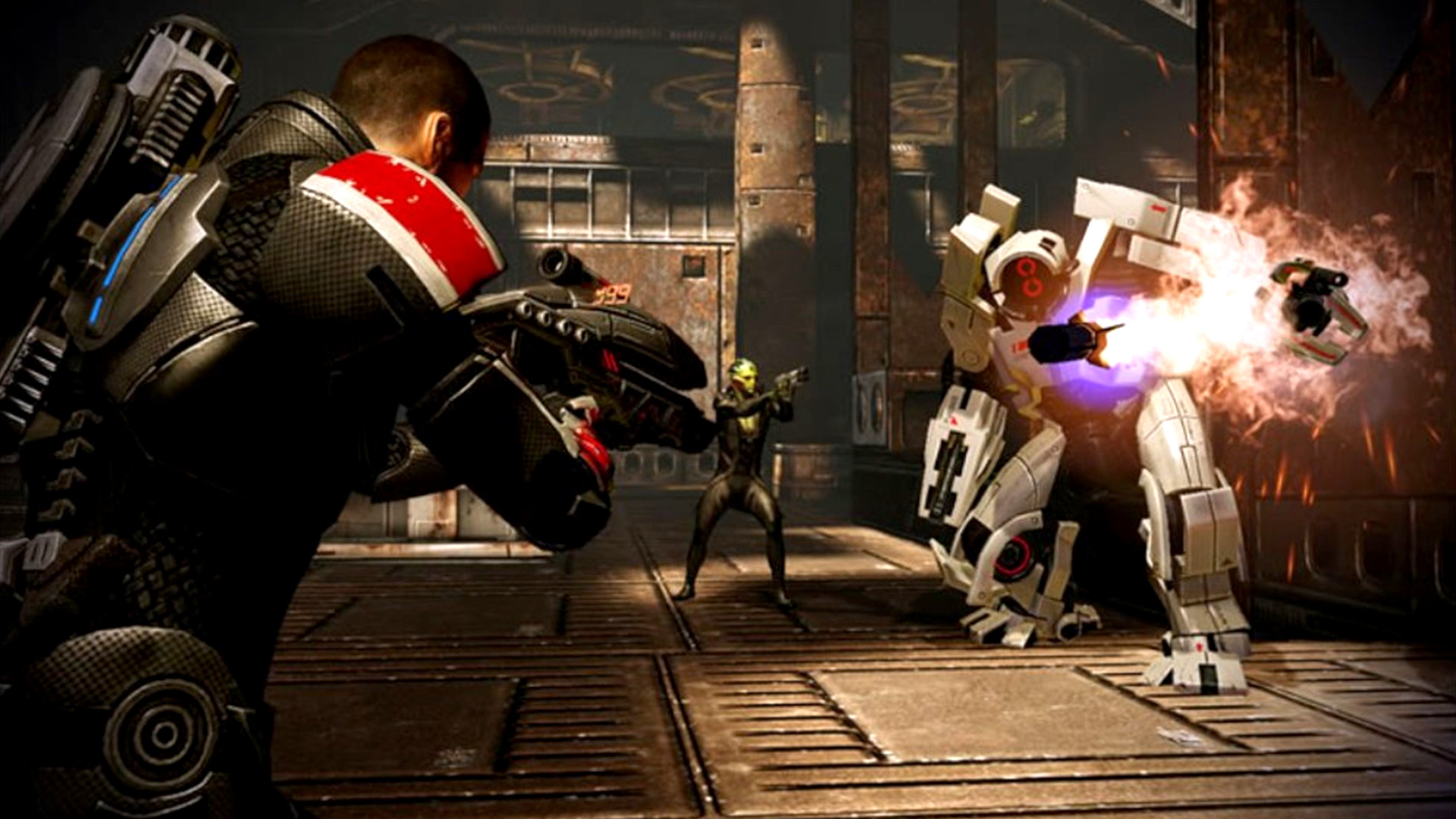
Even if the point hadn't been hammered home, returning players would have noticed from Shepard's first woozy steps across a Cerberus lab. The Commander, once stately and tank-like under the sticks, now moved with a fluidity uncommon in the recently deceased, sliding into cover across Teflon floors on Vaseline-smothered boots. Even your starting pistol could dominate early combat spaces with a snap, crackle, and mechhead pop that flash-vaporised expectations of another 20-plus hours of drab, feedbacklight gunplay.
But the real revelation would come when you fired up the power wheel for the first time and unleashed one of the new biotic or tech abilities. Mass Effect's array of buffs, debuffs, and crowd-control powers had hewed close to BioWare's RPG roots, though yoinking enemies out of cover and into the path of a sniper rifle was quite the trick in 2007. The sight of Shepard dashing across no man's land in a haze of roiling blue fire to explode into the enemy and shove a shotgun up their nostrils, however, promised a very different kind of combat interstitial between conversations. If Mass Effect games were Luc Besson movies, the original had been Lucy, all big ideas but little convincing peril, and 2 was The Fifth Element: an intergalactic excuse for daft, glorious carnage.

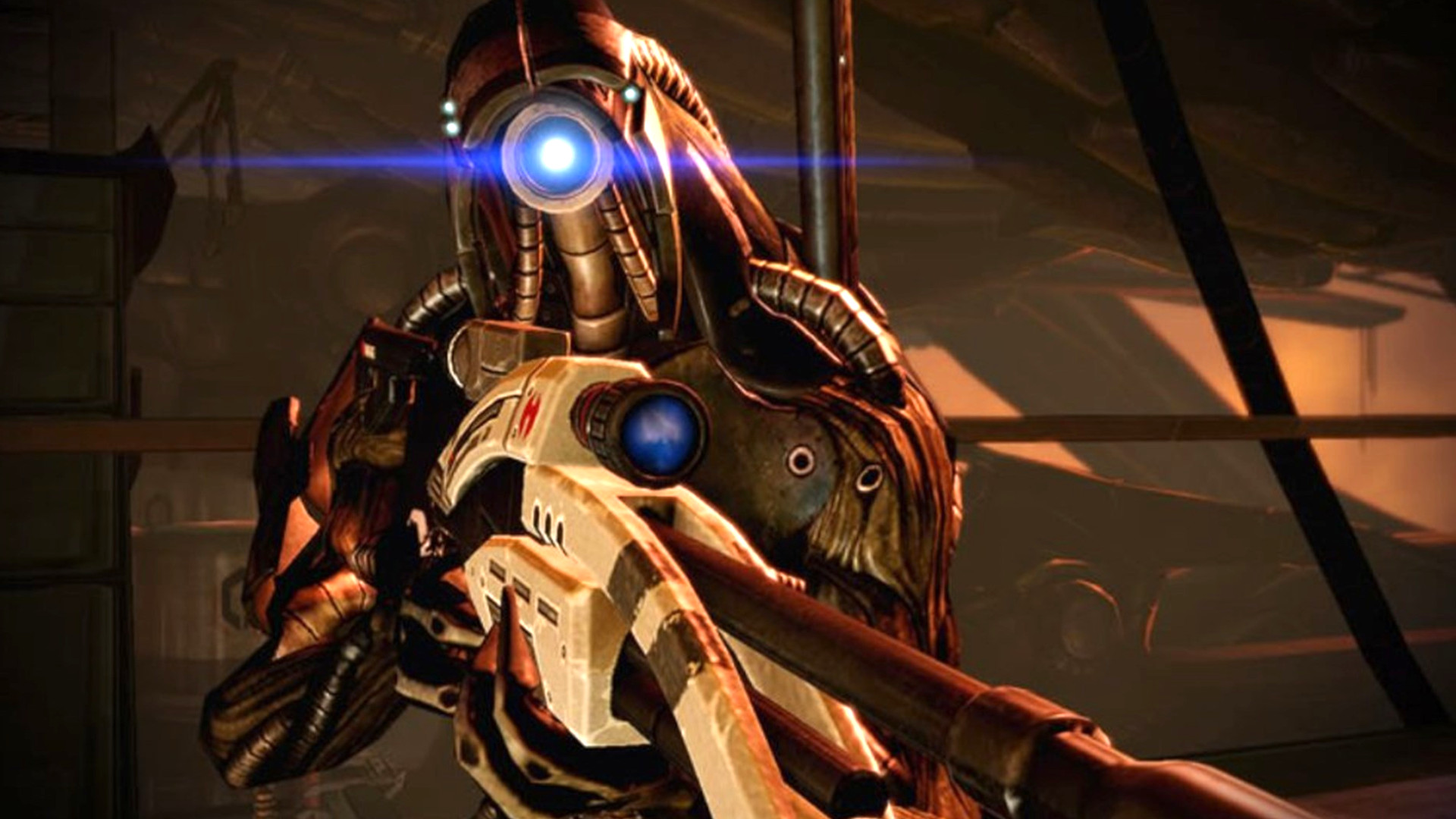
Daft, not stupid. Players didn't even have to wait for the introduction of creepy new Reaper lackeys, the Collectors, before they started having to manage enemy damage, with a separate bar each for tracking shields, barriers, armour and health. Of all the combat system's renovations, this was perhaps the most crucial, a gentle subversion of the RPG's long-in-the-tooth type-based attacks that meant the series could jettison the notion of a tough fight as one where health bars are hidden behind multiple blocks of blue shield and bullet-sponge powers. Mass Effect 2 wouldn't ask you to face ice monsters that were weak to fire, but shields did melt away under the sustained pressure of an SMG, while biotic power Reave stopped health regenerating so you could put down tough organics such as the Krogan or nightmare-imp newcomers, the Vorcha. And you'd have to control space as well as damage output, since enemies were as aggressive as you, flanking, setting up kill boxes, invading your personal space or flushing you out with flamethrowers.
BioWare could afford to bury the needle north of hectic, because any Shepard, regardless of gender or class, had a secret superpower: the ability to freeze time. While others have made entire games out of frozen moments, here they elegantly and invisibly support tactical play, as you let the stale air in your lungs seep from your lips, read the situation, and adapt. Yes, Shepard may have been able to make enemies hilariously pinwheel in slow motion through the air, then biotically dash them to oblivion – kudos to whoever worked out how to really get some use out of Unreal Engine 3's physics simulations – but on the higher difficulties, Mass Effect 2 became as much the thinking man's cover shooter as a heady power fantasy.
هەفتانە هەرسکردنەکان، چیرۆکەکانی ئەو کۆمەڵگایانەی کە خۆشت دەوێن و زۆر شتی تر
سەرچاوەی فەرمی بە زمانی ئینگلیزی: https://www.gamesradar.com/games/stealth/mass-effect-2-found-its-identity-in-the-intimate-and-personal