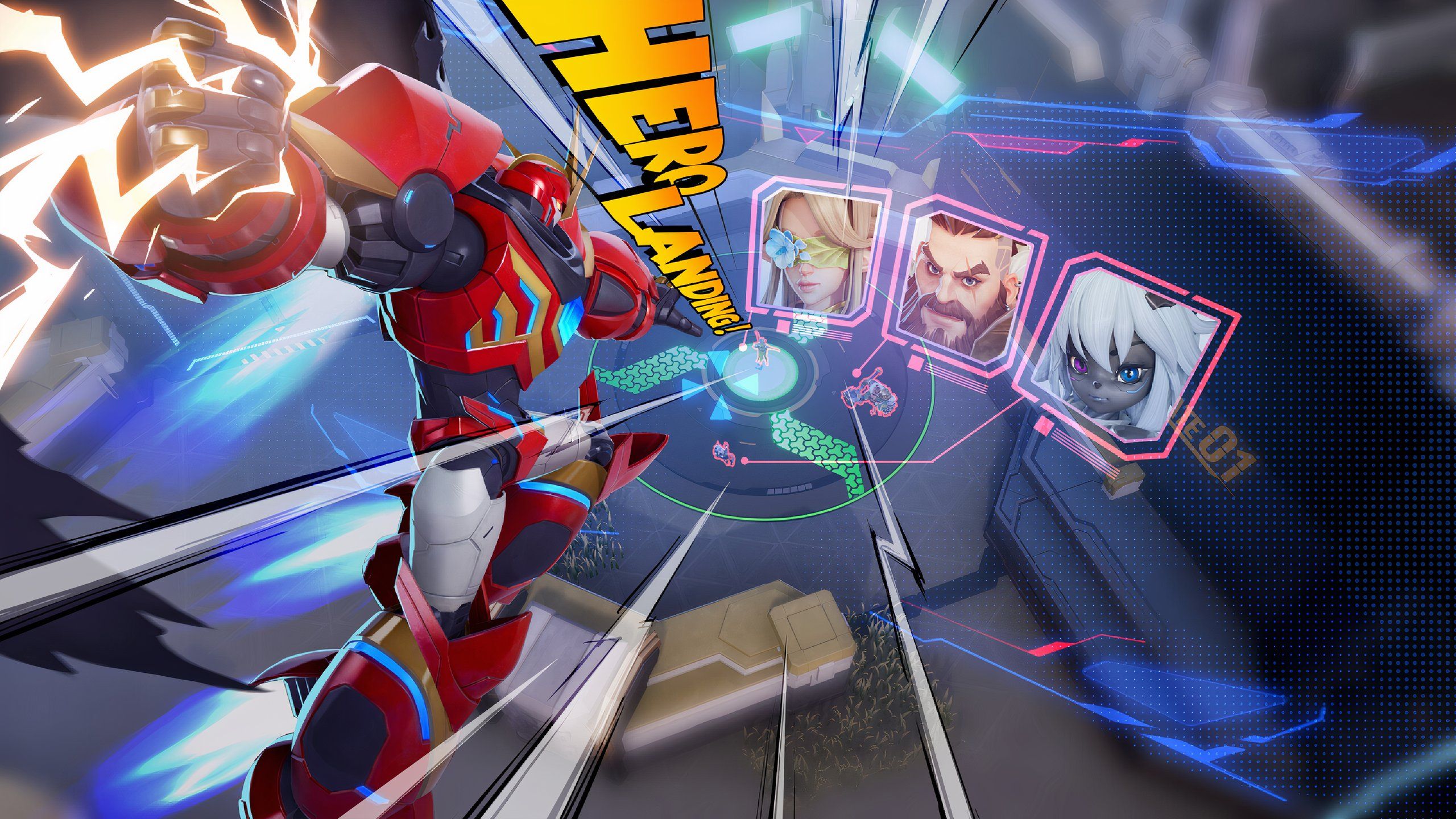
It feels like every competitive multiplayer game inevitably gets compared to something else. Is it a MOBA? A hero shooter? A battle royale? Project Zeta has bits that might feel familiar to fans of all those genres, but Nirvanana is deliberately attempting to carve out something entirely new with what it calls a Multi-team Tactical Arena.
I caught up with Nirvanana CEO Namseok Kim at Gamescom to talk about exactly what that means, why the team wanted to move away from some of the more traditional elements of MOBAs, and how it hopes Project Zeta can deliver the satisfying strategy and team fights players love without making them wait half a match to get to the good stuff.

Kim tells me that the biggest difference with Project Zeta is that he wanted “a very dense succession of team fights”. One of Kim’s main goals is the idea of “Dropping MOBA heroes straight into a Formula 1 racing car without waiting for the 15-minute setup. That way, four teams, zero braking, and constant high-stakes positions. That's what we are going to achieve for players.
“In the past MOBA games, Penta kills were the maximum, but in multi-team environments, you can get 11 kills, 12 kills, and so on. I wanted to make that possible for controllers as well. And so, with the third-party action view, we built this multi-team arena. We wanted these people to enjoy that experience.”
Project Zeta aims to offer “More frequent, denser, pure team fights around key objectives in shorter matches,” because a lot of players don’t have a lot of free time. They’re most used to short-form entertainment these days, and this led to Kim coming up with the idea that “one MOBA needs to be compressed into a shorter form”.
That’s also part of the reason that Kim wanted to ensure that no matter what players use, whether that’s a controller or keyboard and mouse, it’s an even playing field so that anyone can pick up and play.
“There are heroes where controllers are better, and heroes where keyboard and mouse are better,” Kim tells me, explaining that when he plays with a controller, he uses certain characters, and when he plays with a keyboard and mouse, he uses different characters. “If in the future, we get to have an esports event, then the players could have a keyboard and mouse on one side and a controller on one side, and they would enter the arena with these actions, and then depending on the hero that they selected, they would set a keyboard and mouse or controller. I'm imagining maybe that will happen.”
This idea of the MOBA being easily adaptable and accessible for players regardless of their platform came from a console MOBA game that Kim once developed that was eventually cancelled. “It's like Zelda 3D, making it into 3D. That was the initial idea. Then, on console, it would translate, and you would be able to enjoy MOBAs as well. So with these goals of console-based action, we made a console MOBA.”


سەرچاوەی فەرمی بە زمانی ئینگلیزی: https://www.thegamer.com/project-zeta-gamescom-interview-multi-team-tactical-arena-genre/