Onimusha: Way of the Sword is the latest release in Capcom's beloved samurai action series—a series that has left fans waiting for a brand-new game for 20 years. Expectations are sky-high for this latest entry to deliver, and while Onimusha: Way of the Sword doesn't reinvent the wheel, it does prove why the franchise has always been synonymous with the samurai action genre. Onimusha: Way of the Sword has a lot of faults, but that action is not one of them.
At its core, it seems the biggest issue with Onimusha: Way of the Sword is its roughly 20-hour playtime, as by hour 8 or 9 it's clearly stretching itself thin. Nothing in the second half of the game is new, and it's essentially a gauntlet run through the first 8 or 9 hours again. Combine that with other story, gameplay, and pacing issues, and Onimusha: Way of the Sword becomes its own enemy at times. On the other hand, when Onimusha: Way of the Sword lets players go all out against powerful enemies, the game absolutely sings and delivers high-intensity action that will legitimately leave players sweating.
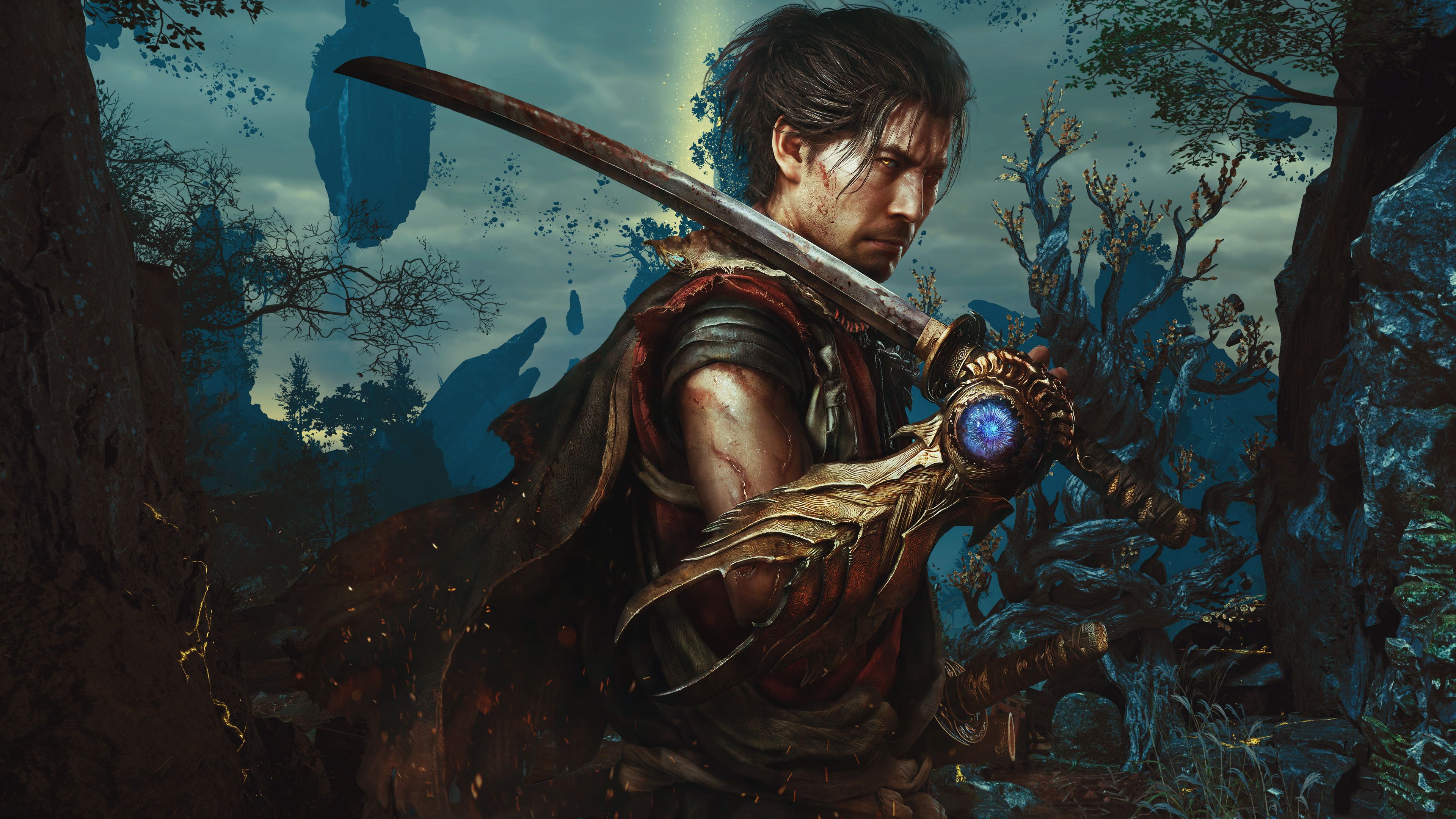
In Onimusha: Way of the Sword, players take on new protagonist Musashi Miyamoto, and he's immediately a fun character. He only cares about testing his own personal strength against others—and he doesn't seem to take anything seriously—until he gets wrapped up in the events of the main game and comes to wield the Oni Gauntlet. Guided by a former Onimusha and an Oni inhabiting the Gauntlet, Musashi goes on a journey to protect Kyoto and Japan from an otherworldly invasion, all while grappling with what it means to be strong and walk the way of the sword. Musashi has an almost Jack Sparrow-like characterization that is consistently fun, but not consistently applied. Still, his character rings true and the best part of the story is the characters hands-down, including those inspired by real Japanese history and those who are entirely fictional.


Unfortunately, the story itself is not much to write home about. The delivery is truly great, as the cinematic cutscenes of Onimusha: Way of the Sword are expertly crafted and usually well-implemented, but the argument can be made that there are way too many cutscenes. Players will consistently be "watching" Onimusha: Way of the Sword via cinematic cutscenes and more basic cutscenes as much as they are "playing" Onimusha: Way of the Sword. In neither is the story particularly unique or interesting, apart from a few key moments. Most of the story development can be wrapped up in less than four hours, with it largely taking place in the opening and final hours of the game.
This uneven pacing applies to the gameplay as well, although much less so to combat in Onimusha: Way of the Sword. In that vein, it offers unparalleled samurai action combat most of the time. Players have their standard parries, their dodges, their quick and heavy attacks, and of course, Onimusha brings with it the beloved Issen counterattacks. Onimusha doesn't reinvent the wheel for action combat here, but it sure does spin that wheel at high speeds. In most combat encounters, minus the basic Genma, players must be both on the offensive and defensive at the same time. It is absolutely the best part of the game and its strongest selling point.
This is especially true of Onimusha: Way of the Sword's boss fights, where the worst thing a player can do is breathe. Mixing up a dodge or parry (even when telegraphed and color-coded) is asking for punishment, and trying to break away and heal only invites the enemy to take advantage of the opening. I found myself relying on a special attack, via one of the various Oni weapons, when needing a moment to recollect myself, and even that wasn't a guarantee. The combat of Onimusha: Way of the Sword is so fast-paced and intense that I broke the detachable analog stick on one of my PS5 controllers at one point, simply because of how fast every input needed to be, how fast I needed to keep up the pressure, and how constantly I was fighting for my life.

Unfortunately, Onimusha: Way of the Sword's combat isn't flawless. Against some of the fastest enemies, I fought with the camera as much as I did them. I simply could not turn the camera as fast as the enemy could back away and attack me from another angle. Similarly, every boss encounter in Onimusha: Way of the Sword is faced at least twice (mini-bosses way more than that) to mixed effectiveness. Some of these bosses were fun to face again, but usually their movesets were unchanged. Some were fun for the sake of being fun, but that's why there are optional replayable boss fights in the game to begin with. Unfortunately, most of them eventually felt like a chore. That said, when it is firing on all cylinders, it's some of the best action gameplay this year.
Progression also feels stunted throughout the game, with as many stops and starts and fewer key areas of emphasis as Onimusha: Way of the Sword's story. In my case, I could usually level up my Gauntlet, Sword, or Clothing multiple times in one go, then go an hour or two without the needed items to progress a single item. Skills work in a similar manner, where progression was stunted by a handful of necessary unlocks and items, and most of the time they didn't seem worth it. One of the skills, for example, lets Musashi open a progression gate faster—a progression gate, mind you, that is effectively a locked door and almost never involves enemies. Speeding that up did nothing for the general gameplay experience.
سەرچاوەی فەرمی بە زمانی ئینگلیزی: https://gamerant.com/onimusha-way-of-the-sword-review/