
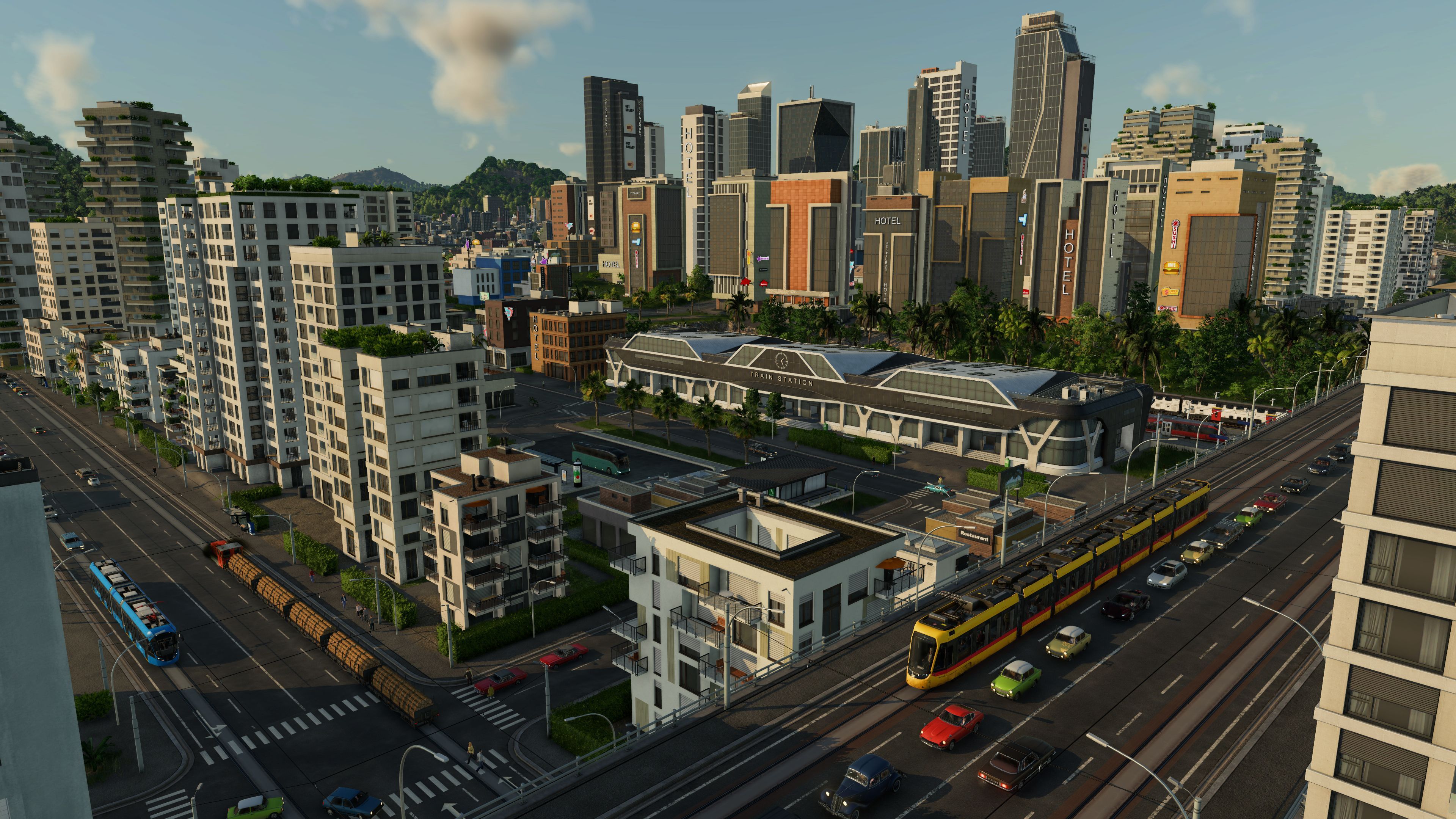
It's always nice to get some nostalgia that's not by design. There are not a ton of tycoon games on the market in today's world, but developer Urban Games is making sure that there's an overly comprehensive one for fans of the genre to enjoy. The Transport Fever franchise isn't a city simulator like Sim City or Cities: Skylines, but it takes obvious cues but does its own things. This franchise focuses on logistics and the history of transportation, including vehicles, trains, sea and air. It's the same canvas, but with a much different idea. Transport Fever 3 has aimed to streamline some logistics aspects while adding over 100 years of transportation history along with a new Campaign that adds some story and structure. Transport Fever 3 is not a game one simply picks up and plays, but darn if it's not super addictive.
You may see screenshots of cities and facilities and trains, basically everything one would see in those games. Transport Fever 3 focuses on the logistics, which means the actual movement of resources to already established towns grows naturally. There's no creating police departments, running plumbing or power or zoning. This game takes the best part of the city builder, and builds something so deep that the process is simply overwhelming to start with. Picture trying to learn a brand-new board game, and this game is at that level of preparation.
When starting a new game, players will generate a map to their liking, and towns are set up in random positions on the map. They'll then take a loan to get started. Different terrains can be selected as well. With Transport Fever 3, players will be taking in both air and noise pollution to keep the citizens happy. This game really feels like a nostalgic game straight out of the year 2000 in both design and options. It is an open sandbox to a degree. Players will still need to adhere to the processes of how the devs want the game to function for the user. Once that core concept is figured out, the world can be the player's, but there is still a sense of structure.

Players will create transportation lines from location to location, diving deeper into specifics of the towns and the industries as time proceeds. Players can start 130 years ago from today and have access to the types of transportation of the day. This goes all the way up to 2030 as things evolve. The vehicles and transportation methods are real licensed transportation from real manufacturers. All of these modes of transportation require upkeep, so strategy is required when choosing what to purchase for what specific purpose. Speed, cargo/person capacity, pollution and dependability all play a key. These machines will deteriorate, and either need to be fixed or replaced.
Contracts will be brought up to complete tasks that allow the area to achieve expansion. There will be a fraction of the payout amount supplied initially to get started on that task. This is where a majority of the money for the area will come from, while the rest gets slowly bled due to maintenance and upkeep (just like real life). Certain towns require certain resources, with certain resources needing importing just to export certain products such as livestock. This can get redundant and repetitive after a while, but the key is to find ways to get more efficient in transportation. This is the hook the game offers during gameplay. There's a reason that universities are using this series as a way to research logistical designs.
Players will need to immediately throw out most everything they know about city simulations and implement transport tycoon and business simulation as a means of description. The quick tutorial in the game will get players up to speed on the basic concept to get footing. The biggest issue with learning this game is the lack of depth in terms of context. You're going to read things a couple of times to try and grasp what the game wants you to do in situations. Take the loan, build a line for establishing resources movement, another line for public transit to get workers to a facility, build that mode of transportation, rinse and repeat. Budgets need to be balanced, but there's no taxing the population.
Starting out in Transport Fever 3 is figuring out how Urban Games wants you to play the game. For example, building two train stations between two towns to open up transportation. Makes sense, right? Especially between two established towns. To actually do this, a road with a bus stop line has to be created, with the bus stop within proximity of the train station. Yes, trains are faster, but this is a goal in the game via one of the tutorials, and it makes it seem like the game just wants you to build the station, not do the rest. Players will be figuring out secrets like this and slowing down to navigate the details in the menu interface. Logically, a person has to be somewhere to build or start something, so that's what the devs are thinking.
Players will need to immediately throw out most everything they know about city simulations and implement transport tycoon and business simulation as a means of description.


سەرچاوەی فەرمی بە زمانی ئینگلیزی: https://hardcoregamer.com/transport-fever-3-review/