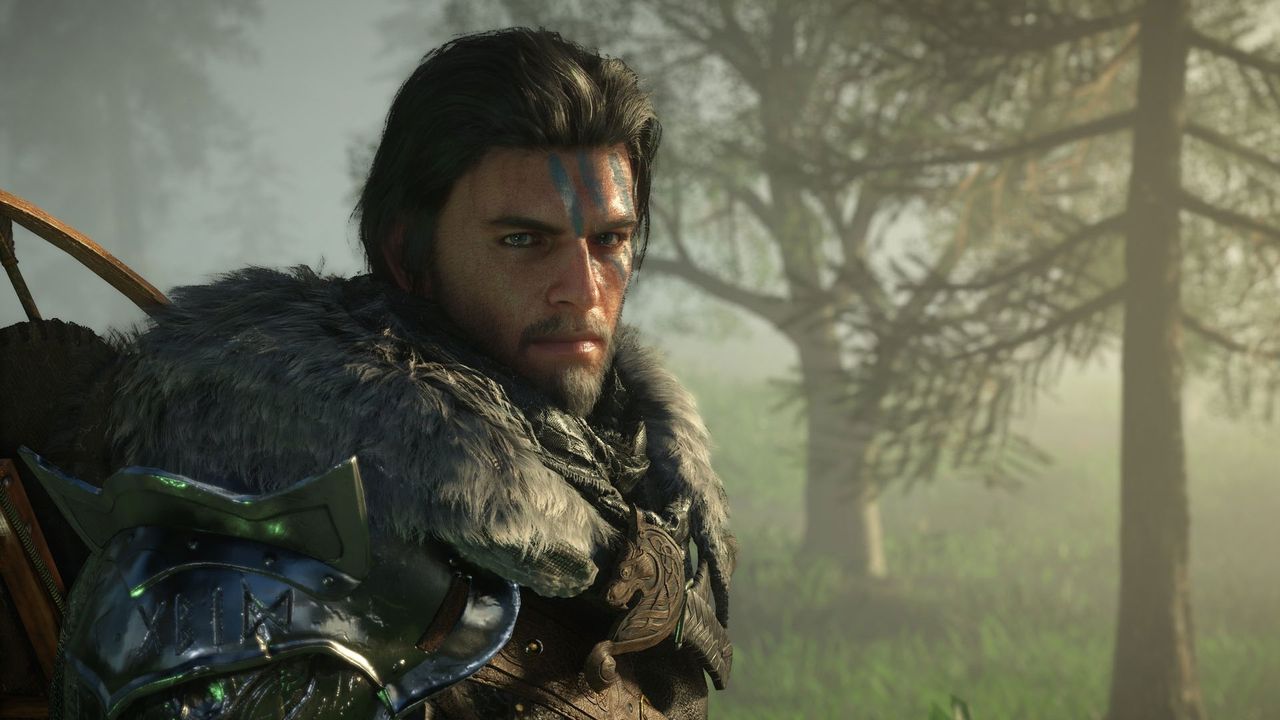
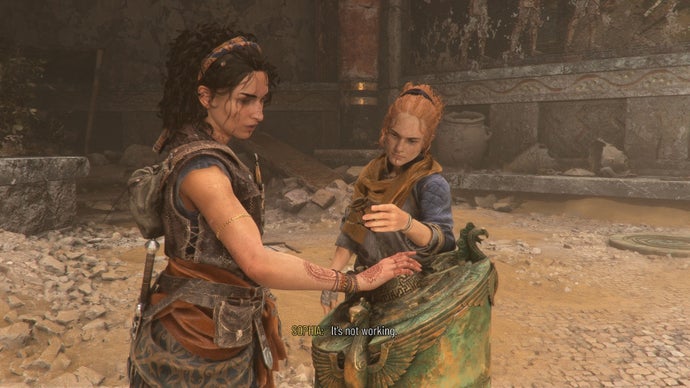
For a series about light and dark, it's appropriate that Resonance: A Plague Tale Legacy is a spinoff that's trying to escape the main entries' shadow. Developer Asobo Studio have dropped much that is familiar to explore exactly what a Plague Tale story can be.
Resonance doesn't feature series protagonists Amicia and Hugo. It is set 16 years before the events of the last game, long before the siblings flee across wartorn medieval France, hunted by the soldiers of the Inquisition. In Resonance, you play Sophia and see how she became the woman who saves Amicia in A Plague Tale: Requiem. You learn how, as a child, she was kidnapped by the Inquisition and injected with a poison that gave her visions of a strange island. How her father, the leader of a group of smugglers, found the island and died there searching for treasure and a cure to Sophia's dreams. And how Faro, her father's successor, continues visiting the island, seeking to unearth its secrets.
Resonance's early chapters see a now teenage Sophia growing frustrated with Faro. The smuggler leader never takes her with him to the island, despite – and because of – the mounting casualties in the expeditions. Guiltridden, Sophia stops sharing her visions. Those chapters also teach you Resonance's focus: combat.

The previous Plague Tale games saw you avoid fights at every opportunity, using stealth and guile to sidestep or ambush your enemies. Not here. As Sophia grows up, she is trained by the smugglers to wield a sword and knife. She parries, dodges, and finishes her enemies. As I found back in April, she fights with a scrappy style, allowing you to pick up bottles and knives from the environment, flinging them at your enemies to break their combos and stun them, leaving them open to attacks. She also has a powerful kick, which you can use to boot enemies into one another or hoof them over ledges. For a studio with no experience of making melee games, Asobo's done an excellent job of defining a characterful fighting style.
After years of trying to access the island's deeper secrets, Faro and his explorers realise they can only advance if they can find a 'key' - an orb they've seen depicted in paintings on the island. He learns that this device is being held in Venice and, after mounting a heist – which I won't go too deeply into – Sophia finds herself on the island with her friend, Leni, key in hand and with a very pissed off Venetian army in tow.
In Resonance, your aim is to get to the centre of the island before the army catches up with you.
Over the course of a largely enjoyable 12 hours, you will unwind the island's secrets, learning why it is filled with trial chambers and puzzles, maze iconography, and statues of a half-man, half-bull creature. You will also learn why Sophia keeps having visions of a warrior called Theseus.
However, for all their efforts to build an environment worthy of investigation, Asobo haven't managed to avoid the pitfalls of the linear action games they follow in the wake of. At its best, Resonance is like a rollercoaster. There is the main path, along which all its set pieces happen. If you stick to the path you will run into fights, scrape through collapsing masonry by the skin of your teeth, and see gorgeous vistas just as something exciting happens in the background. Stick to the path and the world is all motion and energy, but leave it for a moment and it can become static and artificial.
سەرچاوەی فەرمی بە زمانی ئینگلیزی: https://www.rockpapershotgun.com/resonance-a-plague-tale-legacy-review-a-competent-action-game-spinoff-that-loses-what-made-its-predecessors-unique