
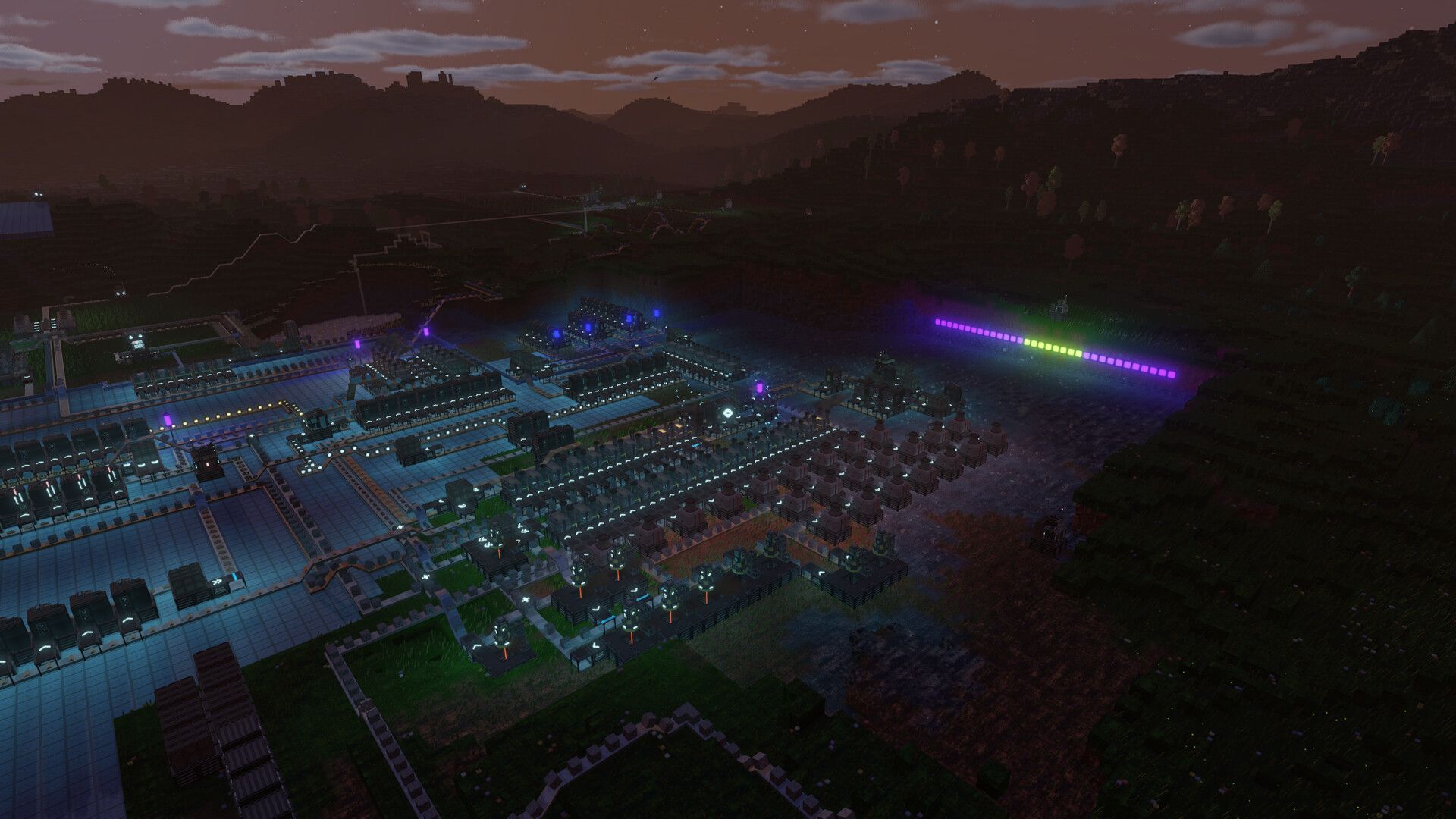
Somewhere in space is a beautiful world untouched by the needs of sentient life. Its rivers and mountains are as wild as they are old, the mineral riches buried under the earth completely untouched, and clean and pure. And then the planet is discovered and starts being put to good use, with its solitary caretaker carving out chunks of the terrain to cover in machinery that turns its unrefined resources into all the bits and pieces needed to build up from nothing into an expanding automated empire. The relatively chaotic spread of wilderness becomes semi-organized to enable efficient production, and while it can be argued that this isn't particularly great for the planet, there's no question it's deeply satisfying to watch an interconnected sprawl of machines working in sync to produce every step of the technologies needed to grow.
The latest automation game just released in Early Access on Steam, advancing from its constantly-updated demo into a much bigger game, and the demo wasn't exactly small to begin with. FluxWerks puts you in the spherical body of a flying robo-drone, equipped with a small army of nanobots to reshape a new, mostly-untouched randomized world in whatever way you see fit in order to make the best use of every resource available. The landscape is voxel-based, made of an uncountable number of cubes, and in classic voxel-world fashion everything can be harvested and reorganized to shape the world around your needs.
The starting requirements are your basic coal, iron, and copper, small deposits of which can be found around the starting site, and you can either excavate the dirt to uncover it or go exploring in search of more generous patches. The drone's nanobots can mine for you, but a few quick tech upgrades earn the automation basics of miners, assemblers, conveyor belts, and a good selection of starter machines. Once the familiar machines are available, though, the mechanics that give FluxWerks its own identity start becoming clearer.

Heat, for example, is important to keep an eye on and acts on almost all equipment, because once the operating temperature tops 100 degrees Celsius the machines start slowing down. This is fairly easily countered by paying attention to where you're building, with a nice grassy landscape being much cooler than a desert, and while the blast furnace of the volcano biome is a lot of fun to play with it's not anywhere you should build. Still, if you do need to build in the desert there's cooling options available by way of the heat sink, which takes in cool water and pumps it out noticeably warmer.
Other systems involve handling pollution, which can wake up weird alien growths that will smother the factory if not harvested, playing with water, which actually flows even if it's kind of jello-ish in its consistency, massive caverns, a wide variety of biomes, weather effects that speed up wear and tear on the factory, and much more.

One of the most useful features is a little button on the hotbar beside the machinery categories, the Planner, which lets you choose a product and the amount per unit of time you're after, and then shows a flowchart of all the components needed from start to finish. This includes not just how many widgets are needed per gizmo but also the number and type of assemblers needed to build them. It's still your job to find the ore, arrange the buildings, sort out transportation, and keep the entire process clean and efficient, but even the automation professionals turn to spreadsheets when the recipes start running six steps deep with the materials criss-crossing the production lines, so it's incredibly handy to have a built-in flow chart to keep the focus on the factory-building rather than arcane calculus.


There's a lot more in FluxWerks to discover beyond just putting a factory together, with the goal of the game being to research the world and transmit the information back home. This involves scouting out ruins, harvesting any number of trees and plants for the data to start your own automated farms for renewable resources, discovering a xeno-science branch of the tech tree, etc. You can also take a dip in a volcano, create waterfalls, design buildings, figure out clever ways to make use of machine heat to provide steam for the turbines, and in general play with the world rather than simply level it to make placing production chains easier. There's a massive world out there for the drone to explore and build in, and while the end goal is to automate all the way past the top of the tech tree there's enough flexibility in FluxWerks' systems that experimentation and creating your own way through is every bit as valid as rote efficiency.
سەرچاوەی فەرمی بە زمانی ئینگلیزی: https://hardcoregamer.com/fluxwerks-automates-its-way-into-early-access-release/