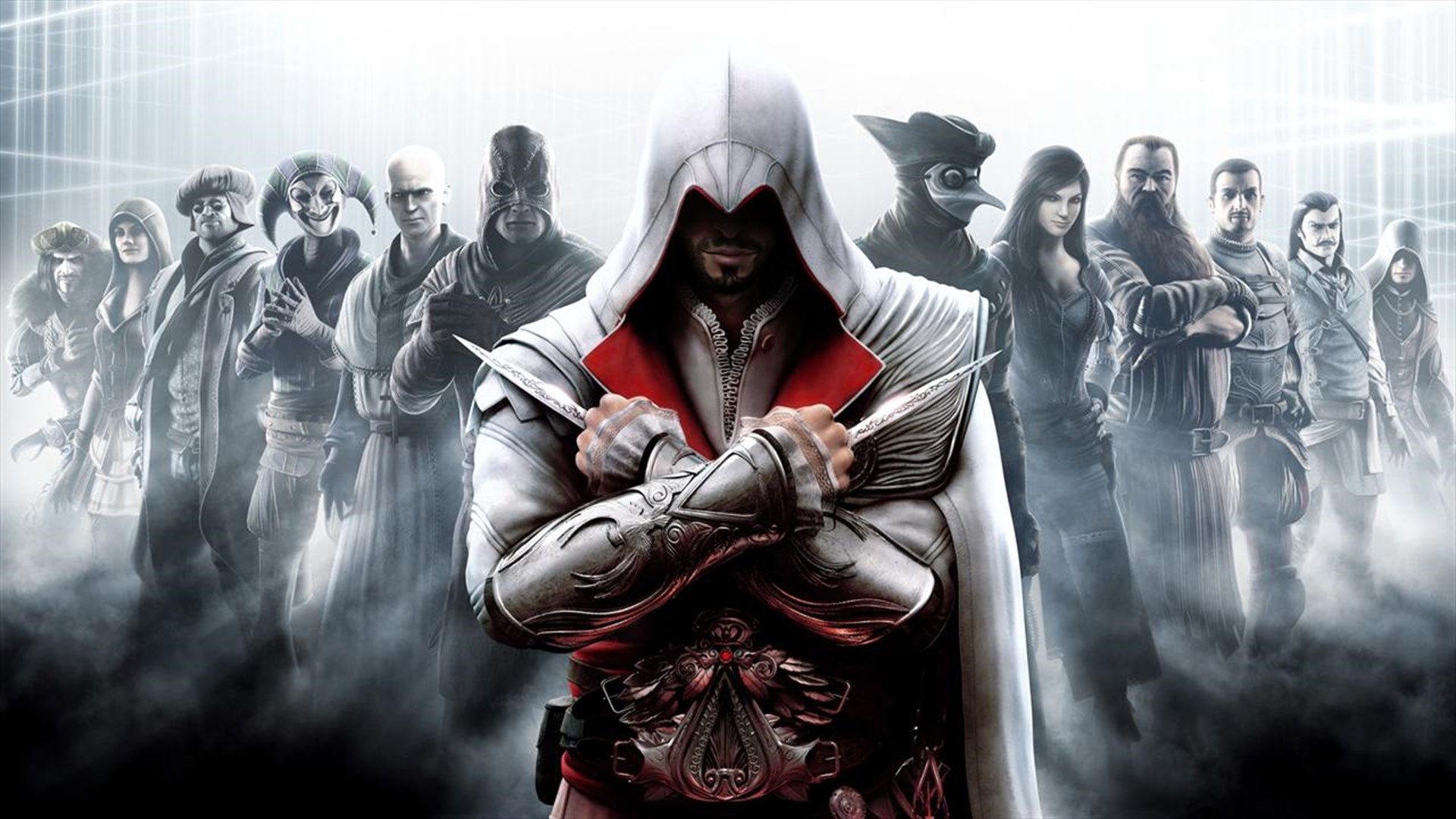
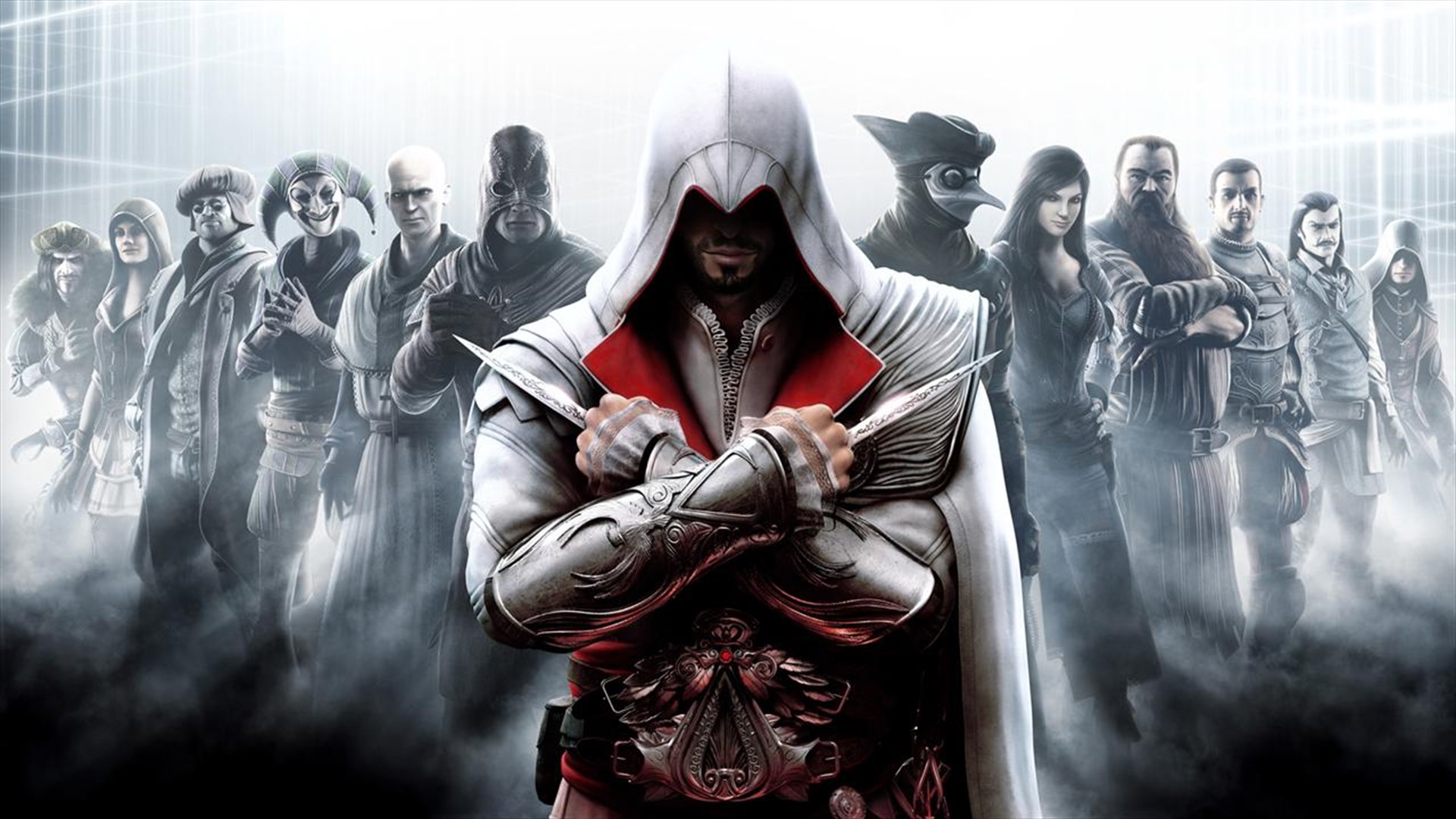
Ubisoft makes a lot more than just Assassin's Creed, but where would it be without Altaïr, Ezio, Connor, and the rest? More pertinently, what would its games look like? In the eight years since a hooded avatar first leapt from steeple to haystack, Assassin's Creed has not just become the most important line on Ubisoft's balance sheet, but also a driving influence on almost every design document that spools from its printers. Whatever the setting or central mechanic, if the company is making an open-world game, then Assassin's Creed will run deep in its DNA. And it does make a lot of open worlds.
Introduced in the first Assassin's Creed, the formula of capturing – or, in Altaïr's case, scaling – a point to fill out the map in its vicinity has become Ubisoft's calling card. Yet while the first Assassin's Creed laid foundations for the series' mechanics and its lore, it didn't make for much of a game. Its two protagonists – Altaïr Ibn-La'Ahad in the past and Desmond Miles in the present – had little to say and not much of worth to do. That would improve in the second game, Altaïr making way for the immeasurably more likeable Ezio Auditore Da Firenze and Miles seeing his skills transfer back to the real world. Looking back, Assassin's Creed was the tech demo, and its direct sequel was the proof of concept. But Assassin's Creed Brotherhood was the peak and tipping point, the game where Ubisoft briefly understood what it wanted the series to be and executed it in style.
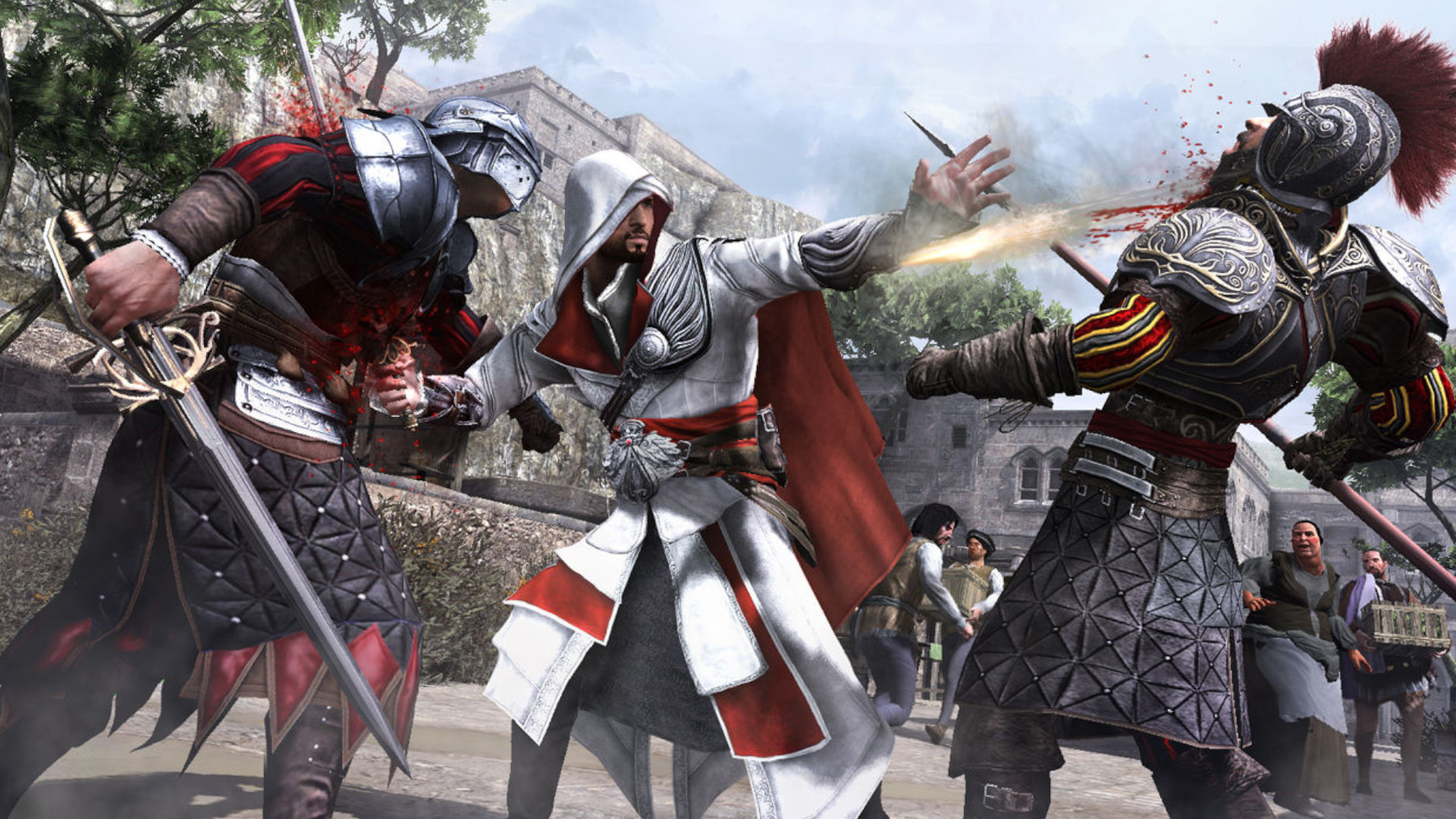
That said, it's a hard game to go back to. Elements that once felt novel have since been reprised at least once a year in the series, and many more times throughout Ubisoft's bulging back catalogue. The law of diminishing returns holds true. What once inspired appreciation now invites cynicism; each canny design choice taken not on its merits but seen as a scrawl on a whiteboard at Ubisoft Montreal that no one ever bothered to wipe clean. Brotherhood's component parts may have been copied and pasted into other games in different genres, but once your eyes have stopped rolling, you can see that those ideas, while often borrowed, have rarely been bettered.
Take, for instance, the tutorial. Ubisoft has long struggled to elegantly explain the morass of systems within its games, and a new Assassin's Creed invariably means a ponderous opening while each little mechanic is relayed one by one. That is certainly the case here – five hours in, you're still being shown new things – but each introduction makes sense within a story moving at such a rate. And for once, Ubisoft's annual iteration offers a bonus to the player as well as the shareholder.
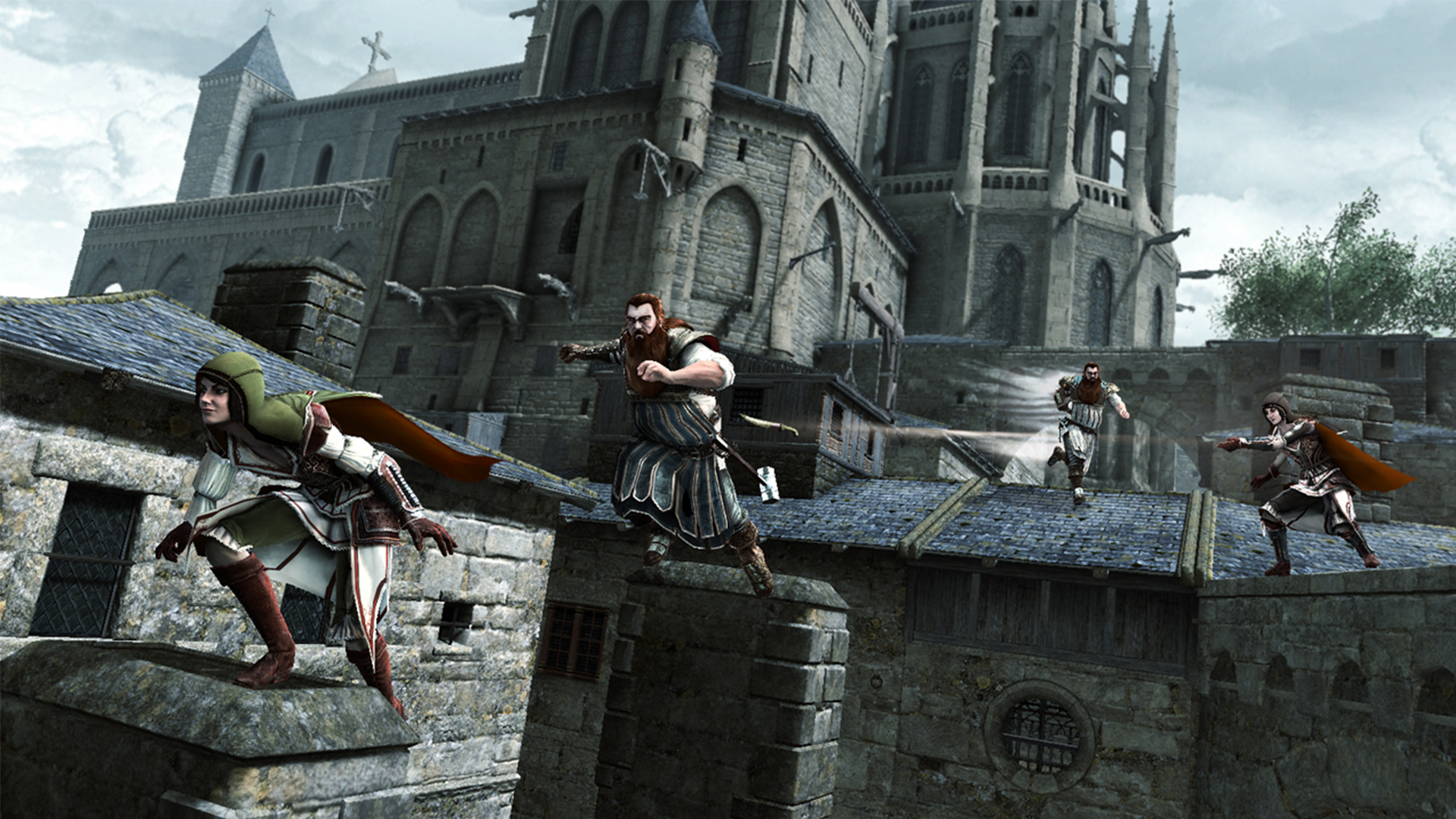
As the second game in the Ezio trilogy (still the only example of its kind in a series that has introduced a new protagonist with each release since Revelations), Brotherhood kicks off its tale seconds after the conclusion of Assassin's Creed 2 with a two-minute cutscene, then puts a blade in Ezio's hand in short order thereafter. He's got all his Assassin's Creed 2 endgame gear and a whopping health bar, and while it's inevitable that they will be taken away, even this cliché is handled with elegance. It's not a flashback or cataclysmic event that strips our hero of his toys and toughness, but a sex scene, a surprise Borgia attack setting Ezio running from a morning quickie half-dressed and empty-handed. Within half an hour of the disc spinning for the first time, Ezio's family seat is in ruins, his relatives either dead or dispatched to safety, and he leaves the scorched Monteriggioni countryside for the stonework sprawl of Rome to exact revenge. It makes ‘press B to crouch' look incredibly clumsy.
It's along the banks of the Tiber that Brotherhood reveals its evolution of ideas brought into life in earlier games, plus a few new notions of its own. Three games in, scaling viewpoints was already beginning to lose its lustre. Meanwhile, the first game's prerelease promise of freeform stealth had gone unfulfilled, at first asking that players spend an unacceptable amount of time sitting on benches and then, in the sequel, hiding behind the skirts of a hired group of courtesans. Brotherhood sought to fix both of these problems in one go.
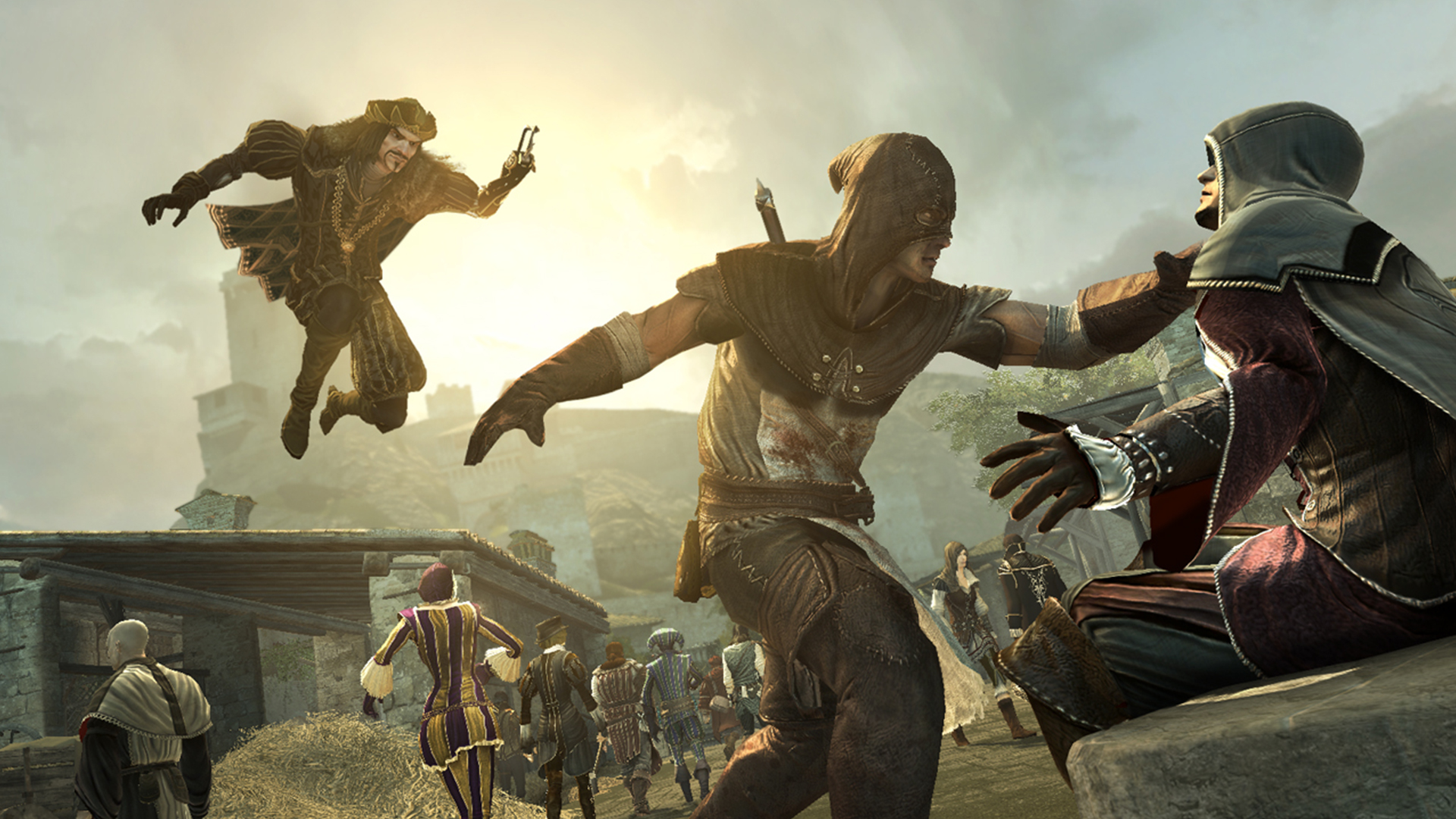
While traditional viewpoints remained in abundance, many took the form of Borgia towers. These well-staffed camps and structures needed clearing out, climbing, and burning down before the map icons in the vicinity became available. Tightly wound, filled with corners and cover, these were spaces designed for flexible stealth. While Assassin's Creed has, both before and since, allowed players to get spotted and draw their swords without penalty (instafail stealth missions aside), here there was a painful consequence to being seen. The regiment's captain, who must be killed before you can claim the tower, usually bolts if you're spotted; if he escapes to his safe room, you'll have to wait until the guard rotates at dawn or dusk to try again. As well as making good on years-old promises, stripping away the Borgia's hold over Rome one flaming, collapsing tower at a time added a weighty sense of achievement to the familiar routine of uncovering the map.
هەفتانە هەرسکردنەکان، چیرۆکەکانی ئەو کۆمەڵگایانەی کە خۆشت دەوێن و زۆر شتی تر
سەرچاوەی فەرمی بە زمانی ئینگلیزی: https://www.gamesradar.com/games/the-legend-of-zelda/assassins-creed-brotherhood-is-still-basically-the-dna-of-all-ubisoft-open-world-games/