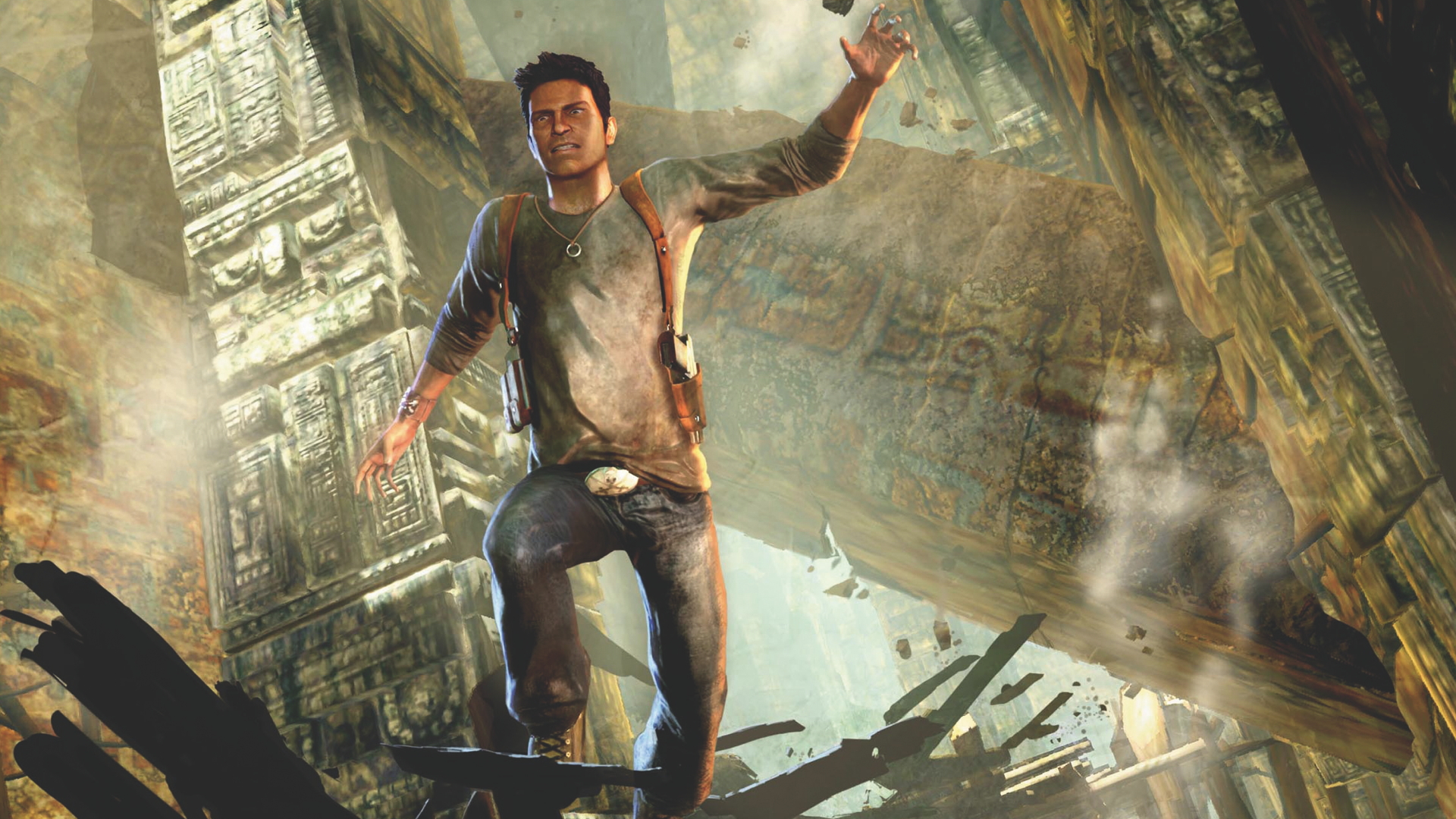
The PS3's legacy may very well be the perfection of the tightly focused 10-hour story campaign. If you define it that way, then Uncharted 2: Among Thieves could claim to be the game of that generation; not the best game, but the one that is emblematic of tightly bound adventures built on the thrills of big worlds and bombastic set-pieces. Naughty Dog's matinée revival has moments of technically astounding action; a lead character capable of carrying an almost unheard-of tonal range of tension, comedy and tragedy, where comparable blockbusters do anger as one long machine-gun burst; plus it embraces ideas of storytelling and entertainment that trigger a rare investment in its cast. It is, in other words, a beautiful game that is also very good at people.
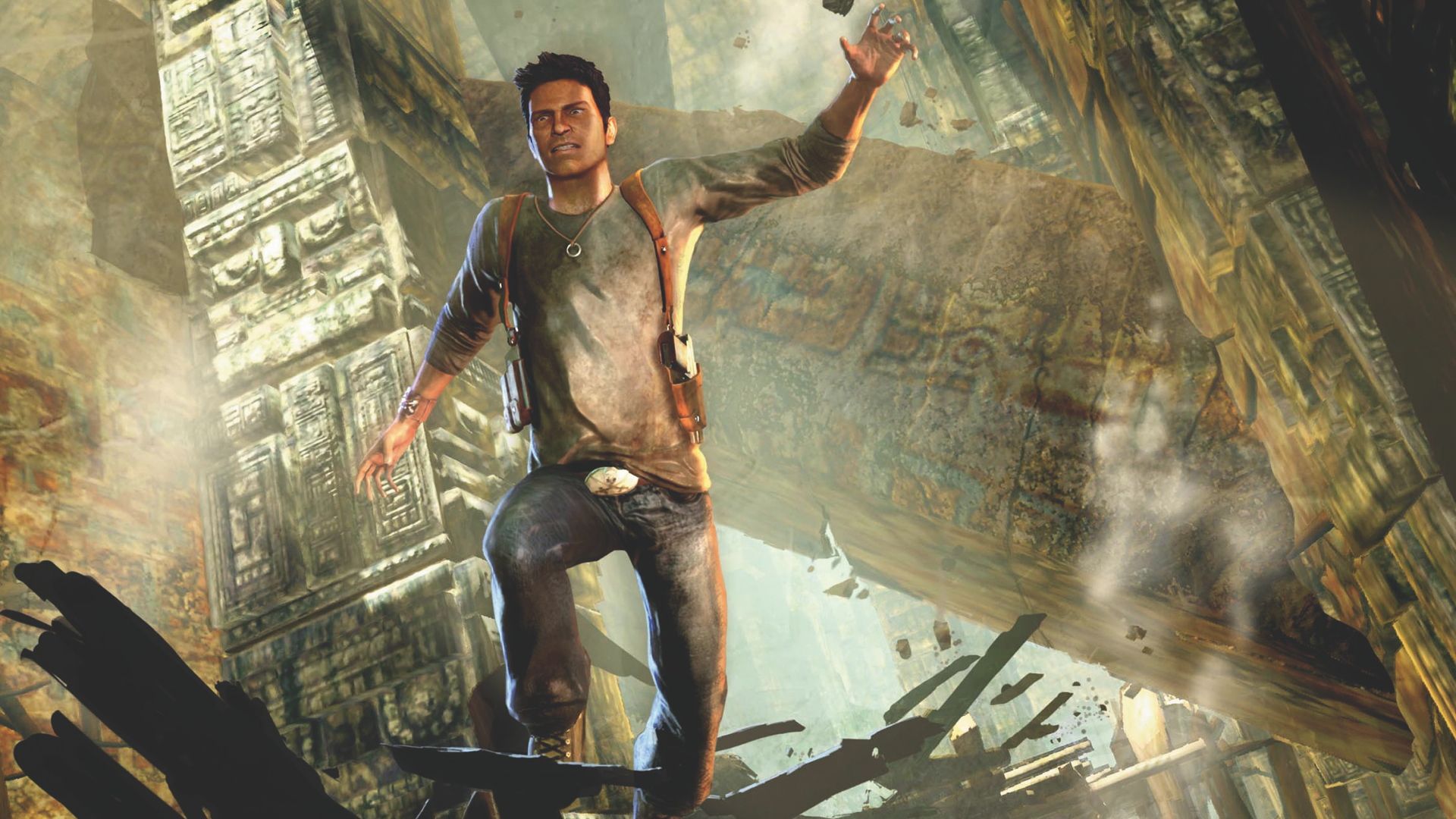
Indeed, it's accomplished at almost everything. Uncharted 2's opening displays a casual confidence of craft and an eagerness for experimentation, breaking in at the story's halfway point and reintroducing us to hero Nathan Drake with snapshot characterisation: he's battered ("That's my blood"), blithe ("That's a lot of my blood"), and, suddenly, he's upside down, a perspective yank turning a stationary train carriage into a vertiginous shaft. Drake plunges past seats and into the first of many hyperbolic translations of cinematic devices – here, the teetering mountainside vehicle, but later a moving train, the unpinned grenade, and last-gasp fingertip handholds.
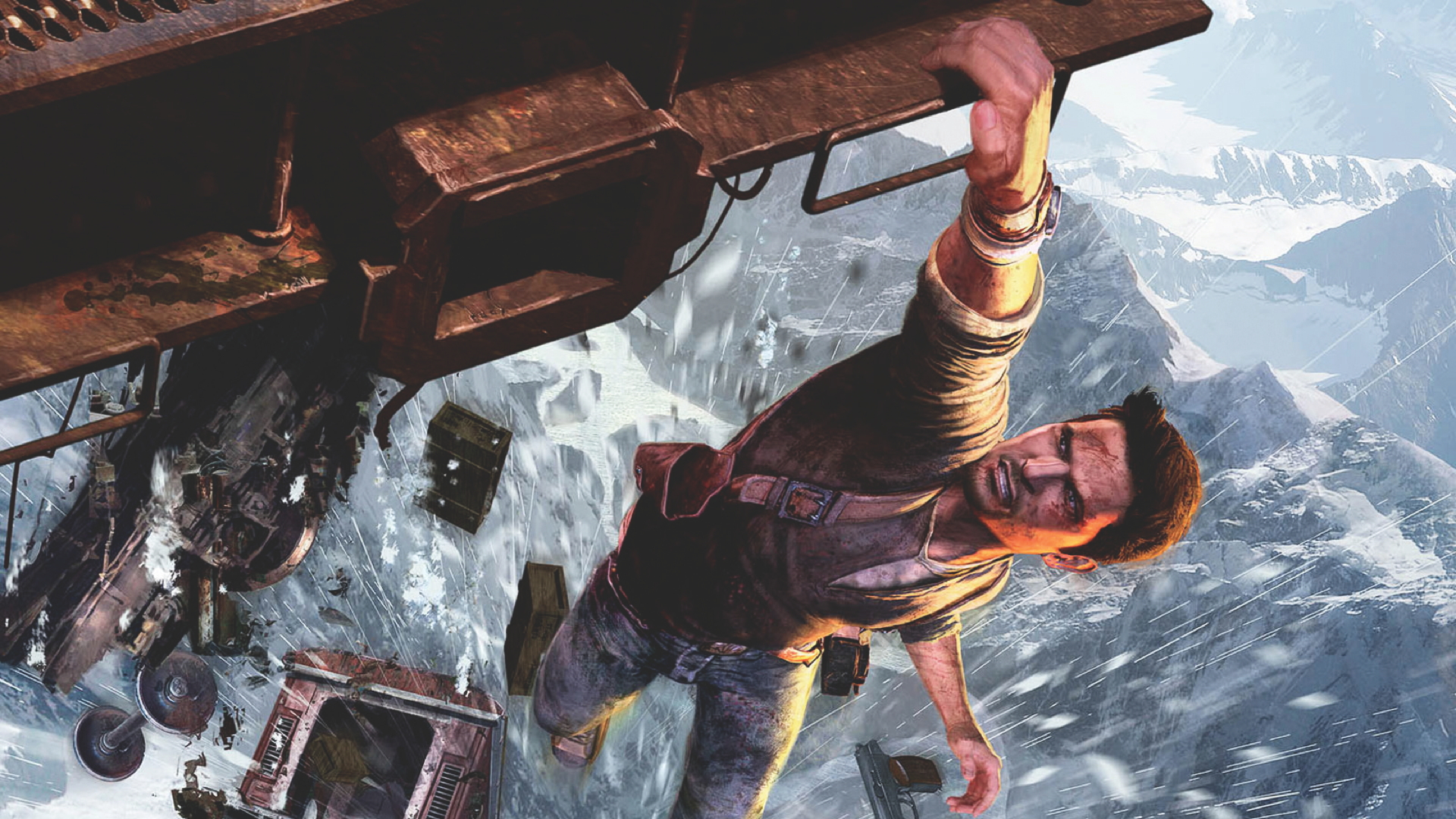
There's something overtly cinematic in that opening: the formalist interruption, a trick instinctively taken from the splice-and-join of film editing; the precariousness of the train, a literal cliffhanger. And it's generally agreed there's something overtly cinematic in Uncharted 2 itself. The game is sandy adventure and sunset romance as seen down the sights of a pistol or on flickering screens since long before Indiana Jones, harking back to the time of Gunga Din. It is also the problematic culmination of Hollywood's decades-long flirtation with games in the obsessive search for synergy.
All of which is to say that Uncharted 2 not only bears highly visible influences from the movies, the basic colour of its world taken from the themes and tokens of big-screen romantic adventure, but that Naughty Dog's reverence for story might have produced the closest thing to convergence between film and games that doesn't involve a cabinet spinning a LaserDisc to create a cartoon dragon. The studio has embraced the craft of storytelling as taught by the film industry, and emerged with a new production process that devotes a sustained, expensive amount of time (the irony of that synergistic urge – there is no shortcut to convergence) to performance capture, to workshopping and rehearsal with actors on a digital soundstage.
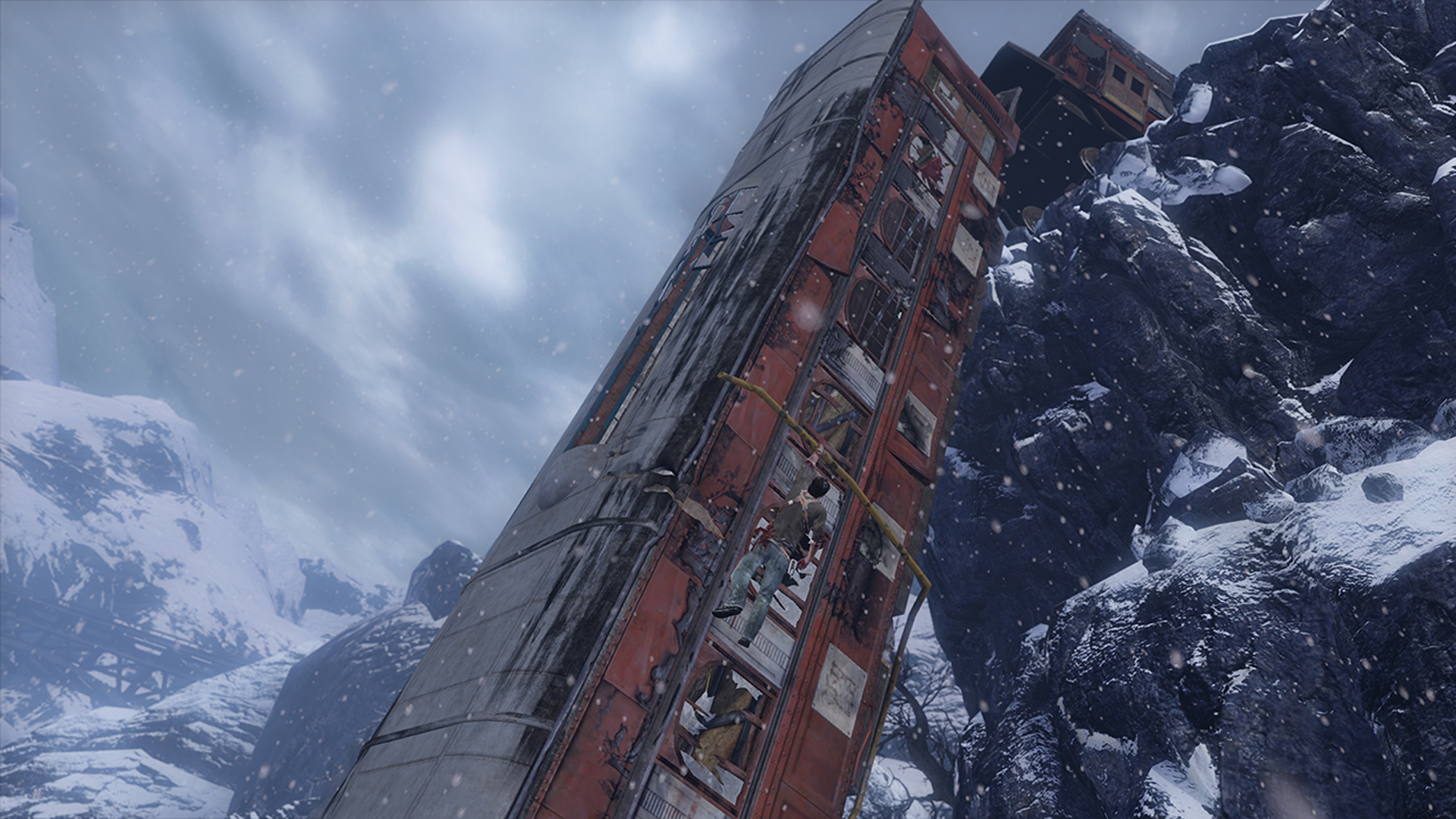
The result is not a revolution. Uncharted 2 does not solve the inelegance of the cutscene, and still needs to interrupt itself to tell a story. And it does not broaden the corridors of that tightly focused 10-hour experience – the game is relentlessly linear, a gilded cage of invisible walls and beautifully textured boundaries. This is where Uncharted 2's cinematic-ness slides from cool observation to criticism. Is it even a game, really? It's so on-rails.
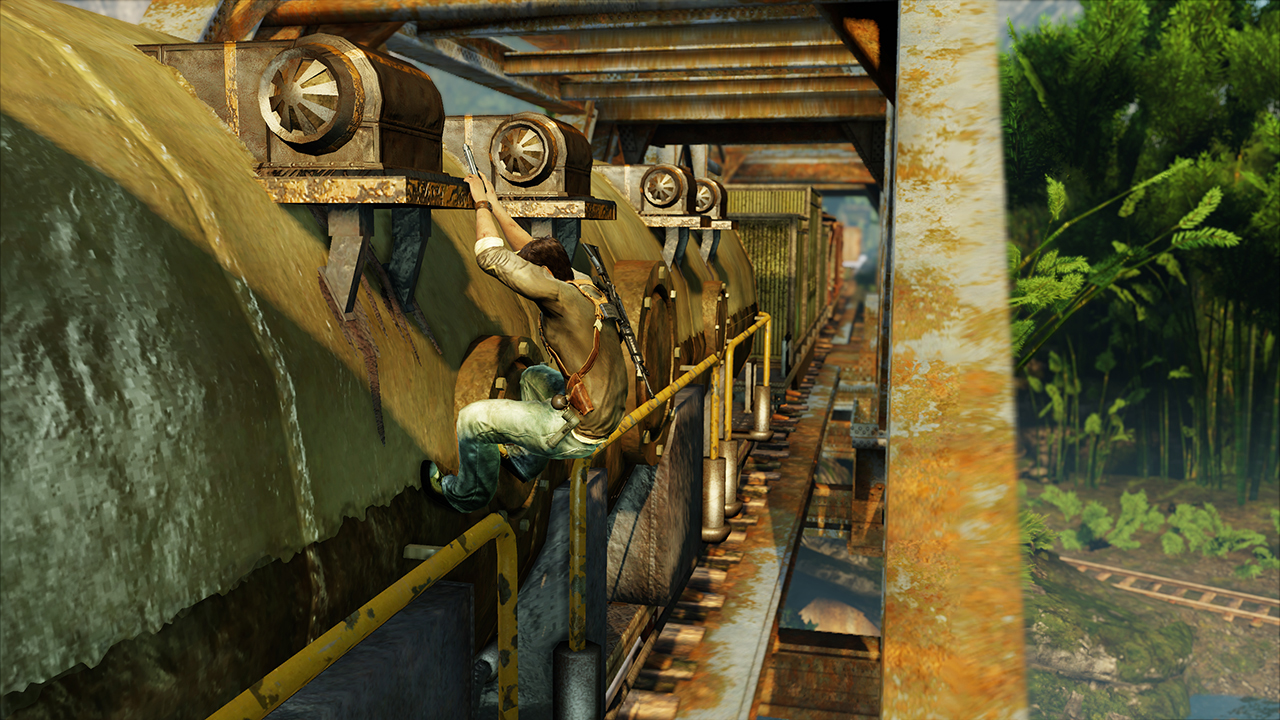
Let's talk about trains, since we seem to be back on one. Walter Murch, editor of Apocalypse Now, once drew a link between the railway and film, between clickety-clack technologies that run along tracks and their shared sense of perception and mechanical possibility. It is, he said, to do with a way of seeing the world. "There is the idea of the voyage. Every voyage is a story."
This idea runs through Uncharted 2. The train wrecked and suspended in that opening is reanimated to become the major action beat of the game's second act, where it carries Drake on a journey to catch up with his own story. Consciously or not – and it's hard to think it could have been totally unintentional – Uncharted 2 has internalised one of the great symbols of cinema, one of the first objects to be filmed in Lumière's L'arrivée D'un Train En Gare De La Ciotat, scattering apocryphal audiences terrified of the onrushing engine, and the heaving iron horse central to the Western. But the train is also a symbol of this generation's great form, the focused, ten-hour single-player campaign – these rails might leave little room for deviation, but they offer a hell of a ride. This is still a game, just a different form of play, one closer to the cinema, built on spectatorship and sympathy, an act of mimesis.
هەفتانە هەرسکردنەکان، چیرۆکەکانی ئەو کۆمەڵگایانەی کە خۆشت دەوێن و زۆر شتی تر
سەرچاوەی فەرمی بە زمانی ئینگلیزی: https://www.gamesradar.com/games/the-legend-of-zelda/uncharted-edge/