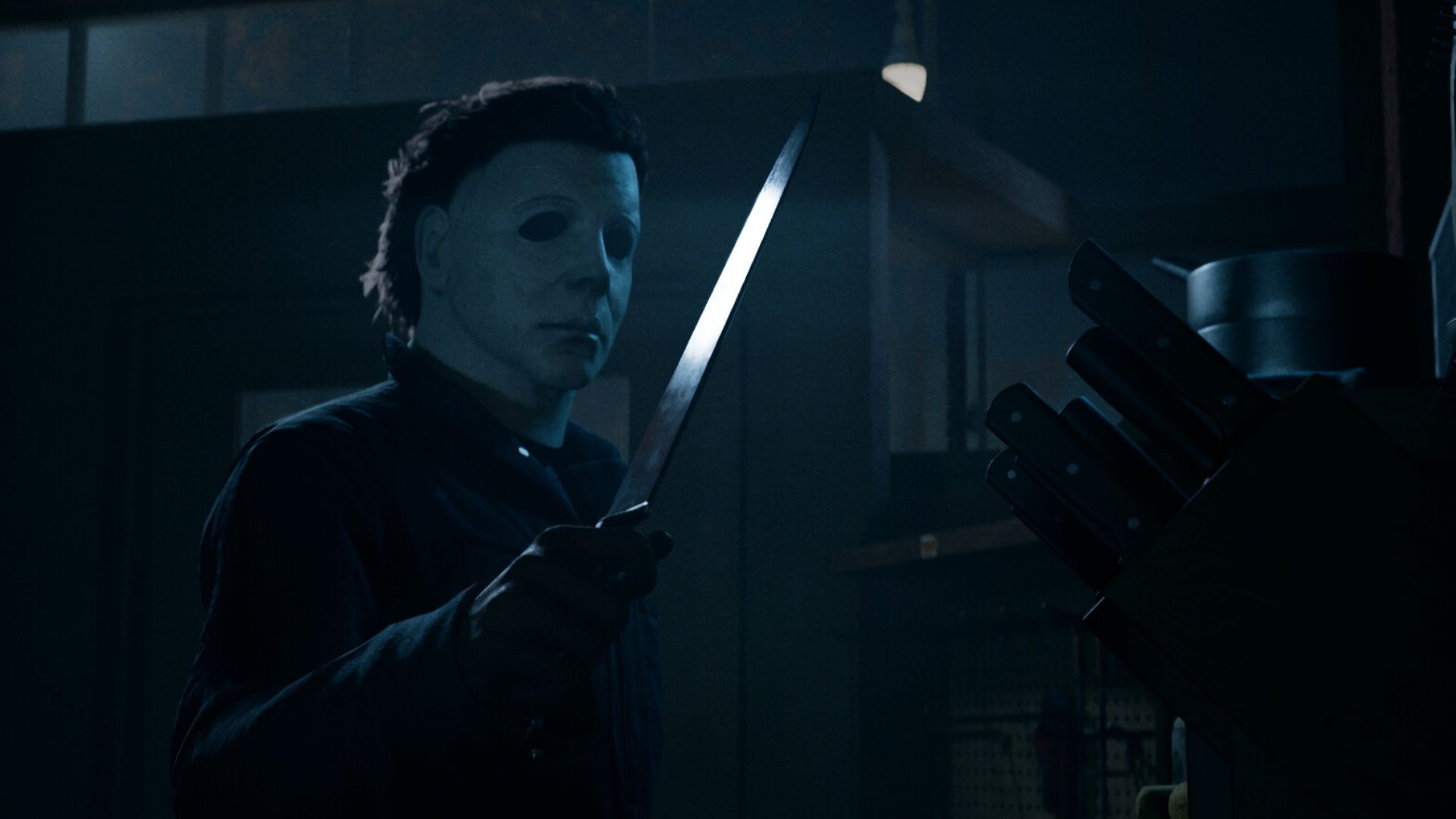
Michael Myers is uniquely unsettling. He is not particularly complicated, nor even particularly fast, but he has mastered the art of simply being there. You turn a corner, and the man is standing exactly where you least want him to be. Halloween: The Game understands that kind of horror. It is a game built around anticipation: the waiting and the creeping suspicion that you are not as alone as you thought.
Halloween: The Game is a one-versus-four asymmetrical horror game based on John Carpenter's genre-defining 1978 slasher. Its premise is familiar territory by now: one dude is the heavy-breathing guy in the William Shatner mask while everyone else plays as civilians scrambling around Haddonfield trying to escape before the night turns into a massacre. What makes it stand out is how thoroughly it recreates the feeling of Carpenter's Halloween. It wants you to feel like you have wandered into that movie, preferably before realizing Michael has wandered in after you.

The single-player story mode is a good icebreaker to the game. Its opening prologue establishes the mood well. Rain falls across a darkened Haddonfield and streetlights bleed into wet pavement. The environment has the sort of gloom that makes even an ordinary street look like somewhere you should not be walking alone.
The story begins with Michael's escape from Smith's Grove, and the short chapters that follow are an enjoyable excuse to step behind the mask. There is a pleasingly pulpy, distinctly '80s quality to the dialogue and presentation, and the campaign does a good job introducing mechanics that later become important in multiplayer.
More importantly, it is just fun to play as Michael without three real people bullying you as you learn the moves. For anyone who isn't particularly interested in the social mess of asymmetrical multiplayer, the single-player mode is the game’s more approachable side.
One of my favorite things about Halloween: The Game might be Haddonfield itself. The maps are large enough to create the feeling of a real town without feeling like a wilderness of identical suburban houses. They are dark and moody, but not lifeless. There are enough details, NPCs, interiors, lights, and little points of interest to make the town feel inhabited. This is good because nothing makes a horror game less frightening than realizing every house, NPC, and parked car looks like it was generated from the same five assets.
The lighting and reflections are impressive, too. Wet streets gleam under lamps and interiors glow against the darkness. The result is a beautiful atmospheric game that knows that Halloween isn't really just about the darkness. It is about what might be hiding just beyond the light. That is particularly important in multiplayer.

I enjoyed my time during the multiplayer. Playing as a civilian, particularly so. What I love is that I was not just completing one objective over and over. I was multitasking: find an item, locate a resident, convince them to come with you, find somewhere to hide, call for help, figure out an escape route, find a weapon, maybe reconsider that decision when you remember who is wandering around the neighborhood. There is always something to do, but never quite enough time to feel comfortable doing it.


سەرچاوەی فەرمی بە زمانی ئینگلیزی: https://www.thegamer.com/halloween-the-game-review-michael-myers-haddonfield/