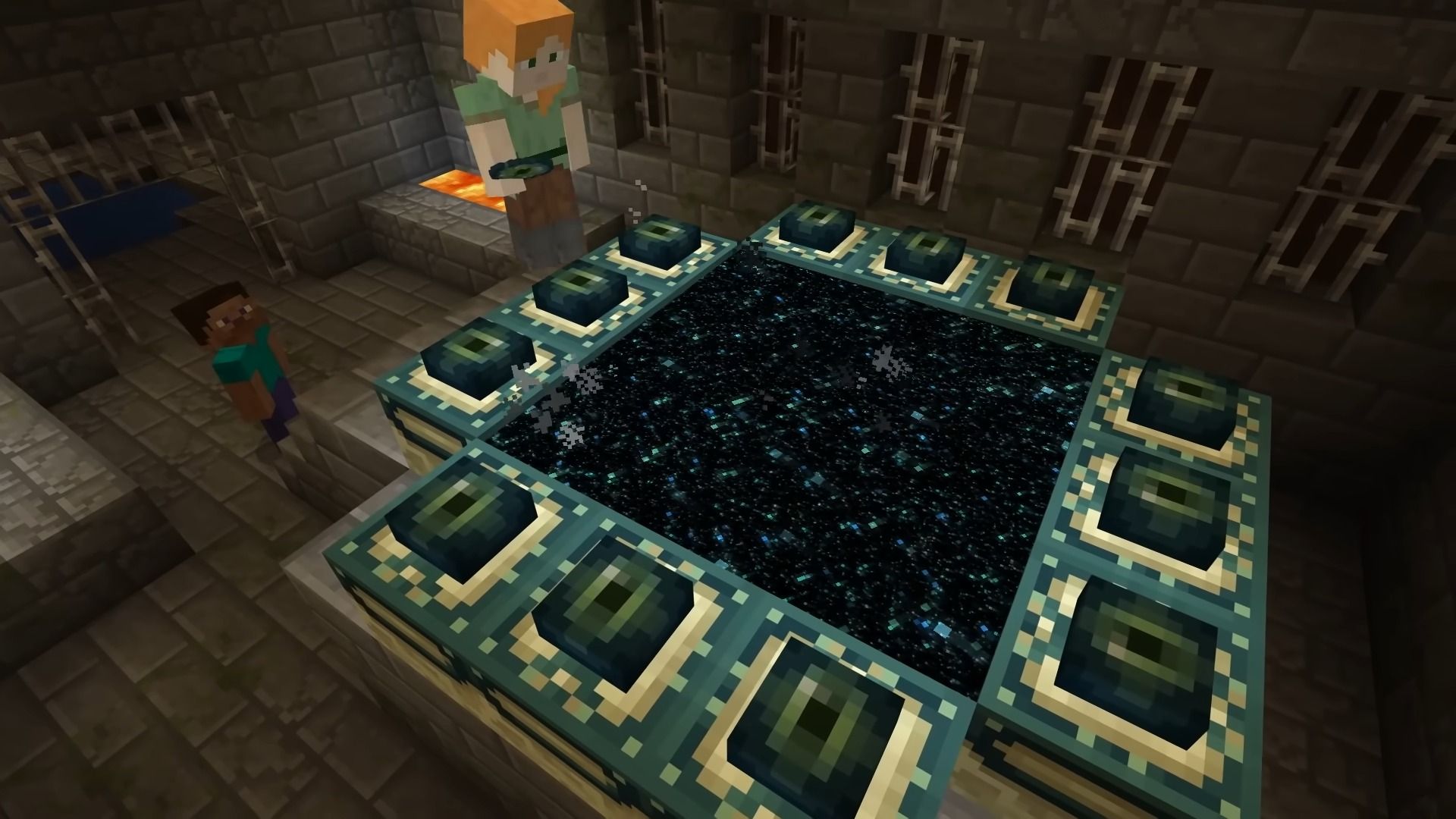
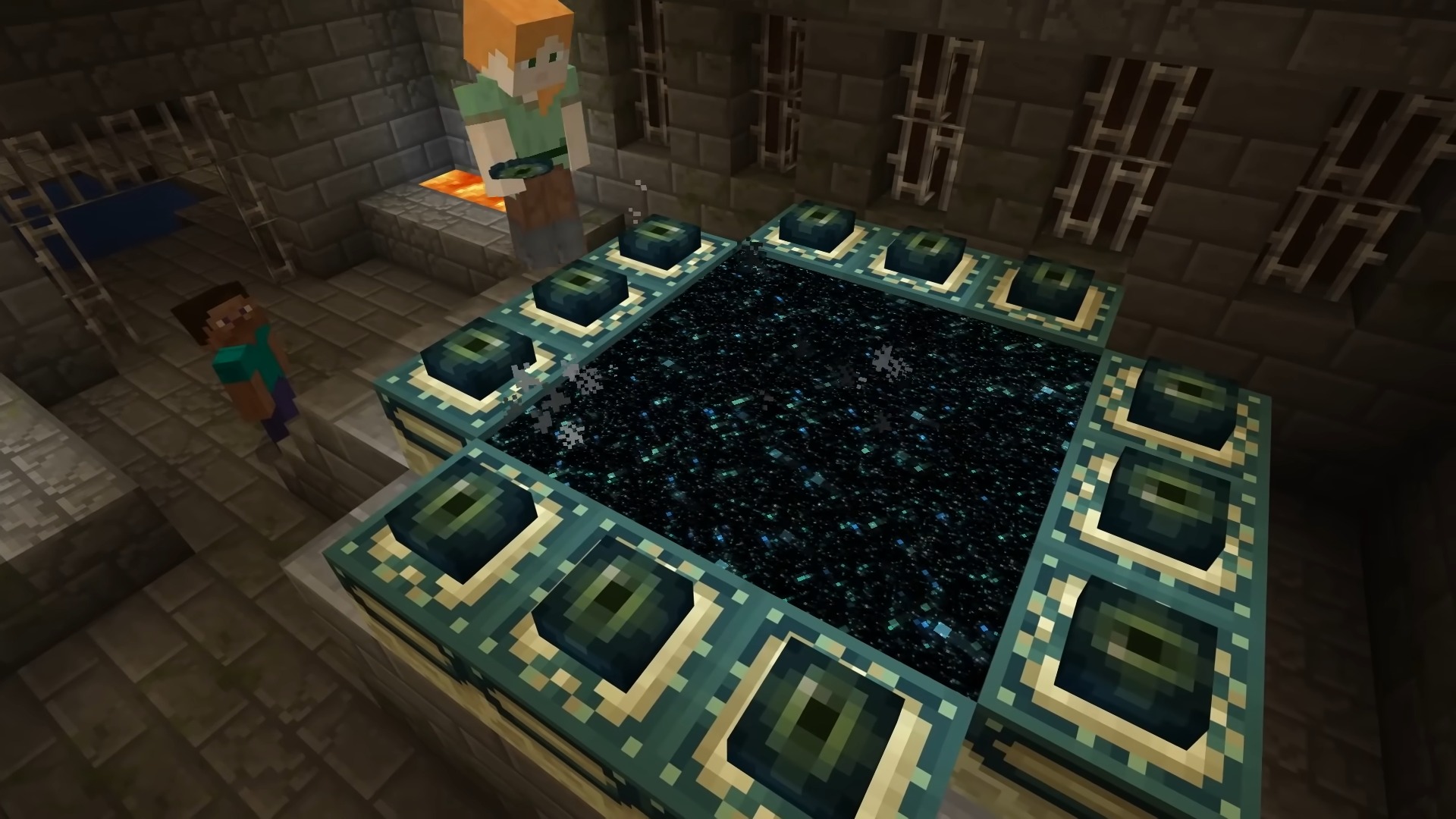
A Minecraft world could automatically beat itself – that is, kill the Ender Dragon and trigger the end scene credits – after roughly 2 billion years, according to a fascinating new experiment about the most popular survival game of all time.
For quite a while, it's technically been possible for Minecraft to play itself. To beat the game, you just have to go to The End and kill the Ender Dragon, typically by showering it with arrows after first destroying the crystals around The End that regenerate the dragon's health.
Even without a player's input, Minecraft mobs can do all of this, but with one big caveat. For this to work, the Minecraft world itself must come with an active portal to The End, as mobs can't create Eyes of Ender or place them in the portal frame to activate it. But with a 12-eye portal open by default, it's theoretically possible for random Minecraft mob behavior to kill the Ender Dragon.
YouTuber RedLogic wanted to find out how long it would take for this theory to play out. "Since this would take an impossible amount of time to happen in real Minecraft, I had to speed up the universe itself," his video description explains. "So I simulated billions of years, tracked the rarest chain reactions, and searched for the timeline where Minecraft finally beats itself."
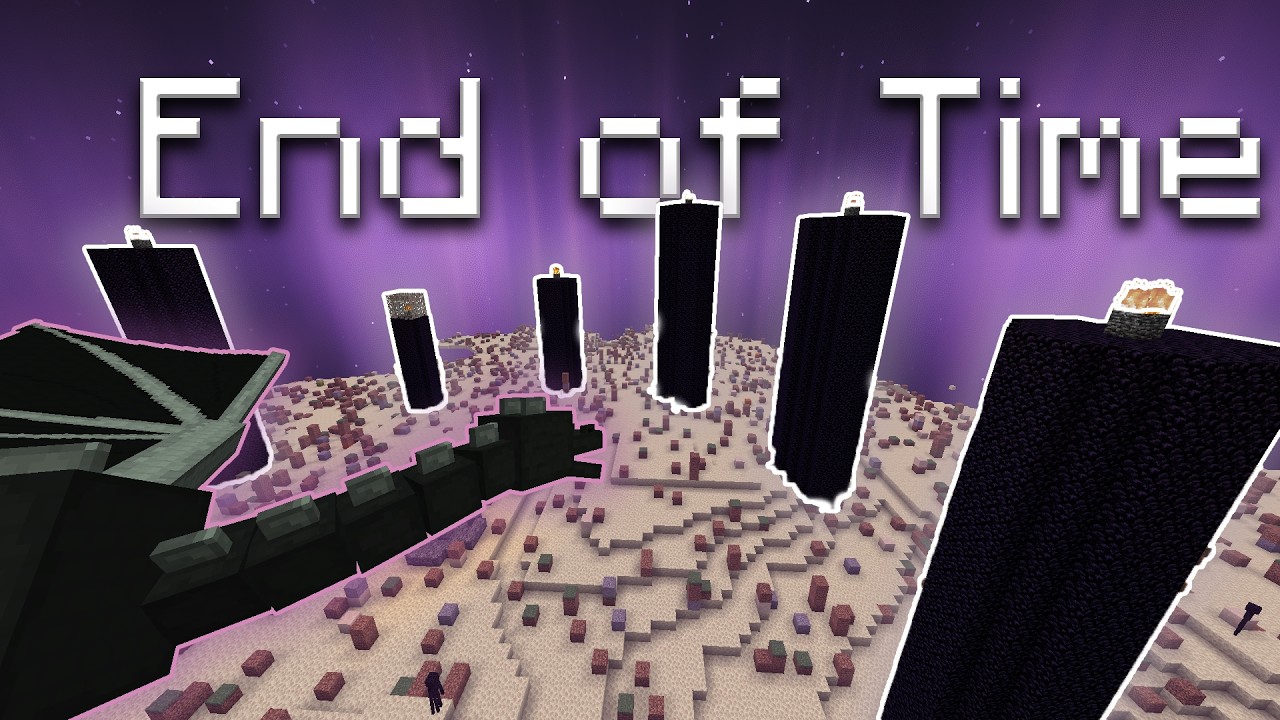
Without billions of years and limitless hardware available, RedLogic used a Monte Carlo simulation to predict the events of a Minecraft world that spawned with a 12-eye End Portal. The video chronicling this sim is a visualization of what would happen in a real game world that actually ran for this long (specifically, in world seed -535646876083114041).
Monte Carlo sims essentially use samples of random variables to model uncertain outcomes. Through the law of large numbers – which states that with enough samples, your discovered mean approaches the true mean of an experiment – they can reasonably estimate average results through many, many models. IBM has a good, short video on the subject.
You can't run Minecraft for 2 billion years, nor can you perfectly simulate every single game action on that scale, but you can compress Minecraft mob behavior into random variables and plug them into a simulation to compute an average. This is about what RedLogic did.
This experiment hinges on an Enderman placing pumpkin blocks on snow to create Snow Golems. This is why you want that 12-eye portal to be in a snowy biome. Those golems must then move underground near the activated End Portal to aggro and detonate Creepers to destroy blocks and open a path to the portal.

سەرچاوەی فەرمی بە زمانی ئینگلیزی: https://www.gamesradar.com/games/minecraft/2-billion-years-of-minecraft-running-in-a-simulation-finds-that-the-game-can-roll-credits-all-on-its-own-the-same-golem-wandered-the-end-for-18-million-years/