
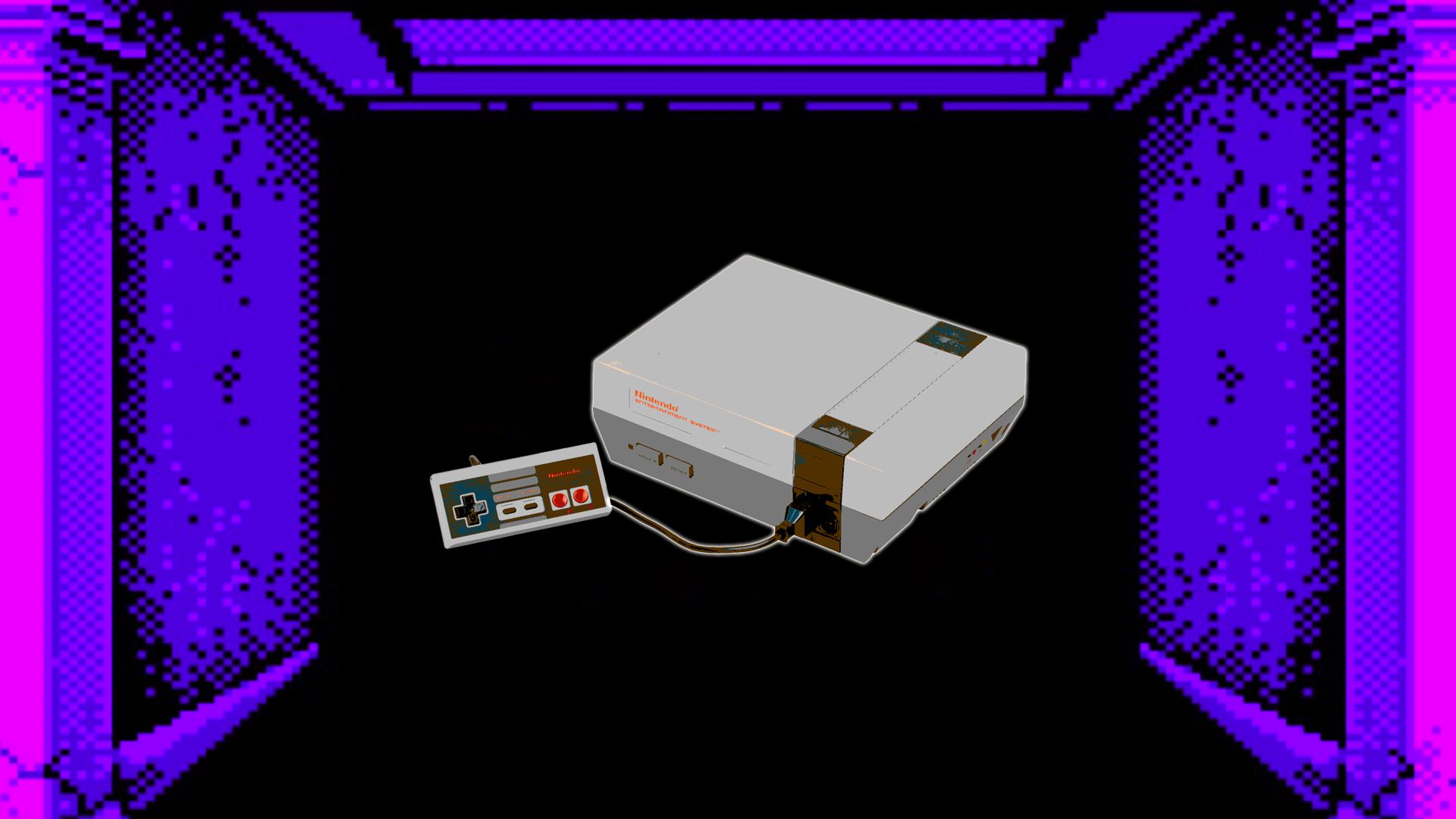
While technically not the first console, the Nintendo Entertainment System really kick-started the gaming era, with its biggest games shaping the industry's future. Obviously, we all know Super Mario Bros., The Legend of Zelda, Metroid, and Excitebike were influential and groundbreaking, but not every innovative NES game earned a legacy as long-lasting as those masterpieces. Many titles introduced important mechanics or showcased incredible technology, only to be written out of history and reduced to footnotes.
Because they age far worse than their 16-bit counterparts, NES games are less likely to be rediscovered long after the fact, since you really need to be a die-hard retro lover to even know the following names. Still, these releases were ingenious for their era, and they deserve to be remembered for how they pushed the industry forward.


When you think of influential horror games by Capcom, the discussion starts and ends with Resident Evil, and that's by no means wrong. However, while RE caused the genre's explosion in popularity, it wasn't Capcom's first attempt to scare the bejesus out of players. No, that would be 1989's Sweet Home, which is basically the grandfather of survival horror.
Yes, one of gaming's most enduring genres started with an obscure movie tie-in game that never left Japan, and Sweet Home even qualifies as a rare horror RPG. Rather than an action side-scroller, which would have been a weird fit for the source material, Capcom crafted a top-down RPG set entirely in a mansion. Playing it now, it is amazing how many elements Sweet Home sets up that the first Resident Evil expands on, including inventory management, the door transition screen, and progression tied to shortcuts.
Beyond just Capcom's own work, Sweet Home features mechanics that later horror games would make great use of. You control 5 characters, each with a vital tool (like a med kit); however, permadeath is part of the equation and a consequence of failure. The game tells its story through environmental storytelling and diary entries, along with surprisingly explicit body horror scenes.
If you are really into horror, you might recognize Sweet Home, even if it is only as the answer to a trivia question. However, Clash at Demonhead is best known as the name of Envy Adams' rock band in Scott Pilgrim, a reference that mostly reduced the original to a punchline.
NES platformers tended to be either very linear or open-ended mazes, structures that were defined by Super Mario Bros. and Metroid, respectively. Clash at Demonhead went down another route... or many routes, to be exact. Rather than just moving you from World 1-1 to 1-2, 1-3, and so on, Clash at Demonhead lets you pick between multiple nodes (or stages) at any given intersection.
If a stage seems too difficult or requires an item you don't have, you can trace your steps back and check out the other routes. You don't have to complete all 40 nodes, and some routes end in a dead end. Ultimately, your goal is to find the seven governors, and there is no set order. You even unlock items by buying them from shops, which was pretty unusual for the era.
سەرچاوەی فەرمی بە زمانی ئینگلیزی: https://gamerant.com/nes-groundbreaking-games-nobody-remembers/